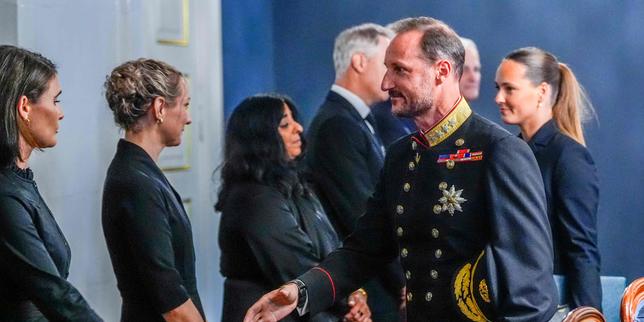
The sea does not care about ancient lineages, nor does it pause its rolling swells for a passing monarch. Decades ago, a young Norwegian prince stood on a stretch of California coast, staring out at the Pacific. He was thousands of miles away from Oslo, wrapped in a wet neoprene wetsuit, desperately seeking a version of himself that did not carry the crushing weight of a crown. In the water, he was just a surfer. On land, he was the heir to a throne.
That prince is now a king. For a deeper dive into this area, we recommend: this related article.
At fifty-three years old, Haakon of Norway steps into the silence left by the death of his father, King Harald V, who passed away at the age of eighty-nine at Oslo University Hospital. For thirty-five years, Harald had been the gentle, steady heartbeat of the nation. He was the smiling sailor-king who welcomed refugees, comforted a grieving country after unimaginable national tragedies, and stubbornly refused to abdicate, insisting that his oath to the Norwegian people was a contract written for life.
When Harald drew his final breath, the era of the modern patriarch officially closed. And the era of King Haakon the Eighth began without fanfare, without the flash of a coronation, and entirely without choice. For broader context on this development, extensive coverage can also be found at Al Jazeera.
Consider what happens next: a man who once confessed that his royal status filled him with childhood anxiety must now anchor a constitutional monarchy through its most turbulent modern storm.
The transition is instantaneous. There is no waiting period for grief. Following an extraordinary Council of State, the newly minted king stepped forward to claim his family’s traditional motto, the same four words that guided his father, grandfather, and great-grandfather through war, exile, and peace.
Alt for Norge. All for Norway.
Yet, the Norway that Haakon VIII inherits is vastly different from the one his father took over in 1991. The palace in Oslo, long viewed by citizens as a warm and approachable institution, has recently found itself buffeted by harsh, unsparing headlines. The sacred trust between the public and the palace has been tested. Queen Mette-Marit has faced intense public scrutiny regarding past correspondence with the late convicted sex offender Jeffrey Epstein, an association she has openly addressed with profound regret. Compounding this emotional weight, the royal household has reeled from the legal fallout surrounding Mette-Marit's son from a previous relationship, who was convicted and sentenced to prison for rape and domestic abuse.
For a monarchy that holds zero political power and survives purely on moral authority and public affection, these dual crises cut deep. A king without an army or legislative veto relies entirely on intangible currency: credibility, empathy, and grace.
This is where Haakon’s quiet, self-effacing nature might just become his greatest asset.
Unlike monarchs who crave the spotlight, Haakon has spent a lifetime learning how to share it. He has long leaned on his wife, balancing his own introverted reluctance with her natural social magnetism. For years, as Harald’s health steadily declined—marked by battles with infections, heart procedures, and respiratory scares—Haakon served as regent. He stepped into the shoes of power incrementally, testing the weight of the crown long before it officially rested on his head.
He knows the machinery of state. He understands the quiet diplomacy required to keep an ancient institution relevant in a fiercely egalitarian Scandinavian society.
When Haakon walks out onto the palace balcony to look down at the sea of candles, flowers, and weeping faces left by a mourning nation, he will not just be mourning a father. He will be gazing upon the future of his own lineage. Standing close by is his daughter, Crown Princess Ingrid Alexandra, the future queen who represents a modernized monarchy.
The crown is heavy. It smells of old velvet, cold marble, and institutional survival. But beneath the regalia beats the heart of a man who once ran as far away as California just to feel like himself, only to discover that destiny has a persistent undertow.
The flag flies at half-mast over Oslo. The church bells echo across the fjords. And the reluctant prince, now bearing the heavy numerical legacy of a king, turns to face the wind.