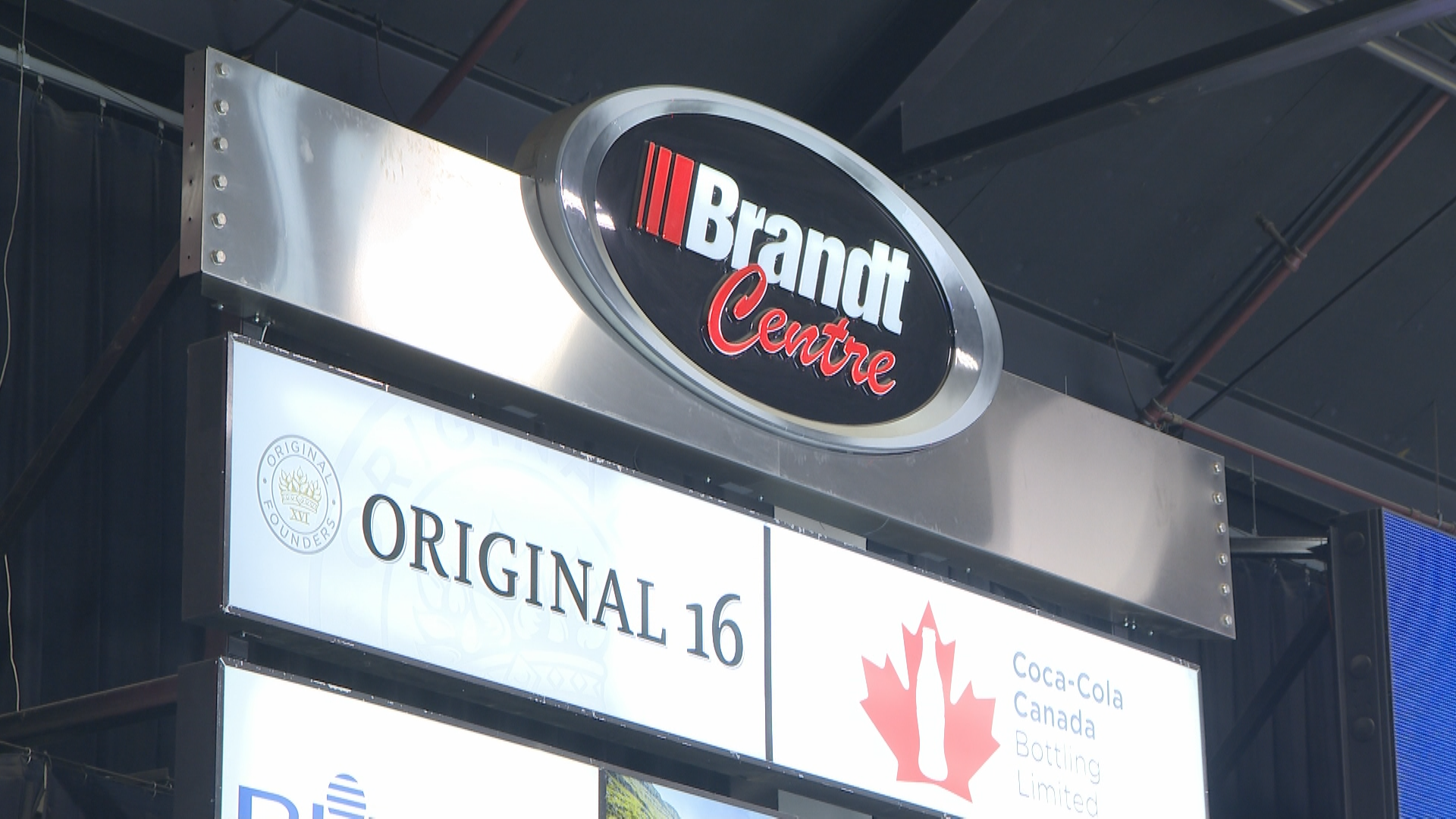
Ticket prices are dropping in the Brandt Centre. The Regina Pats have slashed admission costs for the upcoming Western Hockey League season in a direct bid to fill empty seats, betting that lower barriers to entry will spark renewed attendance.
Major junior hockey teams across North America operate under a fragile financial architecture. When empty seats outnumber paying customers, organizations face a stark choice. They can maintain premium pricing and watch revenue dwindle as the arena grows quieter, or they can reset the cost structure and chase volume. Regina chose the latter. This decision reflects an urgent pressure felt by front offices from Moose Jaw to Spokane.
The economic model of major junior hockey relies heavily on turnstile revenue. Unlike professional franchises cushioned by lucrative national television contracts and streaming rights, junior clubs survive on ticket sales, local sponsorships, concession purchases, and merchandise. When disposable income tightens across households, live entertainment is among the first discretionary expenses families cut.
The Anatomy of a Junior Hockey Turnstile Decline
Empty seats cost more than just the face value of a missed ticket. They trigger a domino effect throughout the venue. A quiet building dampens concession sales, reduces parking revenue, and diminishes the electric atmosphere that makes live hockey compelling in the first place.
For years, sports franchises assumed that ticket prices could ratchet upward indefinitely. Inflationary pressures, rising operational costs, and the desire to project major-league status drove organizations to creep prices higher. Eventually, a ceiling appears. Families calculating the true cost of an evening out—tickets, parking, programs, hot dogs, and drinks—begin doing the math and staying home.
Regina's price reduction acknowledges this threshold. By lowering admission, management hopes to recapture the casual fan base that drifted away during previous seasons of inconsistent performance or inflated costs.
Examining the Revenue Equation
Lowering ticket prices is a high-stakes gamble. To break even on reduced margins, a franchise must experience a sharp surge in overall attendance.
Consider the mathematics of a hypothetical arena holding six thousand fans. If a team sells three thousand tickets at thirty dollars, gross ticket revenue sits at ninety thousand dollars. If they drop the price to twenty dollars to stimulate demand, they need four thousand five hundred fans just to match that baseline. Every ticket sold beyond four thousand five hundred represents net financial gain compared to the high-price, low-turnout model.
Price Model A: 3,000 tickets @ $30 = $90,000
Price Model B: 4,500 tickets @ $20 = $90,000
The variable that tilts this equation is ancillary spending. A fan who enters the building after paying a lower admission fee is statistically more likely to purchase a jersey or buy food at the concession stand. The front office is betting that the psychological relief of a cheaper ticket opens wallets wider once inside the concourse.
The Competitive Landscape of Modern Entertainment
Junior hockey competes against a vastly different entertainment market than it did two decades ago. High-definition home theater systems, widespread streaming services, and video games offer immersive entertainment without the friction of driving to an arena, paying for parking, and sitting in drafty stands on a Tuesday night.
To win the attention economy, live sports must offer an experience that cannot be replicated on a living room couch. That experience requires energy, community, and affordability. When ticket prices climb too high, the value proposition collapses. Fans stop viewing the game as a casual, accessible community gathering and start treating it as a luxury purchase subject to strict cost-benefit analysis.
Regina's pivot recognizes that junior hockey is fundamentally a local product. The Pats are not a multi-national conglomerate. They belong to the community, and their pricing strategy must reflect the economic reality of the families living in southern Saskatchewan.
What This Means for the Rest of the League
Other general managers and team governors are watching the Regina experiment closely. If the Pats successfully revitalize their building and boost overall revenue through increased volume, expect a wave of copycat pricing structures across the Canadian Hockey League.
Conversely, if the experiment fails to generate the required attendance spike, teams will be trapped between two bad options. They can either accept lower revenues or risk alienating their fan base further by raising prices back to unsustainable levels.
The financial health of junior hockey depends entirely on maintaining a vibrant connection between the ice and the stands. By dropping prices, the Regina Pats have made their opening move in a desperate struggle to keep that connection alive. The turnstiles will reveal whether the gamble paid off.