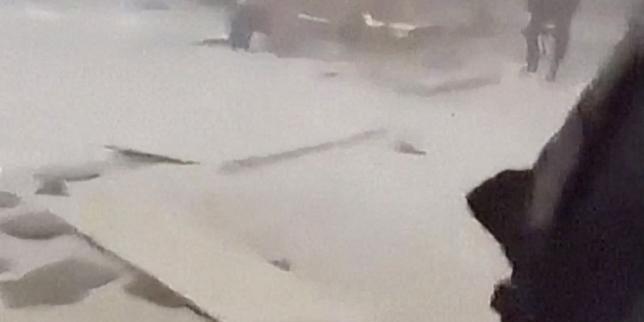
Ground doesn't usually move like that in Panama. When a massive 7.7-magnitude earthquake struck southern Panama, followed swiftly by a punishing 6.6-magnitude jolt, it shattered the everyday rhythm of millions. Skyscraper windows shook violently, historical structures crumbled, and millions of residents poured into the streets in absolute panic.
People outside the region assume Panama is immune to major seismic activity. That is completely wrong.
The Reality Behind the Azuero Peninsula Shaking
Seismic records don't lie. The sequence kicked off on October 9, centered near the Azuero Peninsula along active local faults like the Azuero-Sona fault system. A shallow depth of roughly 10 to 12 kilometers amplified the violence of the shaking. When a 7.7 quake hits that close to the surface, the energy doesn't dissipate safely underground. It travels straight up, turning solid earth into rolling waves.
President José Raúl Mulino faced an immediate crisis. Officials declared a state of emergency as hundreds of aftershocks rattled nerves across multiple provinces. Historic buildings in Penonomé sustained heavy structural damage, roads cracked open in Veraguas, and local infrastructure took a severe beating.
What Most People Get Wrong About Building Safety
Tall glass towers dominate Panama City's skyline. Naturally, onlookers assume skyscrapers are death traps during a major earthquake.
Actually, modern high-rises engineered with strict seismic codes often fare better than older, rigid masonry buildings. Maintenance workers rode out the worst of the tremors suspended high above the capital, swinging like pendulums while concrete walls in older rural towns cracked and collapsed. The real danger wasn't just the initial shockwaves; it was the cumulative fatigue placed on older structures by a relentless swarm of aftershocks.
Surviving the Aftermath and Long-Term Realities
Disaster response isn't just about immediate rescue work. It's about what happens three weeks later when international cameras leave.
Schools in Veraguas and Los Santos had to pivot to temporary learning spaces for thousands of displaced students. Clean water access, sanitation gaps, and structural integrity checks dominated local governance. Emergency preparedness requires brutal honesty about vulnerability. If you live in a seismically active zone, complacency is your worst enemy. Bolt heavy furniture, map out clear evacuation routes, and stop assuming major events only happen to your neighbors.
The earth beneath Central America remains restless. Paying attention to structural reinforcement now saves lives later.
Panama rocked by 2 powerful earthquakes and multiple aftershocks
This video provides real footage and live news broadcasts documenting the intense ground shaking and immediate urban emergency response following the dual earthquakes in southern Panama.