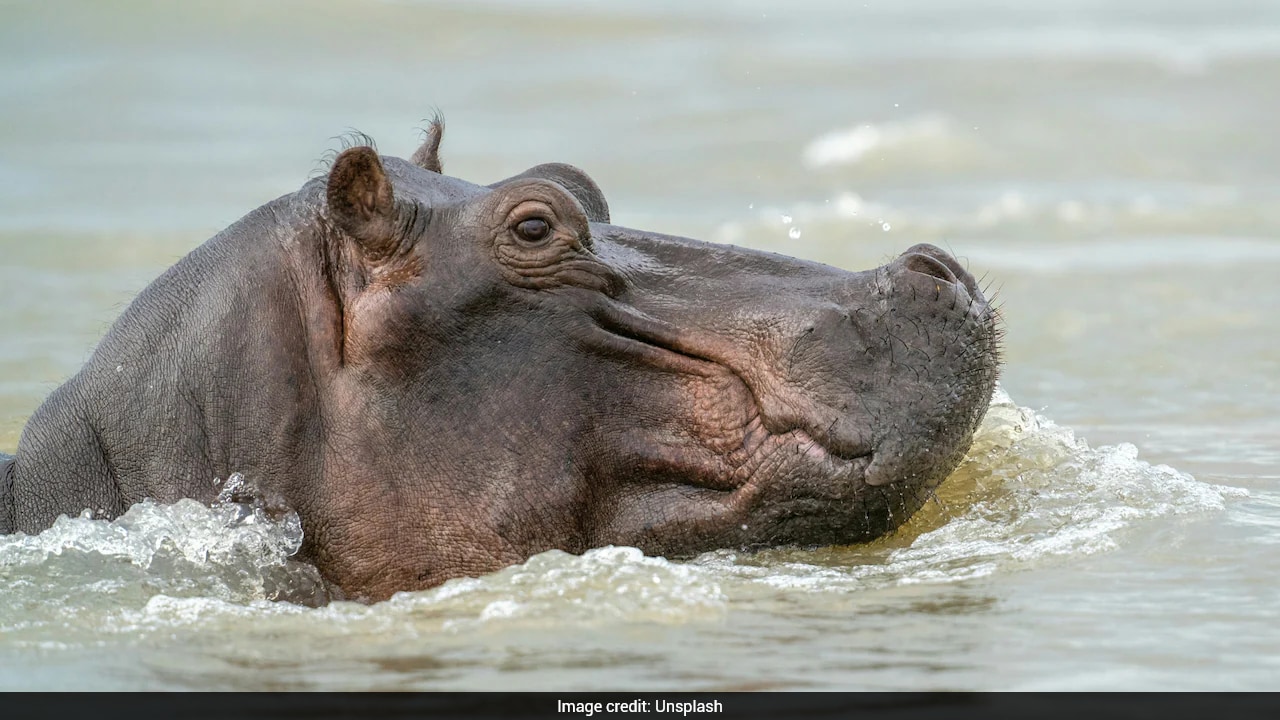
When reports surfaced of a woman punching a charging hippopotamus to save her husband during a honeymoon in Botswana, the internet treated it like an action movie script. In reality, surviving a close-range hippo encounter in the Okavango Delta comes down to split-second distraction, shallow water physics, and breaking an animal's predatory focus rather than physical force. An adult hippo weighs up to 3,200 pounds and possesses a bite force near 1,800 pounds per square inch. No human punch inflicts physical damage on two inches of dense, scarred hide. Yet striking the animal's sensitive snout or eyes can trigger a brief sensory flinch—just enough time for a pinned victim to escape.
Viral wildlife stories routinely strip away the mechanical reality of African bush travel. Tourists read a headline about bare-knuckle survival and miss the systemic failures, ecological pressures, and water-level dynamics that put honeymooners in the jaws of Africa's deadliest large land mammal in the first place.
The Anatomy of a Mokoro Ambush
To understand how a romantic excursion turns into a life-or-death struggle, you have to look at the vessel. Most water-based safaris in Botswana rely on the mokoro, a traditional dugout canoe—now mostly molded from fiberglass—poled through shallow channels by a standing guide. The boat sits mere inches above the waterline. It has no motor, no protective hull, and zero lateral stability when struck from below.
Hippos do not swim. They are too dense to float effortlessly, so they walk or gallop along the riverbed, pushing off the bottom in rhythmic bounds. When a mokoro glides silently over a submerged pod, the shadow and hull vibration trigger an immediate territorial defense. Unlike lions or leopards, which generally avoid human confrontation unless cornered or starving, hippos operate on rigid spatial boundaries.
A bull hippo defending a deep channel does not issue a warning roar. It surfaces beneath the boat, capsizing the vessel in less than a second. Once tourists hit the water, the rules of engagement shift entirely.
Why Sensory Shock Beats Brute Strength
If a hippo grabs a human torso or limb, pulling backward fails. The animal's lower canines—curved, self-sharpening tusks that grow up to twenty inches long—act like industrial hooks. Trying to yank a person free tears tissue and accelerates blood loss.
Veteran river guides and wildlife biologists point to a different mechanism when people survive direct contact. A hippo's skin is virtually bulletproof against blunt trauma, yet its facial sensory organs remain acute.
- The Muzzle Vibrissae: Thick, sensitive whiskers line the upper lip, wired directly to the trigeminal nerve to help the animal navigate murky water at night.
- The Eyes and Nostrils: Positioned high on the skull, these structures sit exposed even when the jaw is clamped shut.
- The Startle Reflex: Hippos expect resistance from rival bulls—massive, slow-moving walls of blubber. A rapid, sharp blow to the snout or eye socket registers as an anomalous threat, occasionally causing the animal to release its grip for a fraction of a second to reassess.
In a hypothetical scenario where a paddler is pinned in three feet of water, striking the water surface aggressively or hammering the animal's nostrils does not injure the beast. It disrupts the behavioral loop. That half-second hesitation is the narrow window a companion needs to drag a victim toward the bank or into thick papyrus reeds where the hippo's bulk becomes a disadvantage.
The Honeymoon Tourism Blind Spot
Botswana markets itself as the pinnacle of low-impact, high-value safari tourism. Travelers pay upwards of $1,500 to $3,000 per person, per night for exclusive concessions in the Okavango Delta. That price tag buys world-class hospitality, fine dining under acacia trees, and an unspoken psychological assumption that the wilderness has been sanitized for safety.
It has not. The luxury safari model creates a dangerous cognitive dissonance for first-time visitors, particularly honeymooners seeking secluded, intimate experiences.
When couples book private water excursions, they often prioritize quiet solitude over group safety protocols. A single mokoro poler managing two panicked passengers in deep water faces an impossible logistical equation. In a standard multi-boat convoy, other guides immediately bang their wooden poles against the water and hulls to create an acoustic wall, driving the hippo back into deeper channels. A solitary honeymoon boat lacks that backup.
Seasonal Water Shifts and Territorial Compression
The timing of a trip dramatically alters the risk profile, a factor rarely explained during glossy booking consultations. The Okavango Delta operates on an inverse flood cycle. Rain falls in the Angolan highlands during the summer, taking months to trickle down into Botswana, peaking during the dry winter months of June through August.
By October and November, the floodwaters recede rapidly. Channels shrink. Lagoons dry into isolated mudholes.
Hippos require deep water to stay cool and protect their hairless skin from the sun. As the delta dries out, dozens of hippos pack into shrinking pools. Territorial aggression skyrockets. Bulls fight constantly for shrinking real estate, and tolerance for passing canoes drops to zero. Tourists visiting during these shoulder months enter a compressed, high-stress environment where pods have nowhere to retreat when a boat approaches.
What Standard Safari Briefings Leave Out
Every reputable camp in Botswana delivers a mandatory safety talk upon arrival. Guides tell guests not to walk alone at night, to stay inside tents after dark, and to remain seated in vehicles. Yet water safety briefings frequently gloss over the brutal mechanics of an aquatic breach.
Tourists are told to "stay calm" and "listen to your guide." Those instructions evaporate the instant cold water fills your lungs and a two-ton animal surfaces three feet away.
- The Panic Reflex: Most tourists instinctively swim toward open water, mistaking the center of the channel for safety. Hippos own the deep water. Survival requires scrambling toward the thickest, shallowest reed beds, even if it means scraping skin on razor-sharp papyrus.
- The Breath-Hold Factor: Hippos can stay submerged for up to five minutes. When a hippo disappears after an initial strike, amateurs assume the threat has passed. In reality, the animal is repositioning underneath for a second, more targeted charge.
- Medical Evacuation Realities: Even the most remote luxury camps rely on bush planes and regional air ambulances like Okavango Air Rescue. A severe crush injury or puncture wound in the middle of the delta involves a grueling extraction chain—boat to airstrip, light aircraft to Maun or Johannesburg, and hours of transit before reaching a trauma surgeon.
The Economics of Wildlife Viral Fame
When a story about a tourist fighting off a hippo goes global, media outlets frame it around human grit and miraculous luck. That narrative serves the tourism industry well. It turns a catastrophic safety failure into an inspiring tale of spousal devotion.
What gets buried beneath the headlines is the liability framework governing African safaris. Guests sign ironclad indemnity waivers before stepping off the airstrip. Camps rarely face regulatory scrutiny following non-fatal wildlife incidents, and official accident reports remain closely guarded to protect national tourism revenue—Botswana's second-largest source of foreign exchange after diamonds.
Guides bear the heaviest burden. Polers in the delta are local professionals who read water ripples, ear twitches, and submerged bubble trails with uncanny accuracy. Yet even the sharpest guide can be overruled by camp management pushing to deliver a "bucket-list sunset cruise" in marginal conditions, or by guests who ignore commands to stay low and silent when passing a pod.
Assessing Risk Before Boarding a Canoe
Travelers heading into hippo territory do not need to cancel water safaris, nor do they need to train like heavyweight boxers. They need to audit the operation before stepping into a fiberglass shell.
- Check the Water Depth: Ask camp managers directly about current channel levels. If pods are visibly congested in narrow waterways due to low water, opt for game drives over mokoro trips.
- Insist on Convoy Travel: Never take a single-boat water excursion through known hippo channels. Two or three canoes moving together present a larger visual and acoustic profile that deters territorial charges.
- Verify Emergency Protocols: Confirm whether your guide carries a satellite communicator or marine radio, not just a wooden pole, and verify your personal medical evacuation insurance covers rotary-wing extraction from remote concessions.
A hippopotamus does not care about your wedding vows, your travel insurance, or the five-figure sum you paid for a private concession. In the shallow channels of the Okavango, survival belongs entirely to the people who respect the physics of the river and refuse to mistake luxury for immunity.