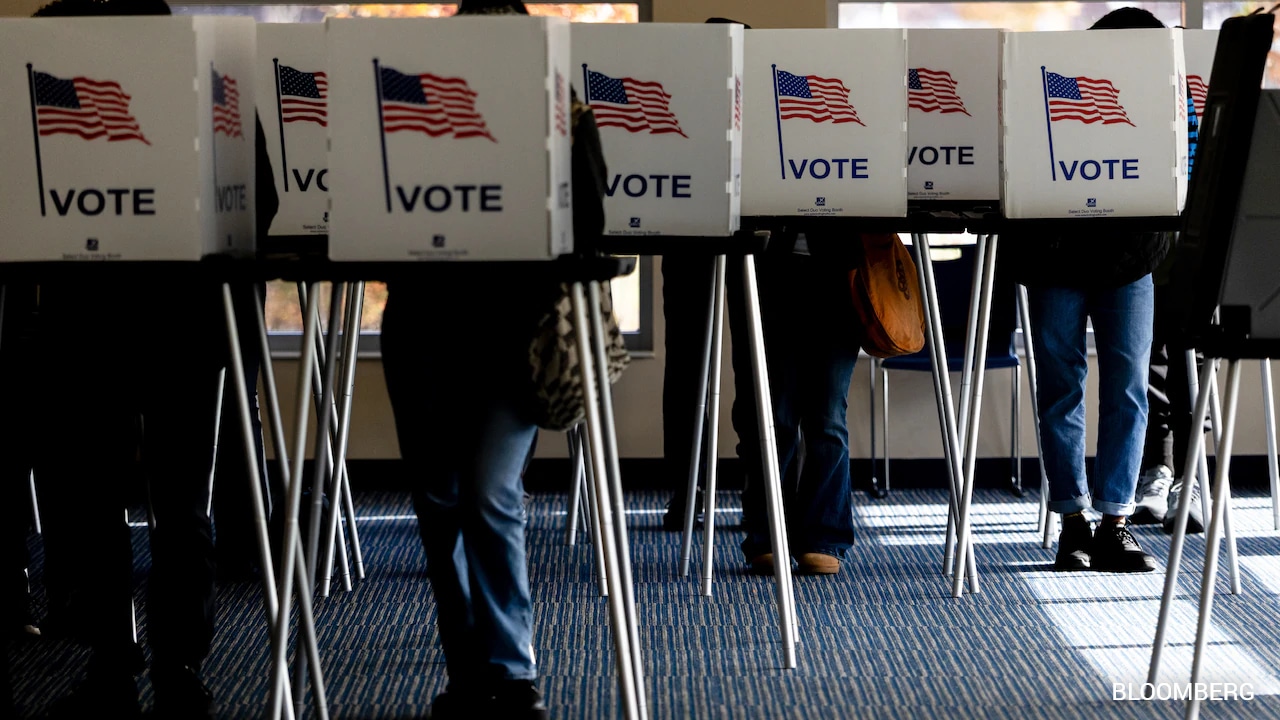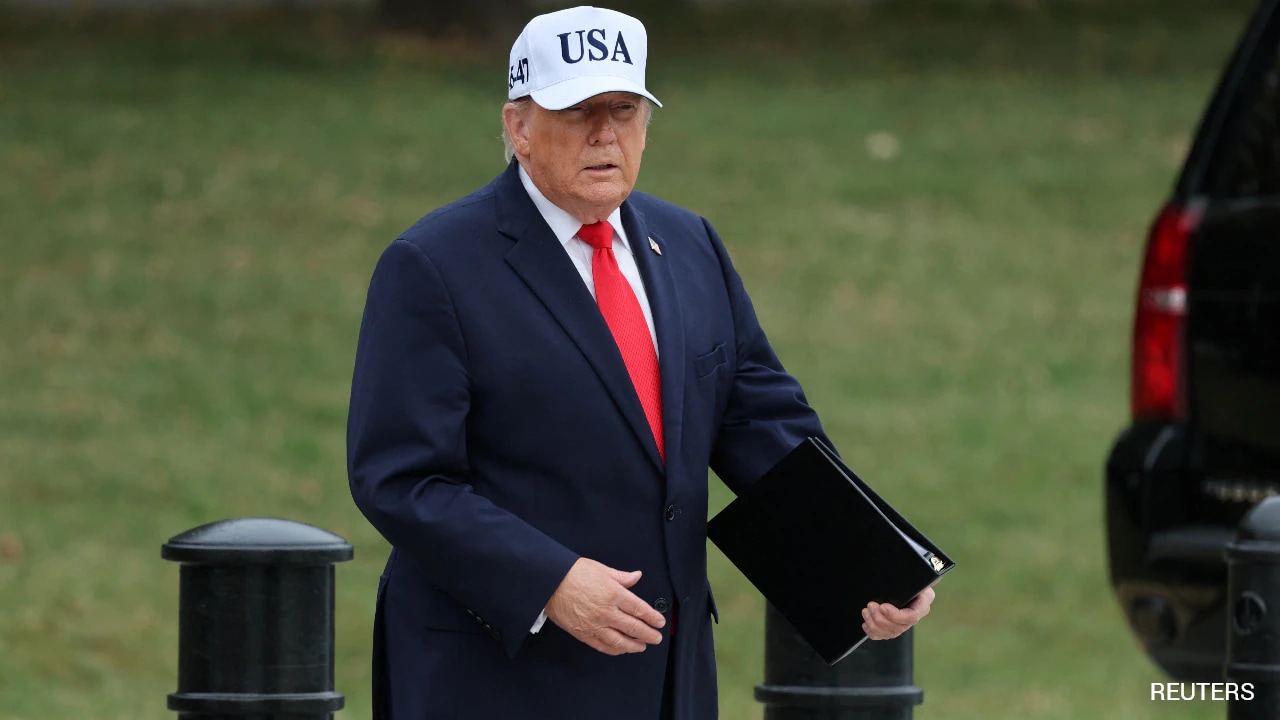
Donald Trump’s job approval rating has dropped to 32 percent ahead of the midterm elections, marking a near-record low driven primarily by persistent inflation concerns, erosion among independent voters, and fatigue over executive chaos. While surface-level punditry treats this slide as a standard second-term slump, the underlying data tells a much more volatile story about fractured coalition mechanics and structural vulnerability in swing districts.
Numbers rarely lie, even when campaign strategists try to spin them into oblivion.
A 32 percent approval rating is not merely a bad week in Washington. In modern polling history, hovering near the thirty-percent floor signals that a president has lost virtually everyone outside their most committed ideological base. When you strip away the partisan noise, that figure represents the exact size of the hardcore loyalist bloc—roughly one-third of the American electorate that will back the administration regardless of economic indicators or legislative gridlock. Everyone else has walked out of the room.
To understand how an administration arrives at this specific inflection point, you have to look past the daily cable news cycle and examine the mechanics of coalition decay. Political gravity always wins in the end. For months, the White House operated under the assumption that cultural grievances and aggressive executive actions would keep turnout high enough to offset broader dissatisfaction. That calculation ignored a fundamental rule of midterm elections: anger motivates the opposition far more reliably than satisfaction motivates the incumbent's base.
The Anatomy of the 32 Percent Floor
Polling averages often obscure the sharpest edges of voter sentiment, so it helps to dissect who actually remains inside that 32 percent bracket. Demographic breakdowns across major national surveys reveal a striking concentration. Support remains solid among non-college-educated white voters in rural counties, a demographic that has anchored Trump’s political movement for over a decade. Yet even within those strongholds, enthusiasm metrics—the silent killer of midterm turnout—have softened considerably.
Suburban voters tell an entirely different story. In the collar counties surrounding major metropolitan areas from Pennsylvania to Arizona, approval ratings have cratered into the mid-twenties. These are the exact precincts that decide control of the House of Representatives. Suburban independents rarely vote on ideological purity; they vote on stability, predictability, and the perceived competence of governance.
Consider a hypothetical voter in a swing district outside Philadelphia or Phoenix. They may have backed Trump previously out of frustration with rising grocery bills or immigration bottlenecks, hoping a disruptive executive style would force rapid corrections. Two years into the term, the disruption is constant, yet the cost of housing, healthcare, and everyday goods remains stubbornly elevated. For that voter, the novelty of political warfare has worn off, replaced by a cold calculation about their own balance sheet.
The erosion of independent support is the single most dangerous metric for any party heading into a midterm cycle. You cannot win competitive congressional districts with base turnout alone. When independents break against a sitting president by margins exceeding twenty or thirty points, down-ballot candidates find themselves trapped in an impossible mathematical vise. If they embrace the president, they alienate the swing voters they need to survive. If they distance themselves, they risk depressing turnout among the loyalists who control the party primaries.
Why Economic Messaging Stopped Working
Every administration tries to sell its economic record, and every administration eventually learns that you cannot convince people their wallets are full when they are standing at a checkout counter. The White House has leaned heavily on macroeconomic talking points—pointing to stock market peaks, deregulation milestones, and domestic energy output—to argue that prosperity is thriving.
Voters do not live in the macroeconomy. They live in the microeconomy of rent renewals, auto insurance premiums, and utility bills.
The gap between aggregate economic data and household financial reality has become a recurring trap in modern American politics, and Trump has fallen straight into it. Tariff policies, while popular as a rhetorical symbol of economic nationalism, have introduced measurable friction into supply chains. When import duties pass through to consumer prices, voters do not blame foreign manufacturers; they blame the person sitting in the Oval Office.
Inflation does not need to spike to double digits to inflict political damage. Even moderate, cumulative price increases create a psychological drag that punishes incumbents. People remember what a carton of eggs or a used car cost four years ago, and they treat that baseline as the standard of normalcy. Until wages demonstrably outpace the cost of living across middle-income brackets, economic victory laps from the podium will continue to land like tone-deaf insults.
The Tariff Paradox
Trade policy offers a clear window into how campaign promises collide with governing realities. On the trail, sweeping tariffs were pitched as a painless revenue generator paid entirely by overseas competitors. In practice, domestic importers and retailers absorb a portion of those costs and pass the remainder directly onto American families.
Agricultural states—traditionally reliable pillars of Republican support—feel this squeeze twice. First through higher input costs for machinery and fertilizer, and second through retaliatory tariffs that choke off export markets for soybeans, corn, and pork. Federal bailout packages can temporarily patch the financial hole, but farmers generally prefer open markets over government checks. That quiet resentment rarely shows up in loud rally protests, yet it surfaces reliably in anonymous polling and lower rural turnout.
Historical Precedent and the Midterm Curse
If you have covered Washington long enough, you recognize the rhythm of second-term midterm collapses. The presidency is an office designed to accumulate blame. Every foreign crisis, every legislative stalemate, and every economic hiccup eventually gets pinned to the chief executive's lapel.
Historical data underscores just how steep the hill becomes once approval dips below 40 percent:
| President | Midterm Year | Pre-Election Approval | House Seats Lost |
|---|---|---|---|
| Harry Truman | 1946 | 32% | 55 |
| Lyndon Johnson | 1966 | 44% | 47 |
| Richard Nixon | 1974 | 24% (pre-resignation) | 48 |
| George W. Bush | 2006 | 38% | 30 |
| Barack Obama | 2010 | 45% | 63 |
| Donald Trump | 2018 | 40% | 41 |
Look closely at the 1946 and 2006 cycles. In 1946, Harry Truman sat at that exact 32 percent mark amid post-war inflation and labor strikes, resulting in Republicans seizing control of both chambers of Congress for the first time in nearly two decades. Sixty years later, George W. Bush hovered at 38 percent under the weight of an unpopular war and domestic fatigue, triggering a wave that wiped out Republican majorities across the map.
Trump’s first midterm in 2018 occurred when his approval rating stood near 40 percent—eight full points higher than current figures—and Republicans still lost 41 House seats. Dropping down to 32 percent removes whatever cushion remained. It shifts the electoral battlefield from defending vulnerable incumbents in purple districts to scrambling to hold seats in districts that voted for Trump by ten or twelve points just two years earlier.
The Structural Drag of Executive Chaos
Beyond policy and economics lies a factor that pollsters struggle to quantify cleanly, though it surfaces constantly in focus groups: voter exhaustion.
Governing by perpetual crisis keeps a media ecosystem hooked, yet it wears down ordinary citizens who view politics as a background utility rather than a daily blood sport. Constant turnover among cabinet officials, public feuds with agency heads, and relentless battles with the judiciary create an impression of institutional instability. Even voters who agree with the underlying policy goals often recoil from the delivery mechanism.
This dynamic splits the electorate along temperament lines rather than purely ideological ones. Hardcore supporters view institutional disruption as proof that their champion is fighting entrenched bureaucracy on their behalf. Swing voters view the exact same behavior as a distraction from basic governance—fixing infrastructure, managing healthcare costs, and keeping the government funded without biennial shutdown threats.
When a president dominates every single news cycle, every local congressional race becomes a referendum on the White House. Local candidates lose the ability to run on district-specific issues like water rights, local manufacturing grants, or veterans' clinics. The nationalization of American politics turns every ballot into a binary choice: approve or disapprove of the president. At 32 percent approval, that binary math is catastrophic for the party in power.
What the Counter-Arguments Miss
Supporters of the administration routinely dismiss national polling as biased, broken, or overly weighted toward urban centers. It is true that modern polling faces severe methodological headwinds. Response rates have plummeted below one percent in many phone surveys, forcing pollsters to rely heavily on statistical weighting models to approximate the actual electorate.
Polls have underestimated Trump’s support before, most notably in 2016 and 2020. However, treating every unfavorable survey as a statistical mirage ignores a crucial distinction between presidential years and midterm elections.
In presidential elections, Trump’s presence on the ballot pulls millions of low-propensity voters to the polls—people who rarely participate in off-year contests. When his name is not physically printed on the ballot, a massive chunk of that coalition stays home. We saw this phenomenon play out vividly in 2018 and again in special elections throughout the intervening years. Polling misses in presidential years do not magically rescue down-ballot candidates when the top of the ticket is absent.
Another counter-argument suggests that opposition fractures will save the majority. Critics point out that the Democratic Party faces its own internal rifts over economic populism, foreign policy, and generational leadership. While those divisions are real, midterm elections rarely require the out-of-power party to present a unified, inspiring governing vision. Midterms are overwhelmingly negative referendums. Voters do not need to fall in love with the alternative to punish the incumbent; they simply need to decide that the status quo is unacceptable.
How Down-Ballot Republicans Are Reacting
Behind closed doors on Capitol Hill, the panic is palpable, even if public statements remain carefully scripted. Vulnerable incumbents in districts across New York, California, and the Midwest are quietly adjusting their campaign playbooks to survive the undertow.
You can spot the shift in how they spend their campaign cash. Early ad buys in competitive districts rarely mention the White House at all. Instead, candidates are pouring millions into hyper-local messaging—highlighting constituent casework, local law enforcement endorsements, and narrow legislative wins on taxes or border security.
Strategic distancing is an art form in Washington, and it carries severe risks. If a vulnerable House member criticizes administration tariffs or breaks ranks on a high-profile floor vote, they risk triggering a primary challenge from the right or losing crucial fundraising access. Yet total obedience guarantees defeat in November. Most endangered incumbents settle on a strategy of selective silence: praising the administration's judicial appointments and deregulation efforts while quietly dodging questions about executive rhetoric or trade wars.
Campaign committees are also triaging the map earlier than usual. National fundraising arms have finite resources, and when an incumbent’s approval sinks to 32 percent, the defensive perimeter expands rapidly. Money that was originally earmarked to flip competitive seats held by the opposition gets rerouted to prop up incumbents in R+8 or R+10 districts that should never be in play. Once a party starts spending millions to defend safe territory, the fight for the majority is usually already lost.
The Path Ahead for the White House
Can an approval rating this low recover before ballots are cast? History offers very few examples of rapid rebounds once public opinion hardens around a second-term president. Perceptions of a figure as thoroughly defined as Donald Trump rarely shift dramatically over a few months; voters have had a decade to form their opinions, and very few people remain genuinely undecided about his character or leadership style.
Any meaningful recovery would require two developments happening simultaneously: a noticeable drop in consumer prices paired with a prolonged period of disciplined, low-drama governance. Lowering interest rates or seeing energy costs dip could ease some of the financial pressure on middle-class households by autumn. Yet economic improvements take months to register in voter sentiment, often arriving too late to alter midterm trajectories.
More importantly, discipline runs counter to the political instincts that built this movement in the first place. Asking a populist disruptor to govern like a cautious caretaker is like asking a boxer to win a match without throwing a punch. The base demands constant motion, and the White House consistently chooses to feed that appetite rather than court skeptical moderates.
At 32 percent, the margin for error has completely evaporated. Unless economic realities shift dramatically in the pockets of working families over the next few months, congressional Republicans are staring down a structural wave that no amount of campaign spin or rally enthusiasm will be able to hold back.