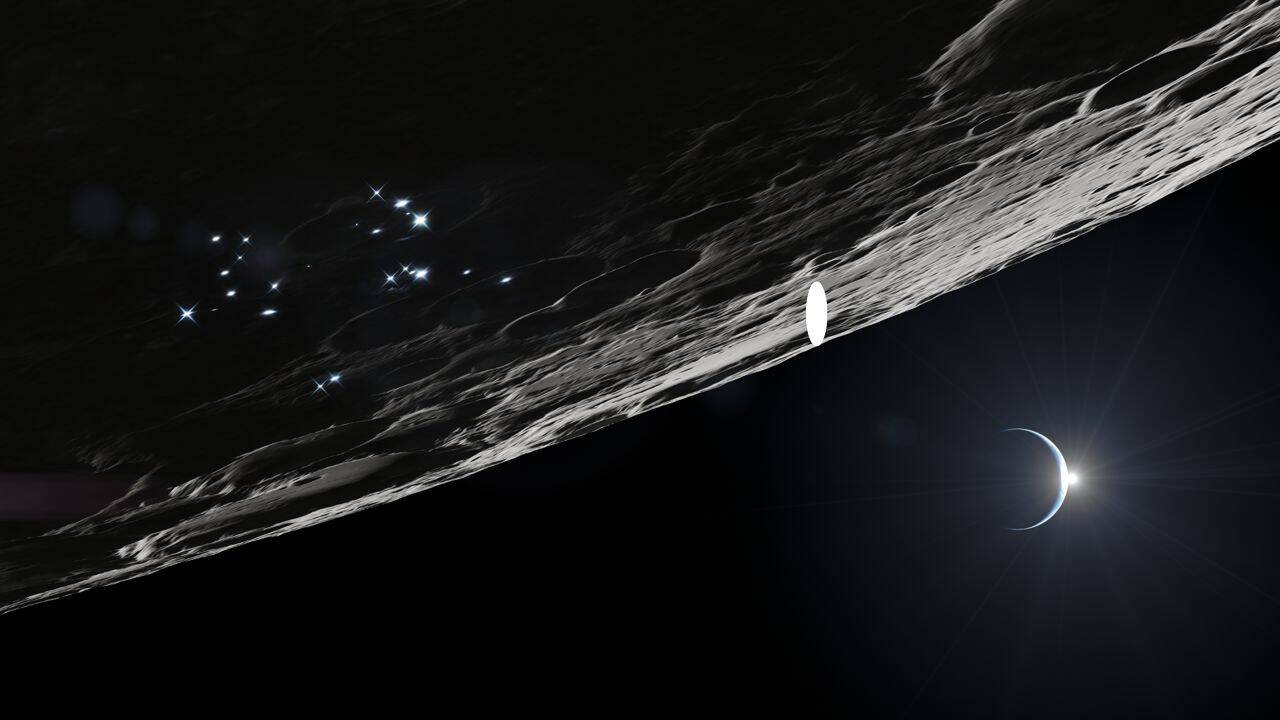
NASA will broadcast a virtual update on June 30 at 2:30 p.m. EDT to announce the next phase of its permanent Moon Base project, including vital lunar lander awards. Behind the public briefing streams on YouTube lies an aggressive, high-stakes restructuring. The agency is quietly decoupling its immediate infrastructure timeline from the deeply delayed Artemis surface landings, turning instead to commercial providers to secure an American foothold on the lunar south pole before international rivals lock down the prime real estate.
By shifting major hardware contracts to private industry, the agency is attempting to bypass its own internal engineering bottlenecks. The June 30 presentation, featuring NASA Administrator Jared Isaacman and Moon Base program manager Carlos García-Galán, will try to frame this as an orderly pivot. Yet the underlying numbers reveal a strategy dictated by architectural necessity and geopolitical panic.
The Logistics of a Fragmented Architecture
The structural reality of deep space logistics has broken NASA's traditional single-rocket procurement model. Building a permanent facility requires mass that the Space Launch System (SLS) simply cannot deliver alone.
Every pound of equipment sent to the lunar surface demands an immense logistical footprint in Earth orbit. To send a single commercial human landing system to the Moon, private partners like SpaceX and Blue Origin must execute a complex sequence of orbital refueling flights. Estimates from industry analysts suggest it will take anywhere from eight to sixteen propellant transfers in low Earth orbit just to send a single lander to the lunar south pole.
[Earth Launch] ➔ [Orbital Propellant Depot] ➔ [Lander Refueling] ➔ [Lunar Transit]
This dependency explains why the June 30 announcements will center heavily on the commercial lander awards. NASA is no longer building a closed ecosystem. It is establishing a commercial freight network where the agency acts as the anchor tenant rather than the sole operator.
The Shadow of the Orion Heat Shield
The rush toward commercial reliance cannot be decoupled from the ongoing technical issues plaguing NASA’s own core hardware. The Orion capsule, meant to be the centerpiece of crewed transit, remains a bottleneck.
During the uncrewed Artemis I test flight, Orion's Avcoat heat shield eroded unevenly, shedding material in a manner that engineers had not predicted. This heat shield is a thermal barrier that must withstand 5,000 degrees Fahrenheit upon atmospheric reentry. If the material degrades unpredictably, the risk to human life is total.
While NASA recently assigned its four-person crew to the rearranged Artemis III orbital test flight, that mission will no longer attempt a lunar landing. It has been safely demoted to a high Earth orbit dress rehearsal to test rendezvous and docking capabilities with commercial partners.
The agency cannot afford to pause its entire lunar ecosystem while Orion’s thermal protection system undergoes redesigns and modifications. The solution is to separate the automated infrastructure from the crewed flight path. By aggressively funding uncrewed commercial landers now, NASA intends to drop habitats, power grids, and survival hardware onto the lunar surface years before an astronaut ever sets foot inside them.
The Geopolitical Real Estate Rush
The phrase "sustained human presence" is often used in public briefings, but the immediate driver is raw geography. The lunar south pole is not an expansive, uniform landscape. It is a treacherous terrain of deeply shadowed craters where sunlight rarely penetrates.
These permanently shadowed regions hold the true currency of the next century: water ice.
Lunar Ice ➔ Water Purification ➔ Liquid Hydrogen & Oxygen (Rocket Fuel)
Water is life support, but more importantly, it is fuel. Processing lunar ice into hydrogen and oxygen creates an oasis in deep space, turning the Moon into a refueling depot for missions deeper into the solar system. The areas where this ice is accessible, alongside elevated crater rims that receive continuous sunlight for solar power, are extremely limited.
A competitor nation occupying these narrow ridges dictates the terms of exploration for everyone else. By accelerating autonomous commercial lander contracts, NASA is trying to stake claims via corporate proxies, bypassing the diplomatic delays of international space policy.
The Problem With Corporate Proxies
Relying on commercial vendors introduces a completely different category of structural risk. The aerospace supply chain is fragile, and the track record for autonomous lunar landings remains highly volatile.
Early commercial attempts have shown that minor software oversights can destroy capital-intensive missions in seconds. Last year, an uncrewed lunar explorer failed simply because a guidance algorithm miscalculated the crater wall topography during its final descent phase. Another multi-million dollar payload was lost when a solar array orientation script ran inverted, pointing the vehicle's panels directly away from the sun and draining its batteries within a single orbital period.
When NASA outsources these landers, it trades direct engineering control for bureaucratic oversight. A single systemic manufacturing flaw at a private contractor's assembly facility can stall the entire lunar program for eighteen months, regardless of how much capital the agency throws at the problem.
Setting the Streaming Schedule
For those tracking the public face of this programmatic shift, the virtual conference will stream via official channels on Tuesday, June 30.
- Date: Tuesday, June 30, 2026
- Time: 2:30 p.m. EDT (11:30 a.m. PDT)
- Platform: NASA YouTube Channel and official website
- Media Access: Question-and-answer credentials require an RSVP by 12:30 p.m. EDT on the day of the broadcast.
The presentations will focus on contract values, baseline requirements, and optimistic target dates. The real story will be found in the fine print of the lander specifications, which will reveal exactly how much payload capacity NASA is willing to buy to keep its lunar ambitions from slipping into the next decade.
The success of this infrastructure plan hinges entirely on whether private balance sheets and commercial engineering velocity can outrun the institutional friction that has bogged down deep space exploration for generations. If these commercial landers fail to deliver operational hardware to the south pole within the next twenty-four months, the entire architecture crumbles, leaving the gate to the lunar surface wide open for international competitors.