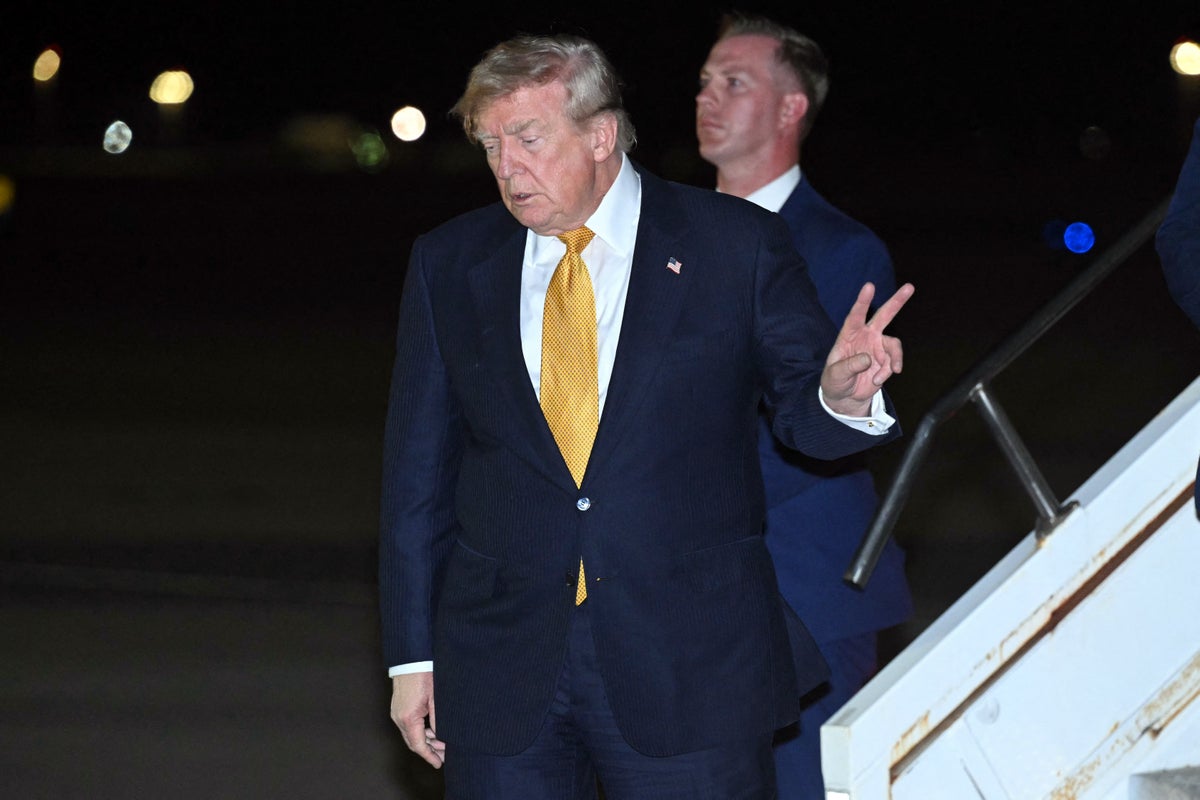
Donald Trump has issued what he claims are standing orders to the United States military to launch a catastrophic bombing campaign against Iran if he is assassinated. Speaking to reporters and publishing statements on social media, the president declared that 1,000 missiles are locked and loaded to decimate Iranian territory should the Islamic Republic succeed in taking his life. This unprecedented announcement introduces a profound constitutional crisis regarding command authority. It raises a critical question about whether a commander-in-chief can dictate military action from beyond the grave.
The declaration came following weeks of intense geopolitical escalation. During a recent interview, Trump revealed he had left explicit instructions to strike Iran at levels never seen before. The warning followed highly charged public funerals in Tehran for Iran former Supreme Leader, Ayatollah Ali Khamenei, who was killed during a joint U.S.-Israeli military campaign earlier this year. At the multi-day mourning ceremonies, massive crowds displayed banners reading "We Will Kill Trump" and openly chanted for the American president's death. Read more on a connected topic: this related article.
Trump brushed off suggestions from intelligence circles that a fresh, immediate plot had been uncovered by foreign allies. He asserted that he has occupied the top spot on Iran target list for years, a reality he accepts as part of his office. His recent social media statements took a harsher turn, stating that orders have already been given and the military is prepared for a year-long operation to completely destroy all areas of Iran.
The Illusion of Posthumous Command
The central flaw in this retaliatory framework is rooted in the United States Constitution. Under Article II, the president serves as the commander-in-chief of the armed forces, but this authority is tied strictly to the living occupant of the office. The moment a president dies, command authority instantly transfers to the vice president, who is sworn in immediately. More analysis by The New York Times highlights related perspectives on this issue.
Trump instructions hold no legal weight once his heart stops beating. Executive orders, presidential directives, and verbal commands do not operate like a personal will or a trust agreement. A deceased individual cannot exercise the nuclear codes or authorize a deployment of Tomahawk missiles. If an assassination were to occur, Vice President J.D. Vance would instantly become the sole authority capable of ordering a military response.
The Pentagon operates under a rigid chain of command. Military officers take an oath to protect the Constitution, not a specific person. If a sitting president dies, the Joint Chiefs of Staff look to the newly sworn-in president for operational guidance. Any attempt by a military commander to execute a pre-recorded or pre-authorized directive from a deceased president without the explicit consent of the living successor would constitute an illegal act.
Historical precedents show that contingency planning for the death of a president is always focused on continuity of government rather than automated vengeance. During the Cold War, the primary objective of decentralized command structures was to ensure that the United States could defend itself if Washington was vaporized in a first strike. It was never intended to serve as an automated, personalized mechanism for a counter-offensive based on the targeted killing of an individual executive.
A Timeline of Escalation and the End of the Ceasefire
The current friction between Washington and Tehran did not develop in a vacuum. Tensions skyrocketed following a massive joint military operation that resulted in the death of Ayatollah Ali Khamenei. That strike altered the balance of power in the Middle East and triggered a cycle of retaliatory threats that shattered all diplomatic progress.
A temporary memorandum of understanding had briefly brought an uneasy truce to the region. That fragile peace disintegrated completely when Iranian forces targeted commercial shipping vessels in the Strait of Hormuz. The United States responded by executing consecutive nights of airstrikes against Iranian ports, military islands, and naval infrastructure. Trump publicly declared that the ceasefire was officially over, labeling the Iranian leadership as bad actors with whom negotiations were a waste of time.
Despite the collapse of the ceasefire, back-channel communication has not stopped completely. Technical talks regarding maritime security and diplomatic borders have continued through neutral third-party intermediaries. Trump's public rhetoric, however, operates on a completely different track than these quiet diplomatic efforts. By announcing that 1,000 missiles are prepared for deployment, the administration is deliberately attempting to establish a policy of maximum deterrence through unpredictable behavior.
The rhetoric has put regional allies in a difficult position. Israel, which routinely shares high-level intelligence with Washington regarding Iranian plots, has seen its findings minimized by Trump's public statements. While leaks suggested that Israeli intelligence officials had flagged a specific, renewed threat against the president, Trump dismissed the idea of a new plot. He maintained that the threat environment has remained identical since his first term, dating back to the 2020 drone strike that killed Qasem Soleimani in Baghdad.
The Pentagon Silent Dilemma
Inside the Department of Defense, officials are forced to manage the logistical reality of a president who views military assets as instruments of personal deterrence. The claim that 1,000 missiles are locked and loaded represents a massive logistical footprint that would require specific positioning of naval assets, carrier strike groups, and strategic bombers.
Placing a military on a permanent hair-trigger alert for a specific contingency drains resources away from other global priorities. Striking an entire nation at unprecedented levels requires immense planning, targeting data, and compliance with the international laws of armed conflict. The military cannot legally target civilian infrastructure or execute blanket destruction without violating the Geneva Conventions, an issue that military lawyers would force any sitting president to confront.
The operational reality differs substantially from political rhetoric. While the military maintains extensive contingency plans for conflicts with major state adversaries, those plans are fluid. They change daily based on satellite imagery, troop movements, and regional alliances. A static instruction to destroy a country over a one-year period cannot account for changing battlefield dynamics or shifting international coalitions.
Defense officials also recognize that a massive, unprovoked strike following an assassination could ignite a global conflict. Iran's ballistic missile arsenal remains capable of hitting regional U.S. bases and disrupting global oil supplies. If an assassination took place on American soil, the immediate priority of the Pentagon would be stabilizing domestic security and assessing broader threats, not executing an immediate, uncoordinated bombing campaign that could pull global powers into a wider war.
Deterrence vs Distraction
Trump's insistence that he is the primary target of a foreign state serves a dual purpose. It acts as an aggressive tool of international diplomacy while solidifying his image as a warrior fighting against foreign enemies. By framing the conflict as a direct battle between himself and the Iranian regime, he elevates his political narrative to a matter of survival.
This personalized approach to foreign policy complicates traditional statecraft. Foreign governments are left trying to decipher whether the United States is operating on a coherent national security strategy or reacting to the personal grievances of its leader. Iranian Foreign Minister Abbas Araghchi responded to Trump's recent threats by accusing Washington of violating international agreements and acting in bad faith, shifting the blame back onto the United States for the collapse of regional stability.
The strategy relies heavily on the concept of strategic ambiguity, a doctrine where an adversary is kept completely unaware of what might trigger a devastating response. Trump has modified this doctrine into a policy of extreme clarity regarding his intentions, combined with total unpredictability regarding execution. He wants the leadership in Tehran to believe that he is entirely willing to cause total destruction if they cross a specific line.
The approach carries massive risks. If deterrence fails and an attempt on his life is made, the pressure on his successor to follow through on these promised strikes will be immense. J.D. Vance would face an immediate choice between honoring the public promises of his predecessor or choosing a measured path to avoid an all-out global war.
The Legal Framework of a Successor Decisions
If the presidency transfers under catastrophic circumstances, the War Powers Resolution of 1973 governs how the new commander-in-chief must act. The law requires the president to consult with Congress before introducing United States armed forces into hostilities. While a president can act defensively to repel an imminent attack, an extended, year-long campaign to decimate a foreign nation requires legislative authorization.
A new president would find themselves constrained by these legal requirements. The political momentum generated by a national tragedy would undoubtedly create immense public pressure for a severe military response. The institutional barriers designed to prevent unchecked presidential warmaking would face their ultimate test. Congress would be forced to decide whether to grant broad war powers or demand a narrow, intelligence-driven operation against the specific individuals responsible for the attack.
The international community would also exert significant pressure. European allies, already wary of regional instability, would likely urge the new administration to avoid a massive bombing campaign that could destabilize global energy markets and trigger a massive refugee crisis. The United Nations Security Council would be paralyzed, as global powers with ties to Iran would oppose any broad military action.
A successor would also have to evaluate the quality of the intelligence linking the assassination to the leadership in Tehran. Proving state sponsorship of a targeted killing is a complex process that takes time. Launching a massive missile strike before a thorough investigation is completed could result in a catastrophic error, targeting the wrong factions or escalating a conflict based on faulty information.
The standing orders Trump claims to have left behind are political theater disguised as military strategy. They function as an effective warning to adversaries who might consider an extreme action, but they possess no operational lifespan beyond his own presidency. The ultimate decision to go to war will always belong to the living, not the dead.
The United States military remains bound by the Constitution to follow the directives of the active, sitting commander-in-chief. No amount of social media proclamations or verbal instructions can alter the legal reality that a president's power ends when their term or their life concludes. The true test of American resilience in the face of a foreign threat lies not in the automated execution of past orders, but in the steady, lawful governance of those who step forward to lead next.

.webp)