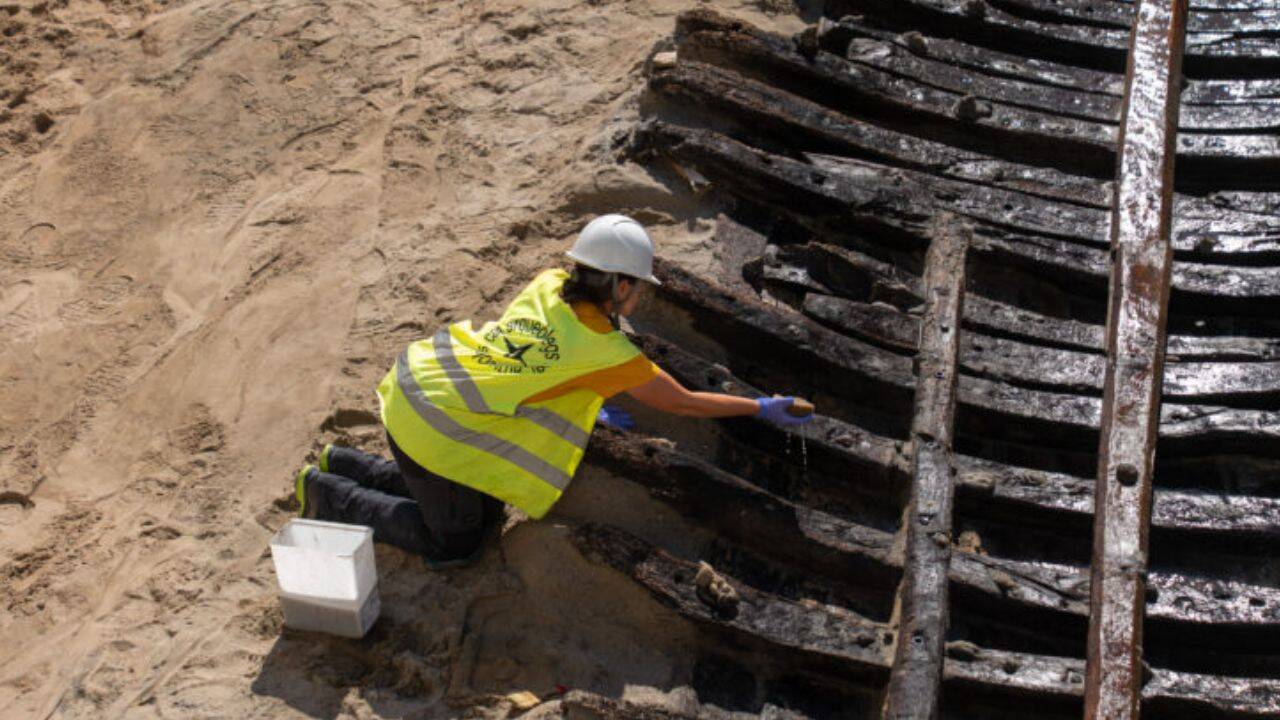
You wouldn't expect to find a massive piece of medieval maritime history while simply trying to park your car. Yet, right beneath the bustling streets of Barcelona, construction workers hit something a lot harder and older than expected. They didn't strike a utility pipe. They uncovered a remarkably well-preserved 15th-century vessel sitting quietly under the modern pavement.
Cities are layers of dust and forgotten stories. We walk over ancient foundations every single day without realizing what rests a few meters below our sneakers. When heavy machinery scraped against wood instead of stone or dirt during a routine parking garage excavation, it forced urban planners and historians to halt everything. What followed was a race against time to document, extract, and understand a ghost ship trapped in the dry earth of Spain's most vibrant coastal city.
The Accidental Discovery Beneath the Asphalt
It happened in the Born district. If you've ever wandered those narrow, winding streets, you know the atmosphere is thick with history. Medieval stone walls press in from all sides. But finding an actual wooden hull intact beneath a modern construction site is entirely different.
Back in 2008, workers were digging for a new underground car park. Standard procedure involves archaeological monitoring because Barcelona's roots go deep into Roman and medieval times. Even so, nobody anticipated a complete skeleton of a boat. The wood survived because of the unique environmental conditions of the site. It sat in wet, oxygen-poor sediment that prevented the usual decay caused by bacteria and insects.
Once the initial planks appeared, the backhoes stopped. Maritime archeologists stepped in with trowels and brushes. They realized they were looking at a vessel dating back to the 1400s, an era when Barcelona stood as a powerhouse of Mediterranean trade.
What the Ship Tells Us About Medieval Trade
History books love to talk about kings, queens, and massive naval battles. They rarely focus on the workhorses of the sea. This particular find wasn't a royal warship meant to intimidate enemies with towering sails and rows of cannons. It was a cargo runner.
Cargo ships from the 15th century are notoriously rare in the archaeological record. Most old boats either broke apart in storms, rotted on distant beaches, or got broken down for firewood centuries ago. Finding one buried in marine silt gives researchers a direct blueprint of how shipbuilders operated during the height of the Crown of Aragon.
- The construction style showed advanced framing techniques.
- The size indicates it carried bulk goods like grain, wine, or oil.
- Tool marks left on the timber offer clues about medieval carpentry.
When you examine the preserved ribs and planks, you see the exact decisions made by shipwrights hundreds of years ago. They didn't have CAD software or metal alloy stress testers. They relied on wood grain, intuitive geometry, and generational knowledge passed down through dockside guilds. Every iron nail and pegged joint tells a story of trial and error on the open water.
Why Did a Boat End Up So Far Inland?
People always ask how a ship ends up blocks away from the modern shoreline. The answer comes down to how much Barcelona has changed its shape over the centuries.
Back in the 15th century, the coastline looked very different. Urban expansion, land reclamation, and centuries of silting pushed the sea back. Areas that are now solid ground and packed with apartments, cafes, and shops used to be shallow harbors, marshes, or active dockyards.
As the city grew, people dumped rubble, soil, and trash to reclaim land for housing and industry. This gradual buildup swallowed the old wooden hull, sealing it away under layers of urban debris. Over five hundred years, the city marched right over its own maritime past, completely forgetting the vessel resting in the mud below.
The Technical Challenge of Extraction
Rescuing a centuries-old wooden wreck from an active construction zone is a logistical nightmare. You can't just hook a crane to it and pull it out. Wood that has spent five centuries underwater turns fragile and spongy. If you let it dry out too fast in the Mediterranean sun, the planks will warp, crack, and crumble into dust within hours.
Specialist teams had to work methodically. They kept the timber constantly misted with water while mapping every single nail, beam, and joint.
- Engineers mapped the structural grid using laser scanners.
- Conservators applied chemical stabilizers to replace lost cellular structure in the wood.
- Workers dismantled the hull piece by piece rather than trying to lift it in one go.
Each timber received a unique tag, went into a protective crate, and traveled to a conservation facility. This painstaking process took months. The car park project had to adapt, redesigning its foundations to accommodate the archaeological salvage operation happening right beneath the footings.
Where History Meets Modern Conservation
Preserving a medieval shipwreck doesn't stop when you dig it out of the ground. The real work happens in the lab. Immersing ancient timbers in baths of polyethylene glycol helps push out the water and replace it with a waxy substance that keeps the wood from shrinking.
This process takes years. Museums in Barcelona have worked tirelessly behind the scenes to stabilize these artifacts so the public can eventually see what medieval engineering actually looked like up close. It's a stark reminder that our cities are built on top of countless layers of human effort.
If you ever find yourself walking through Barcelona's historic quarters, take a second to look down at the pavement. Beneath the asphalt, the gas lines, and the subway tunnels, there's an entire world of forgotten docks, lost cargo, and wooden ships waiting for someone to dig them up.
Check out local museum exhibits dedicated to the city's underwater heritage to see these preserved timbers for yourself, or plan a walking tour focusing on Barcelona's medieval port history to trace the old shoreline on foot.