Washington insiders love a tidy succession plan, right up until reality blows it to pieces.
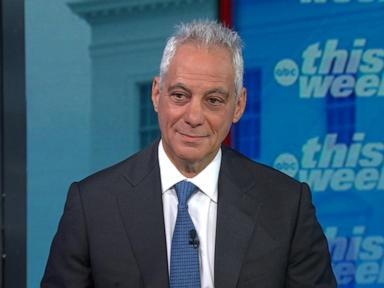
In his public push for Senate Democratic Leader Chuck Schumer to commit to stepping down after the next Congress, former White House Chief of Staff and U.S. Ambassador Rahm Emanuel is pitching what sounds like pragmatic institutional renewal. According to Emanuel’s perspective, setting a firm expiration date on top leadership creates an orderly runway for the next generation of Senate Democrats, prevents the kind of prolonged generational gridlock that eventually forced Nancy Pelosi’s hand in the House, and signals to voters that the party is forward-looking rather than entrenched.
On paper, Emanuel’s argument checks every box for Beltway pundits. In practice, it relies on a fundamental misunderstanding of how power actually works in the United States Senate.
When political strategists talk about "lame-duck" leadership, they usually treat it as an unavoidable nuisance at the end of a term. Deliberately manufacturing a two-year lame-duck period for the highest-ranking Democrat in Congress isn't strategic renewal. It is voluntary disarmament.
The Myth of the Orderly Runway
Emanuel’s thesis rests on the assumption that an announced retirement date creates stability. History proves the exact opposite. The moment a Senate leader puts an expiration date on their gavel, their leverage evaporates across three distinct fronts: fundraising, floor discipline, and inter-party negotiation.
In the Senate, power is not merely institutional; it is relational and forward-looking. Senators fall in line behind a leader not just because of who that leader is today, but because of what that leader can do for them two, four, and six years from now. Committee assignments, campaign cash from leadership PACs, and floor time for pet legislation are the currency of the upper chamber.
If Chuck Schumer announces tomorrow that he is out after the next Congress, every ambitious senator in his caucus—from Brian Schatz and Chris Murphy to Amy Klobuchar and Cory Booker—immediately pivots from legislating to campaigning for the top job. Instead of uniting behind a singular floor strategy, the caucus fractures into rival leadership whip operations.
Look at what happened to the House Republicans during John Boehner’s final years, or even the quiet internal maneuvering among House Democrats during the years leading up to Hakeem Jeffries taking the reins. When the throne has a publicly posted vacancy date, loyalty shifts from the current occupant to the perceived frontrunner. You do not get a smooth transition. You get a shadow primary played out in the middle of high-stakes legislative sessions.
Why the Senate Is Not the House
Critics who point to Nancy Pelosi’s eventual transition to Hakeem Jeffries as a model for Schumer are ignoring the structural differences between the two chambers.
The House of Representatives is a majoritarian institution run through the Rules Committee. A Speaker or Minority Leader with a unified caucus can enforce strict discipline because individual members have very little procedural power on their own. When Pelosi announced a timeline for her departure in 2018 to secure the votes for her final speakership, she still held massive institutional levers to keep her caucus in check.
The Senate operates on unanimous consent and individual obstruction. Every single senator possesses the nuclear option of holding up nominations, stalling bills, and forcing weeks of procedural votes. Keeping 45 to 55 independent political operators moving in the same direction requires relentless transactional leverage.
I have watched dozens of legislative showdowns stall out in the upper chamber simply because one member smelled weakness at the top. If the opposing party—and the White House—knows that Schumer is counting down the days until his exit, they have zero incentive to cut major compromises with him. Why negotiate a complex bipartisan package with a leader who won't be around to enforce the deal in the next cycle? They will simply wait him out, pocket any concessions he offers, and reset the table with his successor.
The Generational Trap and What Voters Actually Care About
There is a lazy consensus among political commentators that age alone is the primary liability for Democratic leadership. Emanuel’s push taps directly into post-2024 anxieties about a party perceived as too old and too slow to adapt.
Voters care about outcomes, economic security, and visible competence—not internal Senate seniority charts. Replacing a seasoned legislative tactician on an arbitrary timeline does nothing to address the structural communication failures or policy disconnects that hurt Democrats in swing states.
Furthermore, forcing a leader to announce a departure date strips the caucus of its most valuable asset: optionality. Politics is inherently volatile. Imagine a scenario where the next Congress ends in a razor-thin 50-50 Senate split, or a massive constitutional crisis erupts over judicial appointments and executive power. In that environment, do Senate Democrats really want a leader who has already checked out, or a brand-new leader learning the procedural dark arts of the Senate floor on the fly?
Even proponents of term limits for leadership have to admit the obvious downside of keeping Schumer indefinitely: stagnation. When one person holds the top spot for a decade or more, younger talent gets bottlenecked, fresh messaging stalls, and the party risks becoming ossified. That risk is real.
However, the cure is not a pre-announced surrender. The cure is organic accountability. Senate Democrats hold leadership elections every two years. If the caucus believes Schumer is no longer the sharpest weapon they have, they have the exact mechanism needed to replace him at the start of any Congress—without crippling him for twenty-four months beforehand.
Asking the Wrong Question Entirely
Political observers keep asking: When should Chuck Schumer step aside?
That is the wrong question. Leadership transitions in the Senate are rarely successful when engineered from the outside by former operatives or cable news panels. The real question Senate Democrats should be asking is: Who has actually built the coalition required to take the gavel away from him?
In Washington, power is never given; it is taken. Lyndon Johnson didn't wait for an elder statesman to set a retirement calendar; he built a whip operation so formidable that the caucus had no choice but to elevate him. Mitch McConnell didn't ask for a succession runway; he consolidated fundraising and procedural mastery until he was indispensable.
If a younger generation of Senate Democrats wants to lead the party into the next decade, they shouldn't wait for Rahm Emanuel to clear the room for them. They should organize the votes, dominate the messaging, and prove they can hold a fractured caucus together under fire.
Until someone in that caucus demonstrates they can actually command the floor better than Schumer, telling him to pre-announce his exit isn't bold leadership advice. It is unilateral disarmament disguised as strategy.



