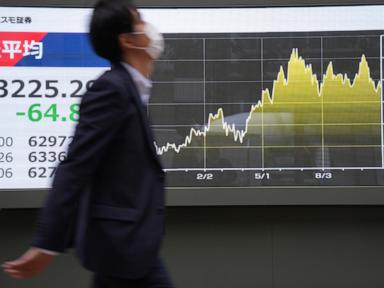
The fluorescent lights in the Yokohama shipping office hum at a frequency that rattles your teeth if you sit beneath them too long. It is four in the morning in Tokyo, which means it is two in the afternoon on Wall Street, and somewhere in the middle of the Strait of Hormuz, a supertanker loaded with two million barrels of crude oil is adjusting its throttle by half a knot.
Nobody at the bus stop outside your house knows the captain's name. They do not know that the Nikkei just stuttered while the Hang Seng crept upward, or that S&P 500 futures are quietly flashing green before New York has even finished its lunch. They are just checking their phones, squinting at the weather, and wondering why a carton of eggs still costs twice what it did four years ago. Meanwhile, you can explore other developments here: The Quiet Chokehold of Modern Manufacturing (And Why We Never Saw It Coming).
Yet those flickering numbers on trading desks in Tokyo, Hong Kong, New York, and London are not abstract weather reports from a distant planet. They are the real-time pulse of a quiet, global tug-of-war over the price of everything you touch. When Asian shares split down the middle, US futures edge higher, and oil prices retreat, the financial press writes a three-sentence wire brief and moves on. They treat it like a box score from a game nobody watched.
They are missing the actual story. To see the full picture, we recommend the excellent report by The Wall Street Journal.
To understand what a "mixed" session in Asia paired with climbing American futures and falling crude really means, you have to step out of the spreadsheet and look at the friction between fear and appetite. Financial markets are not calculators. They are giant, caffeinated crowds trying to guess what the person next to them is about to panic over.
The Anatomy of a Split Screen
Consider a hypothetical trader named Kenji sitting in an office tower overlooking Tokyo Bay. Let us use him as a lens to see what happens when the opening bell rings across the Pacific. Kenji manages pension money—teachers' retirements, hospital endowments, the slow-growing savings of people who will never read a balance sheet. His job is not to get rich overnight. His job is not to lose the principal.
When Kenji looks at his monitors during a session where Asian shares are mixed, he is watching two contradictory stories collide in real time.
On one screen, exporters in Tokyo and Seoul are nervously watching currency exchange rates and consumer demand in the West. If American shoppers are finally pulling back after years of absorbing higher interest rates, the factories in Shenzhen, Busan, and Nagoya feel the chill first. That anxiety pushes one half of the Asian market into the red. You see it in semiconductor stocks taking a breather or shipping conglomerates trading sideways.
On the adjacent screen, however, local stimulus measures, domestic tech rebounds, or bargain hunters stepping into beaten-down Hong Kong equities pull the other half of the board into positive territory. The result is that famously unhelpful headline—Asian shares are mixed.
Mixed does not mean calm. Mixed means disagreement. It means half the room thinks the global economy is catching a cold, and the other half thinks the fever has finally broken.
I remember sitting at a similar desk during the autumn of 2018, watching that exact divergence play out on a Tuesday morning. My palms were sweating so badly I kept a folded paper towel under my mouse hand. Every instinct screamed to pick a side—either buy the dip or sell everything into cash—because the human brain hates ambiguity far more than it hates bad news. Ambiguity feels like walking across a frozen lake at night when you can hear the ice creaking beneath your boots, unable to tell if it is settling or cracking. That is what a mixed Asian session actually feels like from the inside. Indecision with billions of dollars on the line.
Why Wall Street Smiles While Asia Hesitates
Then the sun moves west, and the mood shifts.
While Asian markets are busy arguing with themselves, US futures advance. To understand why New York looks optimistic when Tokyo looks hesitant, think of the global economy as a long freight train rounding a mountain curve. The locomotive—the United States consumer and American corporate earnings—is already emerging into the sunlight on the straightaway, while the middle cars in East Asia are still rumbling through the dark tunnel of higher borrowing costs and uneven post-pandemic recoveries.
Futures contracts are simply bets on where the American stock market will open hours later. When those futures tick upward, traders are pricing in resilience. Maybe inflation data cooled by a tenth of a percent. Maybe a major software giant reported that companies are still spending heavily on cloud infrastructure despite every recession warning printed over the last twenty-four months.
Here is the trick that catches most everyday investors off guard. Wall Street does not need the world to be perfect in order to rally. It only needs things to be slightly less terrible than people feared yesterday.
If investors spent all week bracing for an economic cliff, and the data merely shows a gentle slope, relief floods the trading floor like oxygen into a stuffy room. Algorithms detect the shift in momentum within milliseconds. Pension funds rebalance. Retail traders see green arrows on their apps before breakfast and decide the coast is clear.
Wait. Look closer at the third piece of the puzzle, because without it, the whole picture falls apart.
The Silent Relief of Retreating Oil
Oil prices retreat.
Four words. Easy to skim past. Almost boring until you realize that crude oil is the invisible tax baked into every physical object in modern civilization.
Think about the coffee cup on your desk. The cardboard sleeve came from timber hauled by diesel trucks. The plastic lid was synthesized from petroleum byproducts. The beans crossed an ocean in a bunker-fuel container ship, were roasted using natural gas, and were driven to the café in a delivery van. When crude oil surges by ten dollars a barrel, it acts like a giant hand clamping down on the windpipe of the global economy. Airlines raise ticket prices. Chemical manufacturers slash profit forecasts. Central bankers panic that inflation is roaring back to life, which forces them to keep interest rates painfully high.
Conversely, when oil prices retreat, the entire system exhales.
Why does oil drop on a day when US stock futures are rising? Usually, it comes down to one of two forces, and both tell a fascinating story about supply and demand.
Sometimes, oil retreats because traders look at those mixed Asian markets—specifically sluggish industrial output or softer manufacturing numbers from major importers—and conclude that factories will burn less fuel over the next quarter. Lower expected demand pushes crude prices down.
Other times, oil falls because supply is quietly swelling. Producers outside the traditional cartels pump more than expected, or geopolitical tensions that threatened shipping lanes fail to escalate over the weekend. The "fear premium"—that extra five or eight dollars tacked onto every barrel just in case a pipeline gets hit or a strait gets blocked—evaporates overnight.
For an airline executive in Chicago or a logistics manager in Rotterdam, a retreat in crude prices is an immediate raise. Fuel is often their largest variable expense. Every dollar drop in Brent or West Texas Intermediate crude flows straight toward corporate profit margins, which—surprise—is another reason why US stock futures start climbing the moment oil slips lower.
It is a closed loop. Falling energy costs cool inflation fears. Cooler inflation fears keep central banks from raising interest rates. Stable interest rates make future corporate profits worth more today. And higher expected profits push American equity futures into the green.
The Trap of the Daily Scoreboard
If you have ever checked your retirement account on a morning like this, felt a sudden rush of relief, and immediately wondered whether you should move your savings around, pause for a second.
We are wired to look for narratives in noise. Thousands of years ago, if the bushes rustled on the savannah, the ancestor who assumed it was a predator survived, while the ancestor who dismissed it as random wind occasionally got eaten. Modern financial media hijacks that exact survival instinct. Every minor fluctuation in Tokyo, every half-percent drift in crude oil, gets packaged as an urgent signal requiring your attention.
It rarely is.
Let us take a hypothetical family—say, Maya and David, a nurse and a high school teacher in Ohio trying to fund a college account for their ten-year-old daughter while paying down a mortgage. On a day when Asian shares are mixed, US futures advance, and oil prices retreat, nothing about Maya's hospital shift changes. David's lesson plan on the American Civil War remains identical.
Yet if David opens his brokerage app between third and fourth period, sees green futures and falling oil, and decides to dump their conservative bond allocation into high-flying tech stocks because "the rally is back on," he is falling into the oldest trap on Wall Street. He is mistaking a single weather report for climate change.
Financial history is littered with mornings that started with advancing US futures and retreating oil, only to reverse violently by two in the afternoon when a Federal Reserve governor made an offhand remark at a luncheon in Washington, or a sudden cold snap hit European gas reserves.
Markets move in probabilities, not promises. A mixed session in Asia tells you that global growth is uneven—some engines are firing, others are sputtering. Advancing US futures tell you that American corporate earnings and domestic spending remain the primary shock absorbers for the world economy. Retreating oil tells you that energy bottlenecks are easing, giving consumers and businesses a small pocket of breathing room at the gas pump and the loading dock.
Taken together, those three signals paint a portrait of an economy that is neither booming recklessly nor collapsing into crisis. It is muddling through.
"Muddling through" will never sell newspapers. Nobody clicks on a headline that reads Global Economy Continues Slowly Adjusting to Post-Inflation Reality While Traders Minorly Rebalance Portfolios. Editors need motion. They need tension. So we get the breathless ticker tape of what went up, what went down, and what stayed mixed.
What Actually Matters Beneath the Surface
Once you strip away the daily theater, how do you actually use this kind of market snapshot without letting it hijack your blood pressure?
You watch the correlations, not the individual ticks.
In healthy, functioning markets, assets act as natural counterweights to one another. When energy prices retreat, consumer-facing stocks and transportation companies get a tailwind. When one region of the world slows down, capital flows toward regions showing stronger earnings growth, which is why international diversification exists in the first place. If Kenji in Tokyo has a rough morning because domestic manufacturing is soft, his exposure to American equities or global healthcare helps steady the ship.
The danger only arrives when everything falls together—when stocks plunge, bonds sell off, and oil spikes simultaneously. That is the signature of genuine systemic stress, the kind of stagflationary nightmare we saw glimpses of in 2022 when inflation raged and central banks slammed on the monetary brakes.
A morning where Asian markets are split, US futures are higher, and oil is lower is the exact opposite of systemic panic. It is normal friction. It is the sound of millions of buyers and sellers doing their jobs—price discovery in real time, sorting winners from losers, rewarding efficiency, and punishing excess.
I still catch myself staring at the pre-market futures at six in the morning while waiting for the kettle to boil. Old habits die hard. You look at the green triangles next to the S&P 500, glance at the red minus sign next to crude oil, and feel that familiar itch to predict what comes next.
Then the kettle whistles. You pour the water over the grounds, watch the dark bloom rise to the top of the filter, and remember that the real economy is not happening on a glowing screen in Lower Manhattan or a trading floor in Marunouchi.
It is happening on a container ship easing its speed in the Persian Gulf to save fuel. It is happening in a factory outside Osaka deciding whether to add a second shift next month. It is happening in millions of kitchens where people are simply trying to build a life a little bit steadier than the day before—completely unaware of the invisible tide quietly shifting the price of their morning cup.