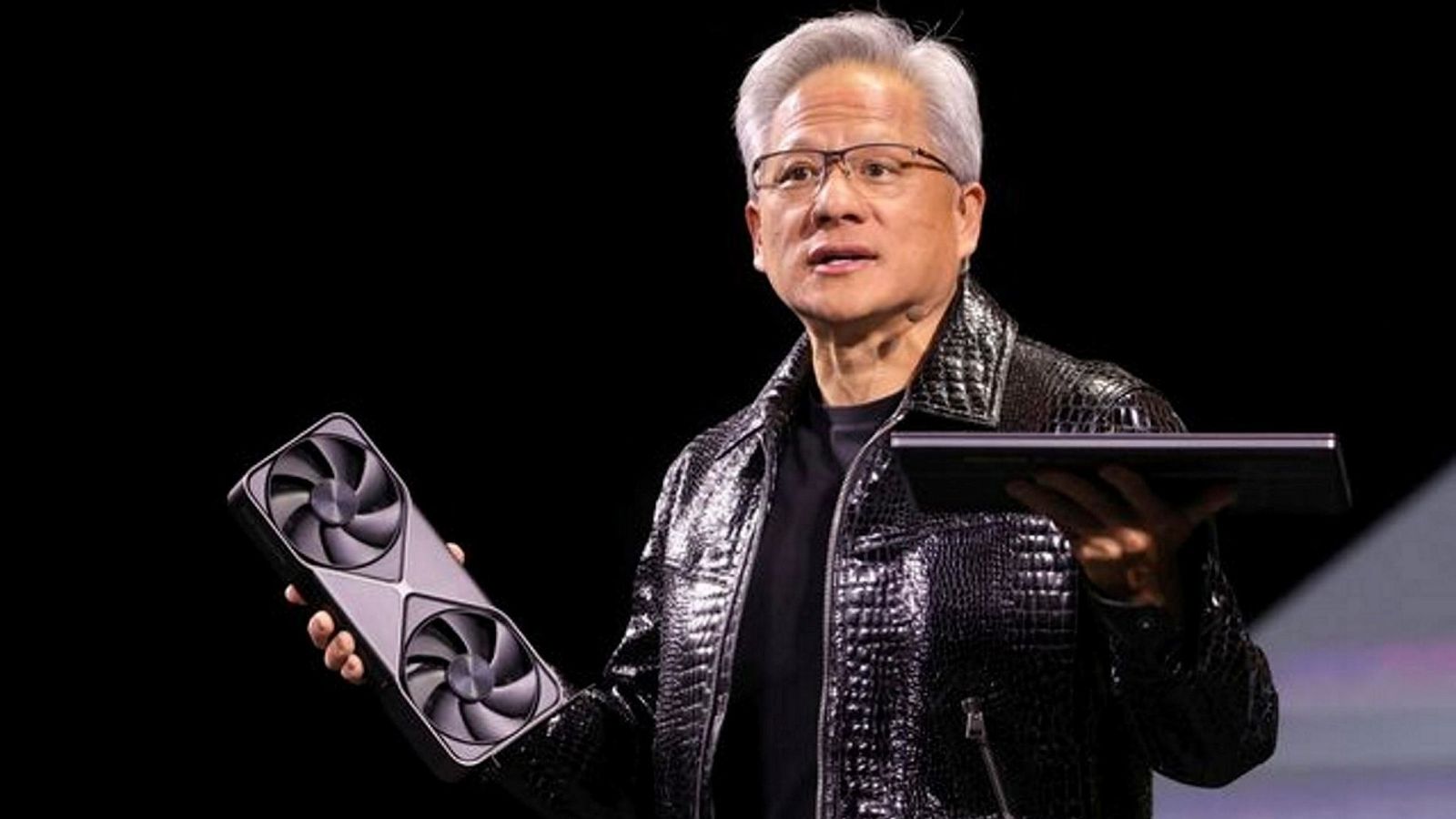
Silence.
That is the first thing you notice when a multi-trillion-dollar empire suddenly loses its center of gravity, not the shouting of lawyers or the frantic clicking of reporters' keyboards, just a heavy, suffocating quiet that settles over open-plan offices and late-night Slack channels alike. For three decades, Jensen Huang was not merely the chief executive of Nvidia; he was the leather-jacketed architect of the modern computing era, a man whose sheer force of will had transformed a niche graphics-card maker into the indispensable engine of artificial intelligence. Then came the fracture. According to reports surfacing from inside the company's inner circle, the ouster that shocked Wall Street was not triggered by a single lapse in judgment, nor a sudden strategic blunder, but by revelations of a second workplace affair involving an employee—a pattern of crossed boundaries that finally forced a reluctant board of directors to choose between the myth of the indispensable founder and the survival of corporate governance. Meanwhile, you can read related stories here: The Governance Failure Behind Jensen Huang's Resignation and Reinstatement.
To understand why this hurts so deeply, you have to step away from the stock tickers and look at the human architecture of Silicon Valley. We do not just buy products from tech giants anymore. We buy into their mythology. We convince ourselves that the person standing under the stage lights, explaining the future of silicon and neural networks with effortless charisma, is somehow exempt from the messy, fragile gravity that pulls ordinary people off course.
The Architecture of Untouchability
Consider a hypothetical scenario that plays out in glass-walled boardrooms across Northern California every single year. Imagine an engineer—let us call her Maya—who joined the company seven years ago, back when graphics processors were mostly prized by gamers and academic researchers. Maya poured her twenties into long nights debugging thermal throttling issues, missing family dinners, and believing the unspoken pact of high-growth tech: Work harder than anyone else, trust the leadership, and your merit will speak for itself. To see the full picture, we recommend the detailed report by Bloomberg.
Now introduce the invisible distortion field that forms when a chief executive becomes larger than the institution itself.
When the leader of a company worth trillions of dollars enters a romantic relationship with a subordinate, the dynamic does not stay neatly tucked inside two private lives. Power is like gravity; the heavier the object, the more it bends everything passing near it. Even if no explicit threats are made, even if every conversation feels consensual in the fluorescent glow of a late-night campus café, the surrounding ecosystem warps. Promotions suddenly look suspect to the engineers sitting three desks away. Project approvals carry the faint, sour aftertaste of favoritism. People stop speaking candidly in meetings because nobody is quite sure where the chain of command ends and personal loyalty begins.
I have sat in rooms where that exact realization sets in, and the feeling is unmistakable. It is the cold, hollow sensation of realizing the rules printed in the employee handbook are merely suggestions for people without enough stock options. You watch bright, ambitious colleagues quietly update their resumes—not out of moral outrage, necessarily, but out of sheer exhaustion from trying to navigate a minefield where the map keeps changing in secret.
When One Becomes Two
In corporate crisis management, a single undisclosed relationship is almost always treated as an anomaly—a painful, embarrassing deviation from an otherwise spotless record. Boards of directors, particularly boards stacked with longtime allies who have watched their own net worth multiply alongside the founder's vision, are wired to forgive an anomaly. They draft sternly worded reprimands. They mandate executive coaching. They hire outside counsel to wall off reporting lines, praying the story never leaks to the financial press.
A second relationship changes the geometry entirely.
It transforms an isolated mistake into an operational liability. In legal and governance terms, the discovery of a second employee affair strips away the defense of momentary human frailty and replaces it with a far more dangerous question: What else do we not know? When sources close to the investigation revealed that Huang had engaged in a second relationship with an employee, the board was no longer weighing a personal indiscretion against the financial risk of removing a visionary leader. They were staring down the barrel of systemic fiduciary exposure.
Think of a skyscraper built on a fault line. Engineers can reinforce the steel frame to survive one unexpected tremor. They can patch the drywall, recalibrate the elevators, and assure the tenants that the structure remains sound. But when a second tremor hits along the exact same fracture, the problem is no longer the earthquake. The problem is the foundation.
For institutional investors holding billions of dollars in pension funds and index trackers, governance is not an abstract virtue. It is insurance against catastrophic surprise. If a chief executive repeatedly violates basic boundaries around workplace relationships, institutional shareholders are forced to ask whether that same disregard for guardrails extends to financial disclosures, regulatory compliance, or succession planning. Once that doubt enters the bloodstream of Wall Street, no amount of technological dominance can fully neutralize it.
The Human Toll Inside the Machine
The public conversation around high-profile executive ousters almost always obsesses over the titans at the top—their golden parachutes, their tarnished legacies, the immediate dip in share price during after-hours trading. We rarely linger on the people caught in the blast radius who never asked to be part of a cautionary tale.
For the employees involved in relationships with a sitting CEO, the aftermath is brutal and deeply asymmetric. Regardless of how a relationship begins, the subordinate almost always absorbs the heaviest professional fallout. Their hard-won technical achievements are instantly reduced to whispered gossip in hallways and anonymous posts on industry forums. If they stay at the company, every future success is tainted by skepticism; if they leave, their departure is dissected by recruiters who read the headlines just like everyone else.
Meanwhile, tens of thousands of rank-and-file workers wake up to push notifications informing them that the leader they trusted to steer their livelihoods has been forced out under a cloud of scandal.
Consider what happens next inside a company defined by relentless execution. Projects freeze. Crucial product roadmaps stall while interim executives scramble to reassure major cloud customers that the next generation of hardware will still ship on schedule. Rivals smell blood in the water and immediately begin poaching top researchers, offering stability and signing bonuses to engineers who suddenly feel unmoored. The very culture of urgency and total commitment that built the empire turns inward, curdles into cynicism, and slows the machine from the inside out.
Why Silicon Valley Keeps Repeating This Script
If this feels painfully familiar, it is because we have watched this exact tragedy unfold across the technology sector with numbing regularity. From Brian Krzanich at Intel to Steve Easterbrook at McDonald's, the corporate graveyard is crowded with executives who believed their extraordinary performance had earned them immunity from ordinary rules.
Historically, Silicon Valley has suffered from a specific blindness known as founder worship. Unlike traditional industries where executives are viewed as temporary stewards of an enduring institution, tech culture treats founders as quasi-religious figures—irreplaceable geniuses whose eccentricities and boundary-pushing behavior are framed as the very source of their brilliance. Investors actively encourage this myth because, for a long time, it prints money. Boards look the other way when warning signs flicker, terrified that enforcing standard corporate discipline might break the magic spell driving exponential growth.
Yet behavioral research into power dynamics shows a remarkably consistent pattern: unchecked authority gradually erodes empathy and risk perception. Neuroscientists have even documented how prolonged experiences of high power alter the way individuals process social cues, making them simultaneously more confident in their own judgment and less sensitive to how their actions affect people lower in the hierarchy. In plain terms, the longer someone sits at the absolute summit without anyone telling them no, the harder it becomes for them to see where their personal desires end and their institutional responsibilities begin.
It is terrifyingly easy to judge from the outside, yet honest self-reflection demands admitting how seductive that environment must be. When every room you enter falls silent in deference, when every joke you tell draws immediate laughter, when armies of brilliant people organize their lives around your calendar, the normal friction of human accountability simply evaporates. Without deliberate, uncompromising checks built into the structure around a leader, human nature almost inevitably drifts toward overreach.
Rebuilding Trust When the Lights Come Back On
So how does an institution survive the sudden removal of the person everyone assumed was indispensable?
Not with a press release. Not with a glossy values statement pinned to the company intranet.
Real recovery begins when a board proves that no single individual—no matter how brilliant, no matter how central to the company's origin story—stands above the rules that protect everyone else. By acting on the evidence of a second relationship rather than burying it to protect short-term stock stability, directors send an unmistakable signal to every engineer, manager, and shareholder watching from the sidelines: The institution is bigger than the ego at the top.
From there, the work becomes fiercely practical. Boards must dismantle the informal backchannels that allow unchecked power to flourish in the first place. Independent reporting mechanisms must go straight to outside counsel rather than filtering through executives loyal to the CEO. Succession planning has to stop being a theoretical binder gathering dust in a legal filing cabinet and become a living, transparent bench of leaders capable of carrying the vision forward without relying on a single personality cult.
Most importantly, companies have to relearn a truth that booming bull markets make dangerously easy to forget: brilliance is not a substitute for character, and extraordinary returns do not erase ordinary obligations.
Walk past any towering tech campus at dusk, long after the commuter shuttles have pulled away and the parking garages have emptied. Inside, a handful of security lights still glow against the glass, illuminating empty desks, half-erased whiteboards, and badges left dangling beside monitors. The machines will keep humming through the night, indifferent to who occupies the corner office, waiting for morning when thousands of ordinary, uncelebrated people walk back through the doors to build the future all over again.