Silence.
In a war zone, silence is never merely the absence of noise; it is a physical weight that presses against your eardrums until you realize how tightly your jaw has been clenched for months, a sudden vacuum where the low, rhythmic thud of outgoing artillery used to live. When the guns finally fell quiet around Oleshky—a small, sand-rimmed town sitting on the Russian-occupied left bank of the Dnipro River, just across the water from Kherson—nobody popped champagne. Nobody danced in the rubble. Instead, people stepped out of damp basements, blinked against the pale winter light, and listened to the wind moving through shattered pine trees.
That local pause in the fighting around Oleshky did not arrive through a grand treaty signed under crystal chandeliers in Geneva. It happened because the war had ground down to an unbearable friction point, and because quiet, localized diplomacy managed to pry open a narrow window of calm. Now, that single, fragile pause has sparked a much larger, fiercely debated question echoing from Washington to Kyiv.
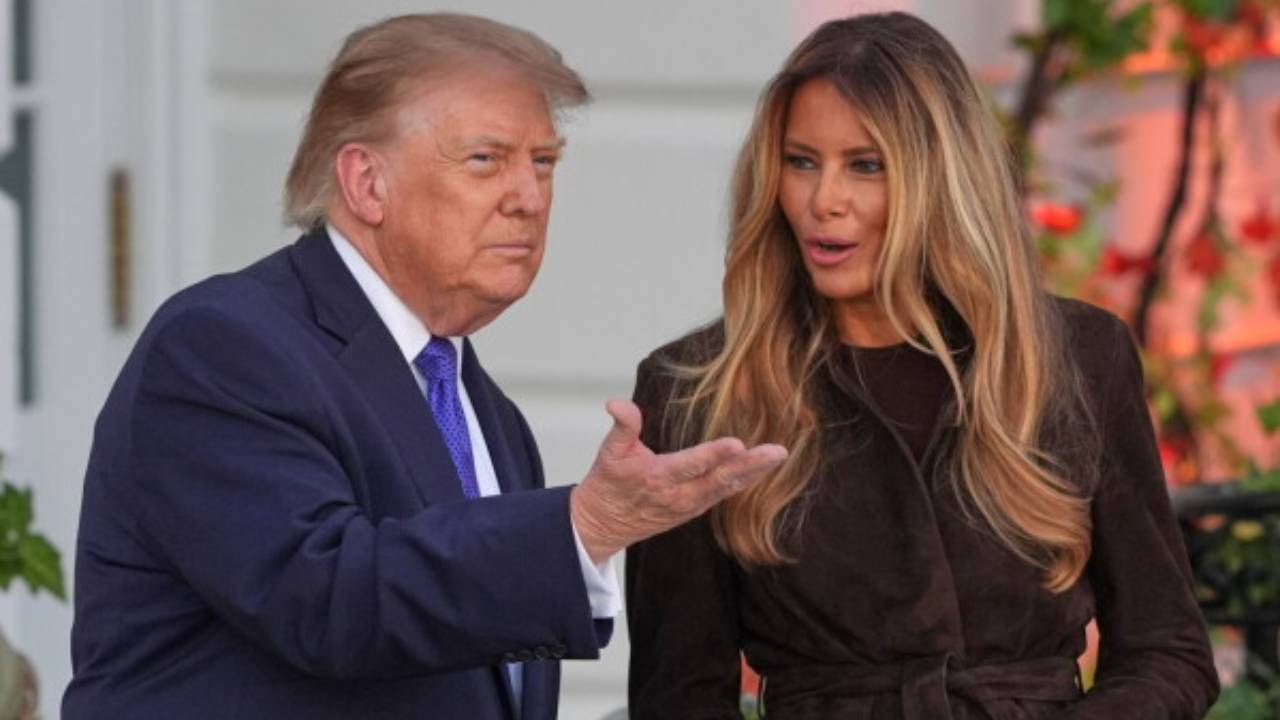
First Lady Melania Trump, stepping into a role that has surprised even seasoned diplomatic observers, is publicly pushing for more localized ceasefires across Ukraine before Christmas. According to her recent statements and public advocacy, the temporary halt in Oleshky proves that targeted, humanitarian pauses are not only possible, they are a moral necessity as winter tightens its grip on millions of civilians. Her message is simple, emotional, and direct: if the guns can stop in one battered river town so families can breathe, bury their dead, and repair shattered roofs, they can stop in others before the holiday season arrives.
In Kyiv, President Volodymyr Zelenskyy’s reaction has been measured, cautious, and heavy with the hard-won skepticism of a wartime leader. While acknowledging any effort that spares Ukrainian lives and relieves immediate civilian suffering, Zelenskyy and his administration have repeatedly emphasized a core strategic reality: a pause on the front lines is not peace, and history has taught Ukraine to look closely at what happens in the dark while the guns are silent.
To understand why a call for Christmas ceasefires feels like a lifeline to some and a trap to others, you have to step away from the podiums and walk down into the frost.
The Anatomy of a River Town
Consider a hypothetical family living just a few kilometers from the Dnipro River—let’s call them Olena and her twelve-year-old son, Maksym. Nothing about their names is pulled from an official press release, yet their reality mirrors thousands of documented accounts from the Kherson and Oleshky sectors.
For Olena, winter is not a season on a calendar; it is an opponent. When a shell takes out a substation, the apartment doesn't just go dark. Within six hours, the radiator turns from lukewarm to iron-cold. Within twelve hours, breath hangs in the air inside the living room. By day two, you are melting snow on a camping stove to flush a toilet while listening to the high-pitched whine of reconnaissance drones overhead.
When a localized ceasefire takes hold in a place like Oleshky, the immediate impact is intensely practical. Repair crews in high-visibility vests can finally climb utility poles without becoming targets for snipers or loitering munitions. Aid trucks carrying generators, insulin, and thermal blankets can cross broken roads without drivers having to floor the accelerator through an artillery corridor. Families separated by a river that is less than a kilometer wide—yet feels as impassable as an ocean—get a fleeting chance to confirm who is still alive.
Melania Trump’s push for expanding this model before Christmas taps directly into this human urgency. Diplomatic analysts note that her approach bypasses the paralyzing complexity of territorial negotiations, sovereignty disputes, and long-term security guarantees. Instead, it treats peace not as a single giant arch that must be raised all at once, but as a series of small stepping stones laid across a freezing river.
If you cannot stop the whole war by December 25, her argument goes, stop it in five towns. Stop it around three power plants. Stop it along four humanitarian corridors. Let mothers cook a warm meal without listening for the whistle of incoming mortar fire.
Why Kyiv Looks at the Clock
Yet when Volodymyr Zelenskyy hears the word ceasefire, he does not hear a Christmas carol. He hears a ticking clock.
Ukraine’s leadership operates under a brutal, unforgiving arithmetic. According to military historians and defense officials in Kyiv, localized ceasefires carry an invisible cost that rarely shows up in humanitarian headlines: time. In modern trench and drone warfare, time is ammunition.
Think of a localized truce like a timeout called in the fourth quarter of a grueling match when one team has a deeper bench. While civilians are gathering firewood and patching broken windows during a seven-day pause, military engineers behind the lines are not resting. They are pouring concrete into new dragon’s-teeth anti-tank barriers. They are laying fresh belts of anti-personnel mines across fields that were cleared weeks ago. They are rotating exhausted infantry brigades, repairing damaged armored vehicles, and stockpiling thousands of first-person-view drones in underground bunkers.
Zelenskyy’s cautious response reflects the bitter memory of the Minsk agreements in 2014 and 2015. Back then, European brokers also pushed for localized ceasefires, Christmas truces, and harvest pauses in eastern Ukraine. On paper, those agreements promised stability. In practice, Ukrainian officials and independent monitors from the Organization for Security and Co-operation in Europe documented thousands of violations, while front lines hardened into permanent scars that eventually served as staging grounds for the full-scale invasion in 2022.
In his public remarks responding to the Oleshky pause and Melania Trump’s call for broader pre-Christmas truces, Zelenskyy walked a razor-thin diplomatic line. He cannot afford to appear indifferent to humanitarian relief, nor can he alienate key figures in Washington whose influence shapes American foreign policy. At the same time, he has insisted that any ceasefire—even a temporary, localized one—must include strict, verifiable monitoring mechanisms and cannot serve as a backdoor way to freeze Russian territorial control in place.
The Ghost of 1914 and the Reality of Modern War
Whenever leaders invoke Christmas and ceasefires in the same breath, the collective imagination drifts backward to December 1914. We picture British and German soldiers climbing out of muddy trenches in Flanders, trading cigarettes, singing Stille Nacht, and kicking a makeshift soccer ball across No Man’s Land.
It is a comforting story. It is also a dangerous illusion when applied to a twenty-first-century conflict.
In 1914, war was still intimate enough that men could shout across a hundred yards of mud and hear each other’s voices. Today, the person piloting the drone that drops a grenade onto a trench in southern Ukraine might be sitting in a darkened basement ten miles away, staring at a high-definition screen, guided by thermal optics and satellite links. There is no eye contact. There is no shared cigarette in the frost.
I remember standing near a winter checkpoint in eastern Europe years ago, watching an elderly man try to push a bicycle loaded with two sacks of potatoes through slush that came up to his ankles. A young soldier stood twenty feet away, rifle slung across his chest, shivering inside a coat that was too thin for the wind. Neither of them looked like a geopolitical actor. Neither of them cared about summit communiqués or strategic leverage. They both just looked cold, tired, and profoundly trapped by decisions made in rooms they would never enter.
That is the emotional core of this debate, and it is why the clash between Melania Trump’s humanitarian push and Volodymyr Zelenskyy’s strategic caution feels so wrenching. Both positions are rooted in undeniable truths.
It is true that civilians in Oleshky, Kherson, Zaporizhzhia, and Donetsk are enduring a winter of deprivation that tests the limits of human resilience. A week without shelling can literally mean the difference between a grandmother surviving pneumonia or freezing in an unheated flat. When Melania Trump advocates for pre-Christmas ceasefires, she is speaking the language of immediate mercy—a language that resonates deeply with millions of people around the world who look at the war and simply want the bleeding to stop, even for a few days.
It is equally true that mercy without enforcement in a war zone can quickly turn into a mirage. Without independent observers on the ground, without clear consequences for breaking the truce, and without a broader political framework, a localized ceasefire risks becoming an asymmetric trap—where the side that obeys the rules loses ground, and the side that bends them gains an advantage.
What Happens in the Quiet
Consider what happens next if Washington, Kyiv, and Moscow actually attempt to replicate the Oleshky pause across other sectors before Christmas.
First comes the question of geography. Which towns get chosen? Every kilometer of the thousand-kilometer front line has a different tactical value. A pause around a civilian transit hub looks very different from a pause near a contested railway junction or a logistics highway. If negotiators spend three weeks arguing over which villages qualify for a Christmas truce, the holiday will pass while the artillery keeps firing.
Second comes the question of verification. Who stands in the snow between two hostile armies to confirm who fired the first shot if a mortar shell lands at 2:00 AM? International monitoring missions require weeks of mandate negotiations, security clearances, and armored logistics. In the absence of neutral eyes, every local ceasefire becomes a battle of competing narratives, where each side accuses the other of breaking the silence while civilians dive back into their cellars.
And third—perhaps most unsettling of all—is the psychological toll of false hope.
Anyone who has lived under bombardment knows that the hardest moment is not the tenth day of continuous shelling; it is the first shell that falls after three days of quiet. During a truce, your nervous system begins to uncoil. You let your child sleep in their own bed instead of on a mattress in the hallway. You boil water on the stove without keeping your boots laced by the door. When a temporary ceasefire collapses without a lasting settlement behind it, the return of the sirens feels twice as loud, and the dark feels twice as heavy.
Zelenskyy knows this psychological fragility intimately. His reluctance to embrace unconditioned holiday pauses is not coldness; it is the calculation of a leader who has watched his country absorb wave after wave of broken promises. He is trying to protect his nation not just from losing territory, but from the slow exhaustion of perpetual, unresolved limbo.
Meanwhile, Melania Trump’s intervention signals a subtle shift in how the war is being framed inside American political circles. By focusing on localized, seasonal pauses rather than sweeping grand bargains, she has placed a spotlight on incremental humanitarian diplomacy—an approach that is harder to dismiss outright, even by skeptics, because its stated goal is simply keeping families alive through the holidays.
Beneath the Pine Trees
Back along the banks of the Dnipro, the winter fog rolls off the water every evening, blurring the line between the left bank and the right until the river disappears altogether.
In Oleshky, the people who stepped out of their basements during the ceasefire did not ask whether the quiet was a diplomatic breakthrough or a tactical pause. They checked on elderly neighbors. They swept broken glass off concrete steps. They boiled tea over small flames and listened to the rare, astonishing sound of a dog barking in the distance without an explosion drowning it out.
Whether that fragile quiet spreads to other towns before Christmas, or remains an isolated island of calm in a relentless winter war, depends on whether leaders in distant capitals can solve a riddle as old as warfare itself: how to stop the killing today without guaranteeing a deadlier tomorrow.
For now, along a frozen river in southern Ukraine, people keep their winter coats within arm’s reach by the door, listening to the silence, wondering how long it will hold.