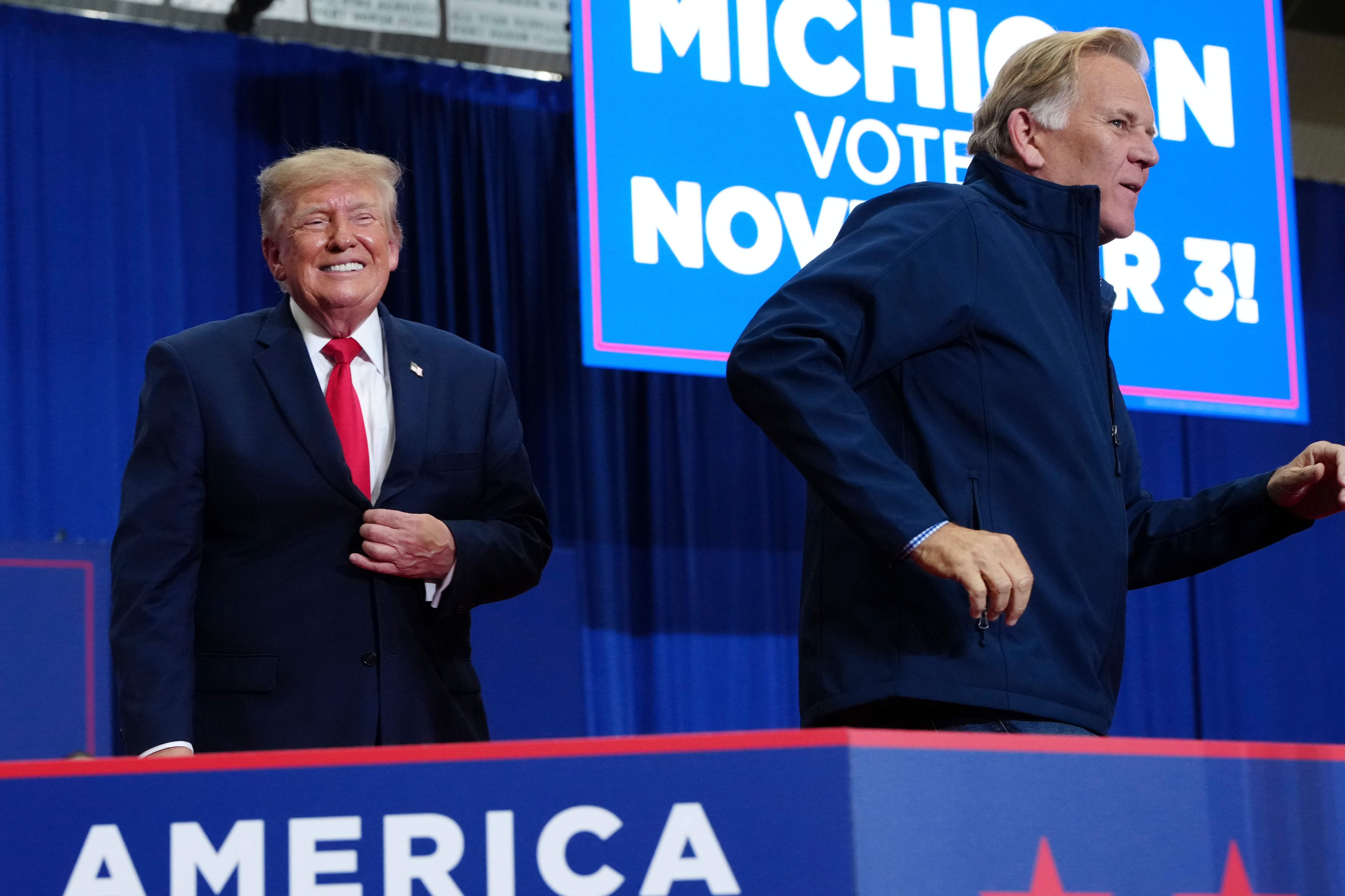
Everyone in North American logistics is currently holding their breath over a rally soundbite. According to reports covering President Donald Trump's recent campaign remarks, the trade dispute with Canada could wrap up "pretty soon." Mainstream business outlets are treating this potential truce like a magic switch that will instantly restore supply chains, drop consumer prices, and return cross-border commerce to normal.
That consensus is dangerously naive.
If you operate a manufacturing plant in Ohio, run a freight brokerage in Ontario, or manage procurement for a mid-sized retailer, treating a political rally speech as a business strategy will cost you millions. A signature on a piece of paper in Washington or Ottawa does not erase structural supply chain shifts, un-bake retaliatory tariffs from corporate pricing models, or solve the underlying economic friction between the two countries.
The real story isn't whether the trade war ends next month or next year. The real story is that the pre-dispute North American economy is permanently dead, and the companies waiting for a return to the old status quo are already losing market share to competitors who adapted to permanent volatility.
The Myth of the Instant Tariff Rollback
When politicians talk about ending a trade dispute, the public hears "prices go down tomorrow." Anyone who has actually managed a bill of materials knows that tariffs are a ratchet, not a light switch. They click up easily, and they rarely click back down at the same speed.
I've watched mid-market manufacturers spend eighteen months and seven-figure consulting budgets just to re-route steel and aluminum sourcing when duties hit. Once a procurement team qualifies a new domestic vendor or shifts tooling to Mexico to bypass a 25% border tax, they do not rip up those contracts because a politician makes an optimistic remark at a podium. Switching costs are brutal. Re-qualifying a Tier-1 automotive supplier takes months of rigorous testing and quality assurance.
Furthermore, corporate pricing power rarely moves in reverse. When importers absorb a tariff, they raise wholesale prices to protect their margins. When that tariff is eventually lifted, those same wholesalers face zero immediate pressure to slash their prices unless a competitor forces their hand. Instead, they quietly pocket the tariff relief as margin expansion to offset the losses they took during the peak of the dispute.
What the Mainstream Coverage Completely Misses
Standard financial journalism loves a horse race. Who is winning the negotiation? Who blinked first? Which politician looked stronger at the podium? This framing obscures the actual mechanics of North American trade.
To understand why a diplomatic handshake won't fix the border, you have to look at three structural realities that exist completely independent of rally rhetoric:
- The USMCA Review Clock is Ticking: The United States-Mexico-Canada Agreement (USMCA) isn't a permanent treaty; it includes a mandatory joint review mechanism scheduled for 2026. Even if immediate bilateral tariffs are paused or lifted, every major institutional investor and supply chain executive knows the entire rulebook is up for renegotiation. Uncertainty isn't a temporary weather pattern anymore; it is the climate.
- Rules of Origin Are Getting Tighter, Not Looser: Regardless of who sits in the Oval Office or Parliament Hill, both Washington and Ottawa are aggressively moving toward industrial protectionism. Strict Rules of Origin—which dictate what percentage of a product must be manufactured within North America to qualify for duty-free status—are increasingly used as a weapon to block third-party components, particularly from Asia. You can end a headline "trade war" while simultaneously making border compliance twice as expensive through customs audits and origin tracing.
- The Currency Buffer Distortion: Exchange rate fluctuations between the US dollar and the Canadian dollar routinely swing by 10% to 15% over a few quarters. A weaker Canadian dollar naturally subsidizes Canadian exports into the US, acting as a de facto offset to American tariffs while simultaneously making American goods more expensive for Canadian buyers. A diplomatic truce does nothing to fix currency divergence driven by differing central bank interest rate paths between the Federal Reserve and the Bank of Canada.
Dismantling the "People Also Ask" Fallacies
When border tensions flare up, search engines flood with the same predictable questions from business owners and consumers. Most of these questions are built on flawed premises.
Will ending the trade war immediately lower inflation?
No. Goods inflation is driven by far more than import duties. Labor shortages in freight, warehouse real estate costs, energy prices, and global shipping container rates carry vastly more weight in the final retail price of a product than a bilateral tariff dispute. Expecting a US-Canada trade deal to noticeably drop your grocery or hardware bill is wishful thinking. At best, it prevents future price spikes in specific sectors like lumber, dairy, aluminum, and auto parts.
Who actually pays for US-Canada tariffs?
The political talking point is that foreign exporters pay the tariff. The textbook economic counter-argument is that domestic consumers pay 100% of it. Both are oversimplifications. Empirical trade data from the National Bureau of Economic Research (NBER) and the Federal Reserve Bank of New York consistently shows that the incidence of a tariff is split across the chain depending on price elasticity. For commoditized goods with thin margins—like softwood lumber or raw agricultural products—foreign producers often have to discount their pre-tariff prices just to keep shelf space, eating part of the cost. For specialized industrial components with few substitutes, the American importer and end consumer absorb nearly the entire hit.
Should businesses pause capital expenditure until the dispute is resolved?
Waiting for political clarity is the fastest way to kill a growing company. If you freeze hiring, delay warehouse expansion, or hold off on automation because you are waiting to see how trade talks go, you are letting politicians dictate your operational tempo. By the time a formal agreement is signed, ratified, and implemented by customs agencies, your aggressive competitors have already locked up the best logistics capacity and vendor terms.
The Structural Vulnerability of Integrated Supply Chains
The reason US-Canada trade friction causes so much panic isn't the volume of trade—it's the nature of it. The US doesn't just buy finished goods from Canada, and Canada doesn't just buy finished goods from the US. The two economies build things together, piece by piece, crossing the Ambassador Bridge or the Peace Bridge multiple times before a product is ever sold.
Consider a standard North American vehicle transmission. Raw aluminum might be smelted in Quebec using cheap hydroelectric power, shipped to Michigan to be cast into an engine block, sent back to Ontario for precision machining, and finally shipped to an assembly plant in Ohio or Kentucky.
| Trade Model | Primary Vulnerability | Impact of Border Friction |
|---|---|---|
| Traditional Bilateral Trade (e.g., US-China) | Finished goods delayed at ports; single-point tariff hit. | Importers shift sourcing to Vietnam, India, or Mexico. |
| Integrated Co-Production (US-Canada) | Intermediate components taxed multiple times across borders. | Compounding costs destroy unit economics; reshoring takes years. |
When you disrupt a co-production pipeline, you don't just add a tax; you break the rhythm of just-in-time manufacturing. Even a temporary threat of border slowdowns forces companies to abandon lean inventory models and revert to "just-in-case" warehousing. Once a CFO approves the capital to build safety stock buffers in domestic warehouses, that inventory strategy stays in place for years as an insurance policy against the next political flare-up.
How Smart Operators Actually Play This
If you want to survive—and profit—while your competitors sit around refreshing news feeds for updates on trade negotiations, stop treating trade policy as an external shock and start treating it as an engineering constraint.
- Audit Your Tier-2 and Tier-3 Suppliers: Most companies know where their direct (Tier-1) suppliers are located. Almost none have visibility into where their Tier-1 suppliers buy their raw materials or sub-components. If your Ohio-based vendor is secretly sourcing their specialty steel from Hamilton, Ontario, you have hidden tariff exposure. Map your entire bill of materials down to the raw material origin.
- Use Foreign Trade Zones (FTZs) and Bonded Warehouses: Stop paying duties the moment goods cross the border. By utilizing bonded warehouses or designated Foreign Trade Zones on either side of the border, you can import components, store them, assemble them, and defer duty payments until the finished product actually enters domestic commerce. If the finished good is re-exported, you often avoid the duty entirely.
- Write Tariff-Sharing Clauses Into Every Contract: Never sign a fixed-price multi-year supply agreement without an explicit force majeure or tariff-adjustment mechanism. Define the exact threshold (for example, any new duty exceeding 5%) that automatically triggers a 50/50 cost-sharing split between buyer and seller, or grants an immediate right to re-bid the contract.
- Exploit Customs Valuation Rules Legally: Work with a licensed customs broker—not a generalist corporate lawyer—to unbundle non-dutiable costs from your commercial invoices. Engineering fees, software licensing, post-importation technical support, and certain international freight charges are frequently lumped into the unit price of imported hardware. Separating those line items legally reduces the declared customs value, lowering your tariff bill regardless of what the headline duty rate is.
The Honest Downside of Building a Tariff-Proof Operation
Building resilience against cross-border volatility is not free, and anyone telling you otherwise is selling consulting hours.
Dual-sourcing components across both US and Canadian vendors immediately destroys your volume leverage. Instead of giving one supplier 100% of your order volume to get a 12% bulk discount, you are splitting orders 60/40 and paying higher unit prices on both sides. Holding extra safety stock ties up working capital that could otherwise be deployed into marketing, R&D, or debt reduction.
If the US and Canada do sign a comprehensive, ironclad trade peace tomorrow—and if that peace somehow holds without a single hiccup for the next decade—the companies that spent money building redundant supply chains will have slightly lower gross margins than the gamblers who bet everything on frictionless borders.
That is the trade-off. You pay a known, predictable insurance premium today in the form of slightly higher unit costs and heavier inventory, or you carry catastrophic tail-risk every time a politician steps up to a rally microphone.
Stop waiting for Washington and Ottawa to save your margins. Price the border friction into your unit economics right now, lock in your customs engineering, and let your competitors waste another quarter hoping a campaign speech turns into free trade.