The linen on a cruise ship is always blindingly white. It is a calculated, comforting clinical shade designed to whisper a specific promise to the vacationer: You are safe here. Everything has been bleached.
Robert sat on the edge of his pristine mattress, watching the grey Pacific chop rise and fall through a circular porthole. His chest felt heavy. Not the pleasant, heavy fatigue of a day spent exploring a historic port, but a dense, suffocating weight, as if someone were slowly pouring wet sand into his lungs. He coughed. The sound was dry, reedy, and entirely out of place against the distant, cheerful thrum of the ship’s calypso band playing on the lido deck three floors above.
A vacation is an act of letting go. We surrender our schedules, our cars, and our geographic tethers to a floating city of steel and glass. We trust the buffet, the filtration systems, and the pristine white sheets. But when the illusion of absolute isolation breaks, it does not crack gently. It shatters.
The announcement had been polite. The ship's captain, speaking in that practiced, soothing baritone reserved for bad weather and logistical delays, had informed the passengers of a localized gastrointestinal outbreak. It was a familiar script for anyone who has spent time on the open ocean. Norovirus. The standard villain of the high seas. Passengers were advised to use the hand sanitizer stations. The crew began wiping down the stairwell railings with increased vigor.
But Robert knew this was different. His fever was a roaring furnace, and the muscle aches in his thighs felt like the aftermath of a marathon he had never run.
When the ship finally docked and the medical personnel boarded, the diagnosis changed from a routine inconvenience to a medical anomaly. A presumptive positive test result. The culprit was not the standard, easily scrubbed norovirus. It was hantavirus.
To understand the sheer panic that a word like hantavirus strikes into the hearts of public health officials, we have to look past the sterile laboratory definitions.
We are conditioned to fear the exotic. We worry about viruses born in deep tropical jungles or dense, overcrowded megacities halfway across the globe. Hantavirus, however, is a threat of the wilderness, a shadow that lurks in the quiet, undisturbed corners of the rural world. It is carried by rodents—specifically the deer mouse—and shed through urine, droppings, and saliva.
The mechanism of infection is terrifyingly simple. A cabin sits empty for the winter. A traveler enters, sweeps up the floor, and kicks up a fine, invisible dust. If that dust contains the virus, it is inhaled. The pathogen enters the lungs, begins to replicate, and starts a countdown.
But how does a virus explicitly tied to rural, land-locked cabins and rustic barns find its way onto a luxury cruise liner cutting through the frigid waters of western Canada?
That is the question currently keeping epidemiologists awake. The leap from a forest floor to a multi-million-dollar vessel is a chasm that shouldn't be easily crossed. Yet, the presumptive positive test of a Canadian passenger has forced a grueling realization: our modern, hyper-connected travel networks are not barriers against the natural world; they are conduits for it.
Consider the journey of a single piece of cargo. A crate of supplies sits in a mainland warehouse near a wooded perimeter before being loaded onto a truck, transferred to a pier, and hoisted into the belly of a ship. The natural world does not respect the boundaries of our vacation itineraries. It crawls through the gaps. It hitches a ride.
The transition from a relaxed passenger to a patient under surveillance is a surreal descent.
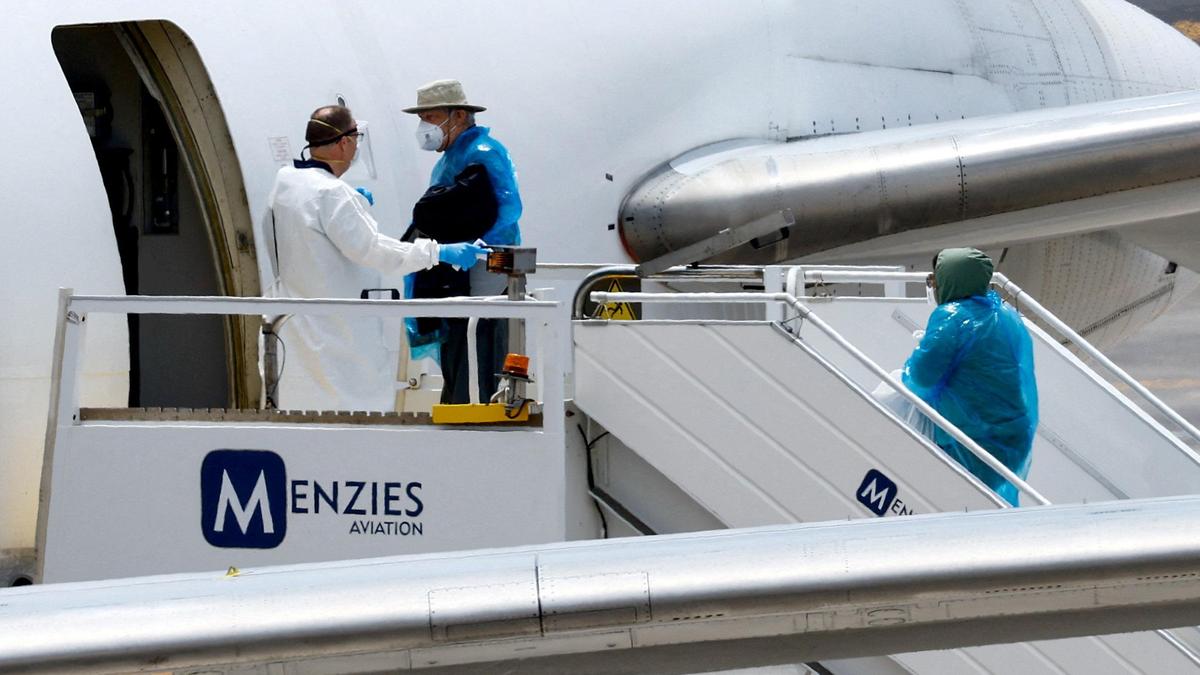
Imagine the shift in perspective. One morning, you are debating between the eggs benedict and the French toast. By evening, your world has shrunk to the four walls of an isolation cabin. The cheerful stewards who previously brought you extra towels now appear at your door wearing N95 masks, nitrile gloves, and protective gowns. The food tray is left on the floor. The door clicks shut, and the lock turns from the outside.
Isolation at sea is a unique brand of loneliness. On land, a quarantine still allows you to look out at a familiar street, to see cars passing, to feel anchored to the earth. At sea, you are a floating island within a floating island. The horizon moves, but you remain entirely stationary, trapped in a sterile box while the ocean hums beneath your feet.
For the Canadian passenger whose test triggered the alarm, the stakes were incredibly high. Hantavirus Pulmonary Syndrome is not a disease that lingers politely. It moves with a brutal, aggressive speed. What begins as a seemingly benign flu-like illness can rapidly progress to severe respiratory distress. The lungs fill with fluid. The body, in its frantic attempt to fight off the invader, essentially drowns itself from the inside.
This is where the true terror of a presumptive positive lies. It is the agonizing weight of the unknown. A presumptive positive means the initial, rapid screenings have flagged the biomarkers, but the definitive, gold-standard confirmation from a central national laboratory is still pending. It is a state of medical limbo. You are sick enough to be isolated, dangerous enough to warrant full biohazard protocols, but you must wait for a distant lab to tell you exactly what is killing you.
The crew on board faced an entirely different kind of nightmare. A cruise ship is a masterpiece of shared spaces. Hundreds of people eat from the same kitchens, breathe the same recirculated air, and gather in the same theaters. The moment the word outbreak is uttered, the atmosphere shifts. The casual camaraderie between passengers evaporates. Every cough in an elevator becomes a threat. Every person who clears their throat at the next table is viewed with suspicion.
The response to an event like this requires a level of logistical precision that resembles a military operation. Public health agencies do not simply wait for the final test results. They must act on the assumption that the worst-case scenario is already unfolding.
Contact tracing on a cruise ship is a monumental puzzle. Officers must review keycard access logs to determine exactly which public areas the infected passenger visited. They must interview the cabin stewards, the dining staff, and anyone who sat within a three-table radius during dinner. They look for the source. Was it a specific storage locker? A shipment of dry goods? An infected rodent that managed to slip aboard during a port stop in a heavily wooded region?
The search for the origin is a race against time, because a ship does not stop moving. Even as one cruise ends and passengers disembark, the next wave of vacationers is already waiting at the terminal, luggage tags attached, ready to step into the very spaces that were occupied by the sick just hours before.
The industry has spent decades perfecting the art of the deep clean. They use electrostatic sprayers, hospital-grade disinfectants, and specialized crews trained to sanitize a vessel from bow to stern in a matter of hours. But those measures are designed primarily for surface-borne bacteria and easily neutralized viruses like norovirus. A respiratory threat tied to an environmental pathogen requires a deeper, more invasive intervention. It forces an inspection of the deep infrastructure—the ventilation shafts, the cargo holds, the dark, damp spaces where passengers never tread but where the life of the ship is maintained.
The sun began to set over the coast, casting a long, amber glow across the water, painting the surface in shades of bruised purple and gold. Inside the isolation ward, the monitors ticked rhythmically.
The true vulnerability of modern travel is not a failure of technology, nor is it a lack of cleanliness. It is our own psychological fragility. We buy a ticket under the assumption that we are purchasing an escape from reality. We want to believe that for seven days, or two weeks, the laws of nature, disease, and consequence are suspended. We pay for the privilege of forgetting that we are biological creatures vulnerable to the micro-kingdoms of the earth.
A presumptive positive test on a luxury liner is a stark, uncomfortable reminder of the contract we sign with the world every time we leave our homes. We cannot fully decouple ourselves from the ecosystems we visit, no matter how many layers of paint, steel, and white linen we place between ourselves and the wild.
Robert watched the coastline recede into the gathering dark. The calypso music had stopped, replaced by the low, steady thrum of the ship’s engines pushing the massive vessel toward its next destination. The ship would dock. The passengers would return to their lives. The white sheets would be stripped, washed, and remade for the next guest.
But for those who were inside the room when the illusion broke, the ocean would never look quite the same again. They would remember the weight in the chest, the turn of the key from the outside, and the realization that the wilderness is never truly left behind on the shore. It waits in the shadows, watching the ships go by, looking for an open door.