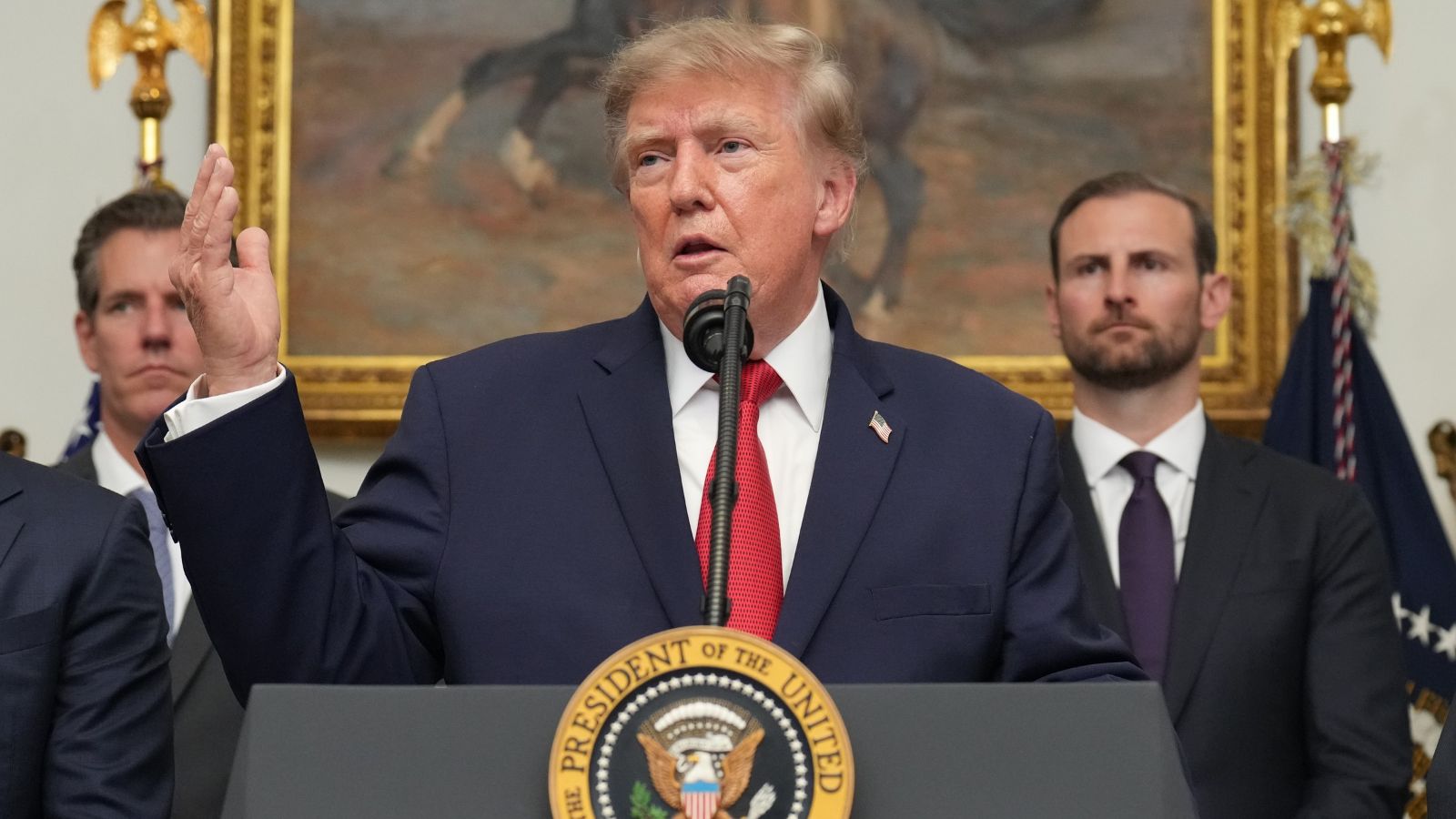
Most headlines treat diplomatic summits in Washington like routine photo ops, but the meeting between Donald Trump and Qatari Prime Minister Sheikh Mohammed bin Abdulrahman Al Thani is anything but business as usual. Doha isn't just showing up to shake hands. They're bringing concrete proposals to break a dangerous deadlock between Washington and Tehran that has kept the entire Persian Gulf on edge.
If you've been following Middle East diplomacy over the last few years, you know how easily these backchannel efforts collapse. Yet Qatar has carved out a rare position as the only state actor capable of speaking candidly with both the White House and the leadership in Tehran. When Doha pushes new proposals onto the table during a high-level meeting with Trump, it signals that the window for quiet de-escalation is narrowing fast. For another perspective, check out: this related article.
What Is Actually Happening Behind Closed Doors
Let's strip away the diplomatic jargon. The core issue bringing Qatar’s Prime Minister to meet with Donald Trump is the urgent need to prevent a direct military collision between the United States and Iran while addressing nuclear enrichment and regional proxy conflicts.
For years, Doha has operated as the primary switchboard for indirect messaging between American officials and Iranian negotiators. Unlike other Gulf neighbors who have historically favored pure containment or open confrontation, Qatar shares the massive North Dome/South Pars natural gas field with Iran. Geography forces pragmatism. Doha simply cannot afford a regional war on its maritime border, which explains why its diplomatic corps works overtime to keep lines of communication open when everyone else walks away. Similar coverage on the subject has been provided by Reuters.
During these high-stakes discussions, Qatar typically presents phased frameworks rather than grand, sweeping treaties. Think transactional diplomacy. Trump has consistently favored direct, measurable deals over sprawling multilateral agreements like the 2015 Joint Comprehensive Plan of Action (JCPOA), which he exited during his first term. Doha understands this preference better than almost any foreign capital. Their proposals almost certainly focus on immediate, verifiable concessions—such as frozen asset releases, prisoner swaps, or caps on specific uranium enrichment levels—in exchange for targeted sanctions relief or security guarantees.
Why Trump Listens to Doha
You might wonder why a Trump administration would entertain proposals mediated by Qatar, especially given the turbulent history of Gulf politics during his first presidency. Remember the 2017 Gulf diplomatic crisis? Back then, Saudi Arabia, the UAE, Bahrain, and Egypt severed ties with Qatar, and initial rhetoric from Washington leaned heavily against Doha.
Things changed quickly.
By the end of his first term, Trump recognized Qatar’s utility as an indispensable regional fixer. Doha hosted the historic US-Taliban negotiations that led to the 2020 Doha Agreement, demonstrating an ability to deliver complex diplomatic outcomes that aligned with Trump's goal of ending prolonged American entanglements abroad. Add to that the presence of Al Udeid Air Base—the largest US military installation in the Middle East and the forward headquarters for US Central Command—and you see why Qatar holds real leverage in Washington.
When Sheikh Mohammed bin Abdulrahman Al Thani sits across from Trump, he isn't asking for favors. He's offering an off-ramp from a conflict that would spike global oil prices, disrupt shipping lanes through the Strait of Hormuz, and pull American forces back into a full-scale Middle Eastern war.
What Most Coverage Gets Wrong About US-Iran Talks
Mainstream news updates love framing US-Iran diplomacy as a binary choice between total war and a signed nuclear treaty. That framing misses the real game entirely. Neither Washington nor Tehran expects a comprehensive normalization of relations anytime soon. The distrust runs too deep, and domestic political pressures on both sides make sweeping compromises nearly impossible.
Instead, what Qatar is actually trying to engineer is managed de-escalation.
Here's how that works in practice:
- Limiting nuclear breakout timelines: Rather than dismantling Iran's entire nuclear infrastructure overnight, intermediate proposals aim to freeze enrichment at current thresholds and restore International Atomic Energy Agency (IAEA) camera monitoring at key facilities.
- Containing regional flashpoints: Talks inevitably spill over into the activities of Tehran-aligned groups across Lebanon, Iraq, Syria, and Yemen. Doha's mediators routinely link economic breathing room for Iran to verifiable reductions in cross-border attacks.
- Establishing crisis hotlines: When naval vessels or drones operate within miles of each other in the Persian Gulf, miscalculation is the biggest threat. Qatari proposals frequently prioritize military-to-military deconfliction channels to stop an accidental skirmish from spiraling out of control.
I've watched countless analysts dismiss these incremental steps as weak or insufficient. Honestly, those critics misunderstand how high-stakes brinkmanship works. When two adversaries refuse to sit in the same room, getting them to agree on basic rules of the road is a massive achievement.
The High-Wire Act of Qatari Mediation
Serving as the middleman between Washington and Tehran isn't glamorous work. It's a thankless balancing act where both sides regularly accuse Doha of favoring the other.
In Washington, hawks frequently criticize Qatar for maintaining open diplomatic channels with Tehran and hosting political offices for groups that the US designates as adversaries. Meanwhile, hardliners in Tehran view Doha with suspicion because it hosts thousands of American troops and buys billions of dollars in advanced US military hardware.
So why does Qatar keep doing it? Survival and influence.
As a small, extraordinarily wealthy peninsula surrounded by much larger regional powers, Qatar uses mediation as its primary national security shield. By making itself indispensable to global superpowers during crises—whether facilitating hostage negotiations in Gaza, mediating between Russia and Ukraine on the return of displaced children, or bridging the gap between the US and Iran—Doha ensures that Washington, Tehran, and Brussels all have a vested interest in keeping Qatar stable and secure.
The Trump Factor Changes the Equation
Traditional diplomats rely on predictability, slow consensus-building, and strict adherence to protocol. Donald Trump operates on the exact opposite wavelength. He thrives on unpredictability, personal rapport with foreign leaders, and the willingness to scrap conventional wisdom if he thinks he can cut a better deal.
For Qatar’s Prime Minister, this dynamic presents both an opportunity and a massive risk.
On one hand, Trump isn't bound by the bureaucratic inertia that often stalls State Department initiatives. If Doha presents a clear, direct proposal that gives Trump a tangible diplomatic win—something he can point to as proof that his "maximum pressure" approach forced Tehran to blink—he can greenlight it rapidly. On the other hand, if Tehran stalls or attempts to play for time, Trump is far more likely than previous administrations to walk away from the table entirely and escalate economic or military pressure.
Doha's diplomats know they have to deliver real substance from Tehran, not vague promises of future talks. If Iran uses Qatar merely as a stalling tactic while advancing its nuclear program, Trump will pull the plug on the entire channel.
What Happens If Doha's Proposals Fail
We need to be realistic about the odds here. Diplomacy with Iran has a graveyard full of promising frameworks that collapsed at the eleventh hour. Domestic hardliners in Tehran frequently sabotage agreements negotiated by their own diplomats, while shifting political winds in Washington can abruptly alter American demands.
If the proposals Qatar brings to Trump fail to gain traction, the consequences won't stay confined to diplomatic cables.
First, expect an immediate tightening of economic enforcement. Washington still has significant room to squeeze Iranian oil exports—particularly shipments heading to independent refineries in Asia—through secondary sanctions on shipping networks, insurers, and financial institutions. Second, the risk of direct kinetic clashes in the Gulf spikes dramatically. Without an active diplomatic track managed by Doha, every maritime incident or regional proxy strike carries a much higher probability of triggering a massive retaliatory cycle.
Global energy markets are watching this meeting closely for a reason. Roughly a fifth of the world's petroleum passes through the Strait of Hormuz, right off Qatar's doorstep. Even a brief disruption in that narrow waterway sends shockwaves through inflation numbers, supply chains, and financial markets from New York to Tokyo.
How to Track What Really Matters Next
When reading live updates about Trump meeting Qatar’s Prime Minister, ignore the vague statements about "constructive dialogue" and "shared regional interests." Every diplomatic readout includes those exact phrases, and they tell you nothing.
Pay attention to three concrete indicators over the next several weeks instead:
- Movement on frozen funds or humanitarian channels: Any real progress in US-Iran talks almost always involves unlocking restricted Iranian revenues held in third-country banks, typically structured so the funds can only be used for non-sanctioned goods like food and medicine. If you see quiet banking transfers authorized, the talks are working.
- IAEA access reports: Watch the quarterly updates from the International Atomic Energy Agency. If inspectors suddenly regain access to centrifuge workshops or enrichment sites in Natanz and Fordow, Doha's proposals hit their mark.
- Rhetoric from Tehran's leadership: Pay less attention to what Iran's foreign ministry says to Western reporters and more attention to speeches from the Supreme Leader's office and Islamic Revolutionary Guard Corps commanders. If their public tone shifts from imminent confrontation to cautious pragmatism, they've accepted the framework Qatar put on the table.
Keep your eyes on those three signals rather than the daily cable news noise, and you'll know immediately whether Doha pulled off another diplomatic breakthrough or if the region is bracing for impact.



