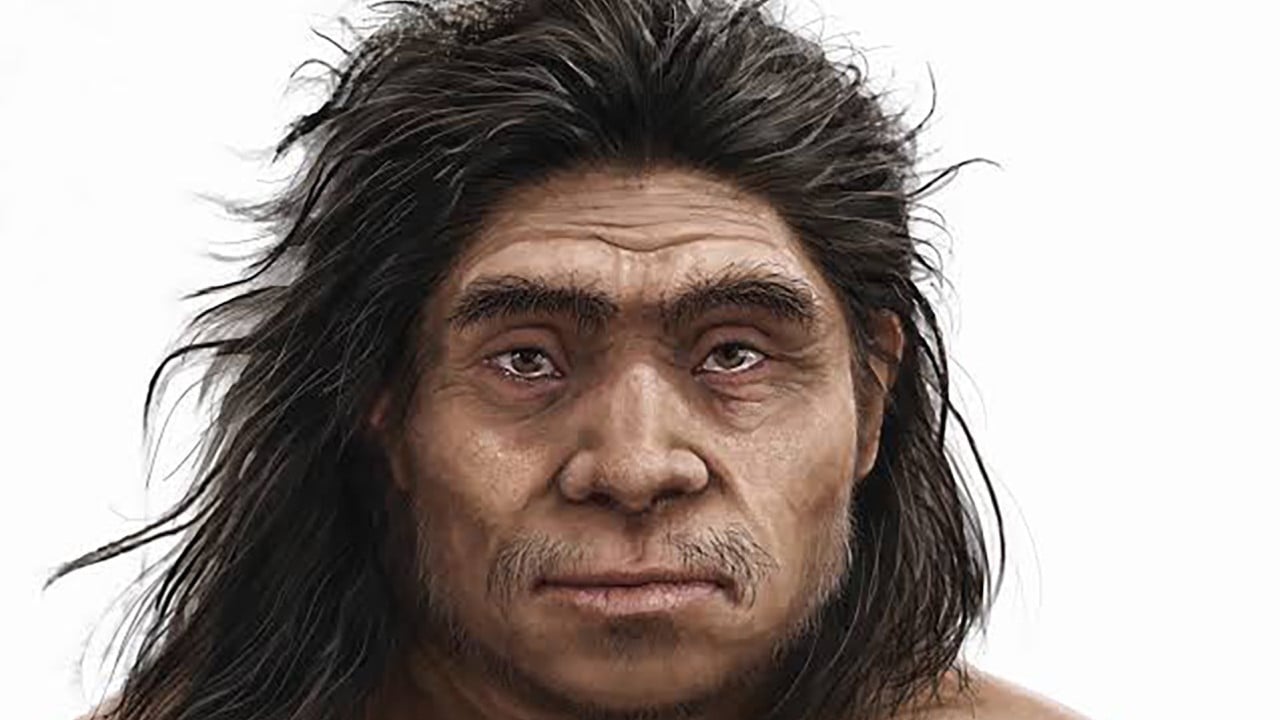
They did not put a face on the Denisovans. They sculpted an artist's best guess onto a controversial cranium and called it a family reunion.
Stop clapping. Look closer at the bones.
When headlines announce that researchers have finally given a face to the Denisovans, the lazy consensus rushes in with warm, nostalgic copy. We get a story about a long-lost cousin stepping out of the shadows of prehistory, greeted with a friendly wave after hundreds of thousands of years. It makes for great clickbait. It satisfies our appetite for tidy narratives and dramatic "before and after" visuals.
It is also a massive oversimplification of messy, contested paleoanthropology.
For years, the Denisovans existed mostly as a genetic ghost—a set of ancient DNA sequences extracted from a tiny finger bone and a few teeth in Denisova Cave in the Altai Mountains, alongside a jawbone from Baishiya Karst Cave on the Tibetan Plateau. That discovery, spearheaded by teams around Svante Pääbo and Johannes Krause, changed how we think about human evolution. We learned that ancient hominins interbred far more often than old textbook models admitted, leaving traces of Denisovan DNA in modern populations across Oceania, Island Southeast Asia, and parts of East Asia.
Then came the crania, including specimens like the famous Harbin skull (often dubbed "Dragon Man" in popular media) and other East Asian fossils that researchers have linked to Denisovan lineages through proteins, morphology, or comparative modeling. Suddenly, people want a portrait. They want eyes, skin tone, hair texture, a brow ridge, a recognizable human expression staring back from a screen.
Here is the problem: a face is soft tissue, pigment, and expression. Fossils give you bone, tooth wear, and statistical probabilities. Bridging that gap requires assumptions stacked on top of assumptions.
We Are Asking the Wrong Question About Human Origins
People love to ask what an ancient hominin "looked like" because a face feels intimate. Put two eyes and a mouth on a reconstruction and your brain treats it like a person you could pass on a train.
That instinct is the exact trap that distorts public understanding of paleoanthropology.
Asking "What did a Denisovan look like?" assumes there was a single, uniform Denisovan look. There almost certainly was not. Think about modern Homo sapiens spread across thousands of miles of diverse terrain over tens of thousands of years. Now apply that to an archaic group ranging from cold Siberian caves to high-altitude plateaus and warmer southern latitudes, mixing with Neanderthals and early modern humans along the way.
A single facial reconstruction represents one individual from one time and place, filtered through an artist's judgment and a researcher's taxanomic hypothesis. Calling it "the face of the Denisovans" turns a hypothesis into a mugshot.
Even worse, media coverage treats taxanomic assignment as settled fact the moment a headline prints it. Linking a specific skull to the Denisovans is a high-stakes scientific argument, not a finished chapter. Specimens have contested provenances, uncertain dates, or debated classifications. Treating a proposed match as gospel erases the very method that makes science trustworthy: skepticism and replication.
How Reconstructions Actually Work (And Where They Break)
Soft-tissue reconstruction is part anatomy, part statistics, and part guesswork. Forensic artists use known relationships between skull landmarks and tissue depth in living humans to estimate muscle and fat thickness. That works moderately well for modern forensic cases where you already know the population baseline.
It gets much trickier with archaic hominins.
Consider what bone cannot tell you directly:
- Pigmentation and hair: Ancient DNA from a handful of samples has hinted at traits in specific individuals, not an entire species across every climate. You cannot reliably read skin shade or hair curl off a calcified brow ridge.
- Expression and fat distribution: Muscle attachment sites show where tissue anchored, not how someone held their jaw, squinted against wind, or carried weight in their cheeks.
- Individual variation: Even within a single population, facial geometry varies wildly. One skull is a data point, not a template.
Imagine a scenario where a team reconstructs a face from a robust skull with a heavy brow and wide nasal aperture. Viewer A sees a rugged, powerful cousin who survived brutal winters. Viewer B sees a primitive brute stuck in the past. Both reactions come from cultural baggage layered onto a three-dimensional model. The bone did not supply the narrative; the viewer did.
I have watched science communicators, museum displays, and media outlets blow credibility by overselling certainty on reconstructions. When a model is presented as definitive, and a later study challenges the fossil's dating or classification, the public feels misled. Worse, critics seize on the hype to dismiss legitimate paleoanthropology altogether.
The Heavy Hitters and the Messy Reality
To understand why caution matters here, look at the serious debates driving the field. Researchers like Chris Stringer, Jean-Jacques Hublin, and Katerina Harvati have spent careers dissecting how archaic groups relate to one another and to us. Their work underscores how fluid hominin diversity was—more like a braided stream of populations splitting, shifting, and reconnecting than a neat ladder climbing toward modern humans.
When a skull is proposed as Denisovan, scientists test that claim against dental traits, cranial measurements, ancient proteomics (proteins survive longer than DNA in warm or tricky environments), and comparative analyses with other Middle and Late Pleistocene fossils. Progress happens through cross-examination, not press-release triumphalism.
Here is my own contrarian bias laid bare, because honesty cuts both ways: I am naturally skeptical of flashy reconstructions that prioritize visual drama over methodological restraint. That skepticism has a downside. If you push too hard against visual storytelling, you can make fascinating science sound dry, academic, or aloof to everyday readers who genuinely want to connect with deep time.
That is a real trade-off. You want people to care about ancient human history without tricking them into mistaking artistic interpretation for photographic proof.
Answering What People Actually Search For
When people read about a Denisovan face, their follow-up questions usually sound like a game of twenty questions. Let's strip away the fluff and answer them straight.
Were Denisovans a separate species from us?
"Species" is a human label drawn over a continuum of biological reality. Genetically, Denisovans diverged from the lineage leading to modern humans and Neanderthals hundreds of thousands of years ago. Yet they interbred with both groups and produced fertile offspring whose genes still echo in living people today. If you define species strictly by reproductive isolation, the boundary gets blurry fast. Calling them a distinct hominin group or sister lineage is cleaner and more accurate than fighting over a rigid label.
Do I have Denisovan DNA?
Unless your ancestry traces to populations with known Denisovan admixture—such as Indigenous Australians, Melanesians, certain Southeast Asian groups, or some East Asian lineages—your share is likely zero or near-zero in standard consumer tests. Even where it is present, it typically accounts for a small percentage of a person's genome, often concentrated in specific regions linked to immunity or environmental adaptation, such as high-altitude tolerance tied to the EPAS1 gene variant seen in Tibetan populations.
Why does a face matter if we already have DNA?
DNA tells you how we are related and which biological pathways shifted over time. A skull and a reconstruction remind you that these were physical beings walking real landscapes, hunting, sheltering from weather, and living lives—not just abstract strings of A, C, G, and T on a server. The mistake is not wanting to picture them. The mistake is pretending the picture is finished.
What You Should Actually Do Instead of Buying the Hype
If you care about human evolution and want to stay ahead of shallow headlines, change how you read coverage of ancient discoveries.
- Separate the fossil from the face. Always check which specific specimen a reconstruction is based on, how complete the bone is, and whether experts agree on its classification.
- Look for multiple lines of evidence. Strong claims in paleoanthropology rarely rest on one skull or one method alone. Look for convergence across morphology, genetics, proteins, archaeology, and dating.
- Read the caveats in the study, not just the headline. Headlines sell certainty. Methods sections reveal sample sizes, error margins, and open questions.
- Reframe your curiosity. Instead of asking "What did they look like?", ask "What traits did this population adapt for, how did they move across landscapes, and how does their story reshape our view of human diversity?"
A sculpted face on a screen can spark curiosity, and curiosity is worth keeping. Just do not mistake a compelling reconstruction for the final word on a group of ancient humans whose story we are still piecing together one fragment at a time.