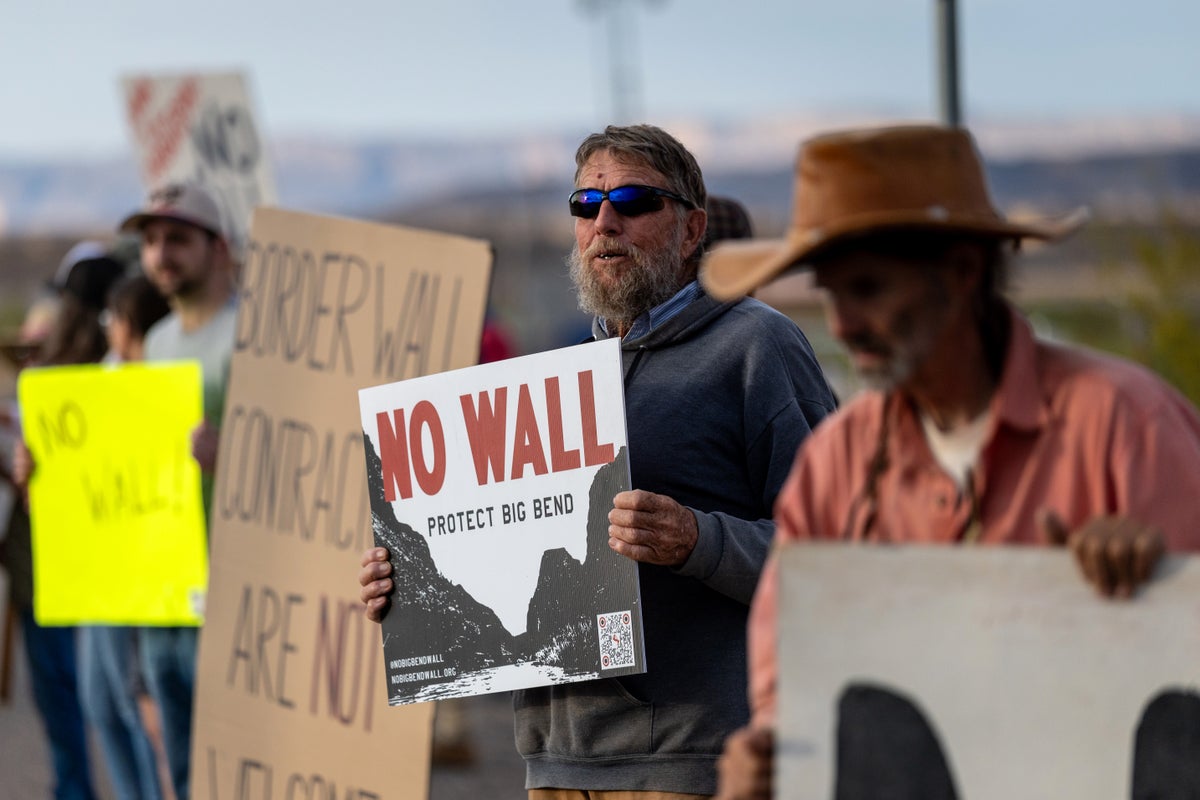
Every few years, Washington discovers a new flavor of expensive panic. This time, the establishment has settled on a billion-dollar crusade: dropping massive physical barriers into pristine national parks under the convenient banner of stopping cartel activity. The official line from leadership sounds tough on paper. Build the wall, stop the bad guys, save the ecosystem from lawlessness.
It is a fairy tale for people who have never set foot in the backcountry.
I have spent two decades analyzing the operational mechanics of border logistics and transnational supply chains. I have watched billions evaporate into concrete projects that solve political polling numbers while completely ignoring ground-level reality. The lazy consensus among bureaucrats is that drawing a hard line in the dirt stops illicit movement. The truth is much uglier. Physical walls in remote wilderness zones do not deter cartels. They merely tax them, and the cartels easily pass that tax down to their logistical networks through adaptation, innovation, and basic physics.
The Geography of Absurdity
National parks are not flat, predictable urban alleys. They are chaotic, rugged ecosystems featuring sheer cliffs, deep canyons, and dense wilderness where normal infrastructure goes to die.
When you drop a billion-dollar barrier into a remote national park, you are not stopping determined operators. You are altering a fragile landscape while giving local field managers an administrative headache that lasts decades. Cartels operate with decentralized cell structures, encrypted communications, and highly adaptable smuggling routes. They use drones, spotters, and local knowledge that renders static steel barriers little more than an inconvenience.
Let us look at the actual math of wilderness logistics. A cartel moving high-margin contraband does not care about a ten-million-dollar stretch of fencing when the profit margin on a single payload covers the cost of a cutting torch or a rope ladder. Treating a national park like a fortified military outpost does not secure the nation. It transforms public conservation land into an industrial construction site that fails its primary objective.
The Bureaucratic Logic Trap
Why do border chiefs keep pushing these mega-projects despite mountains of operational evidence showing diminishing returns? Because visibility equals budget security.
In government procurement, quiet competence does not win appropriations. Dramatic gestures win appropriations. A wall is a monument to action. You can point a camera at it, cut a ribbon in front of it, and put it on a slide deck for congressional hearings. Admitting that border security in remote terrain requires quiet intelligence, agile personnel, and technological surveillance rather than heavy iron doesn't fit neatly into a thirty-second campaign ad.
The real strategy behind these multi-billion-dollar initiatives relies on what I call the theater of deterrence.
- The Illusion of Permanence: Concrete and steel create a psychological comfort blanket for voters who want simple solutions to complex geopolitical friction.
- The Maintenance Trap: Once built, these barriers require endless federal maintenance budgets to repair weather damage, environmental erosion, and deliberate sabotage.
- The Displacement Effect: Hardening one specific park sector simply pushes foot traffic deeper into more dangerous, ecologically sensitive backcountry, increasing environmental degradation rather than stopping the flow.
Imagine a scenario where a multinational corporation tried to secure a sprawling, multi-million-acre asset by building a single fence across a mountain range while ignoring internal logistics, insider threats, and digital surveillance. Shareholders would riot, and the executive team would be fired before lunch. Yet, when the federal government does it with taxpayer cash, we call it national security.
What Real Operational Security Looks Like
If you want to disrupt illicit supply chains operating through remote public lands, you stop investing in medieval fortification strategies and start investing in agility.
Cartels rely on predictable enforcement patterns. When law enforcement locks down one area with static barriers, smugglers map the blind spots, adjust their timing, and utilize unmonitored elevation changes. True security requires dynamic mobility. It requires sensor networks that can track movement across thousands of acres without turning a national park into a militarized zone. It requires targeting the financial architecture of the organizations rather than playing an expensive game of whack-a-mole with shovels and rebar.
We need to stop evaluating border strategy by how much concrete is poured and start measuring it by actual disruption metrics. How much contraband was intercepted relative to the intelligence gathered? How many command structures were dismantled? By those metrics, the billion-dollar park wall project is an abysmal failure disguised as strength.
The establishment wants you to believe that security is just a matter of spending enough money on heavy materials. They are lying to protect their budgets. Stop buying the narrative.
The wall is not a defense against cartels. It is a monument to bureaucratic cowardice.