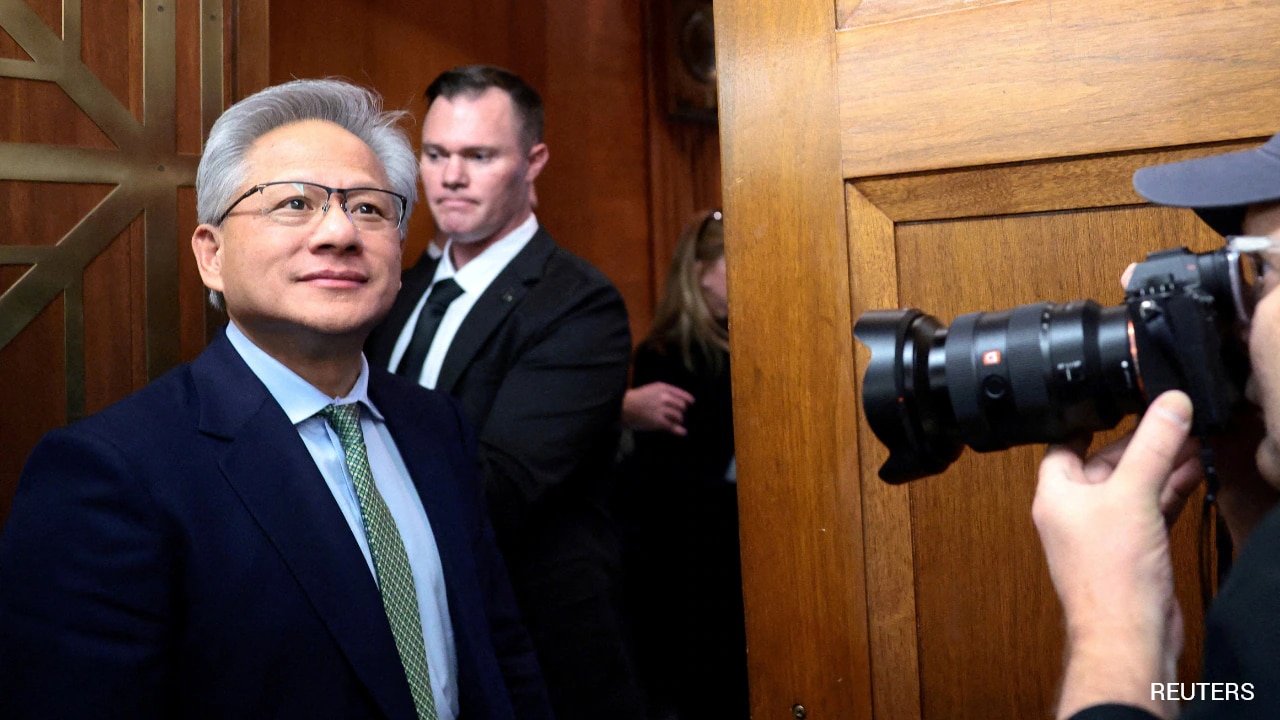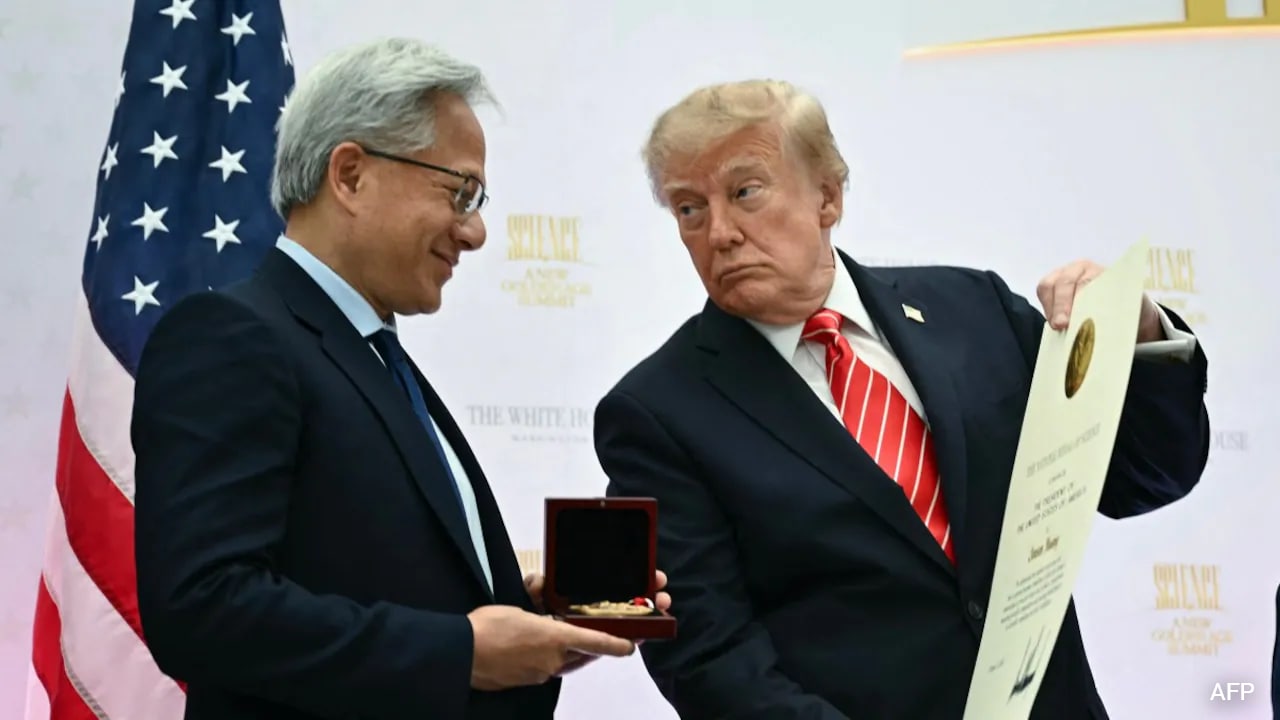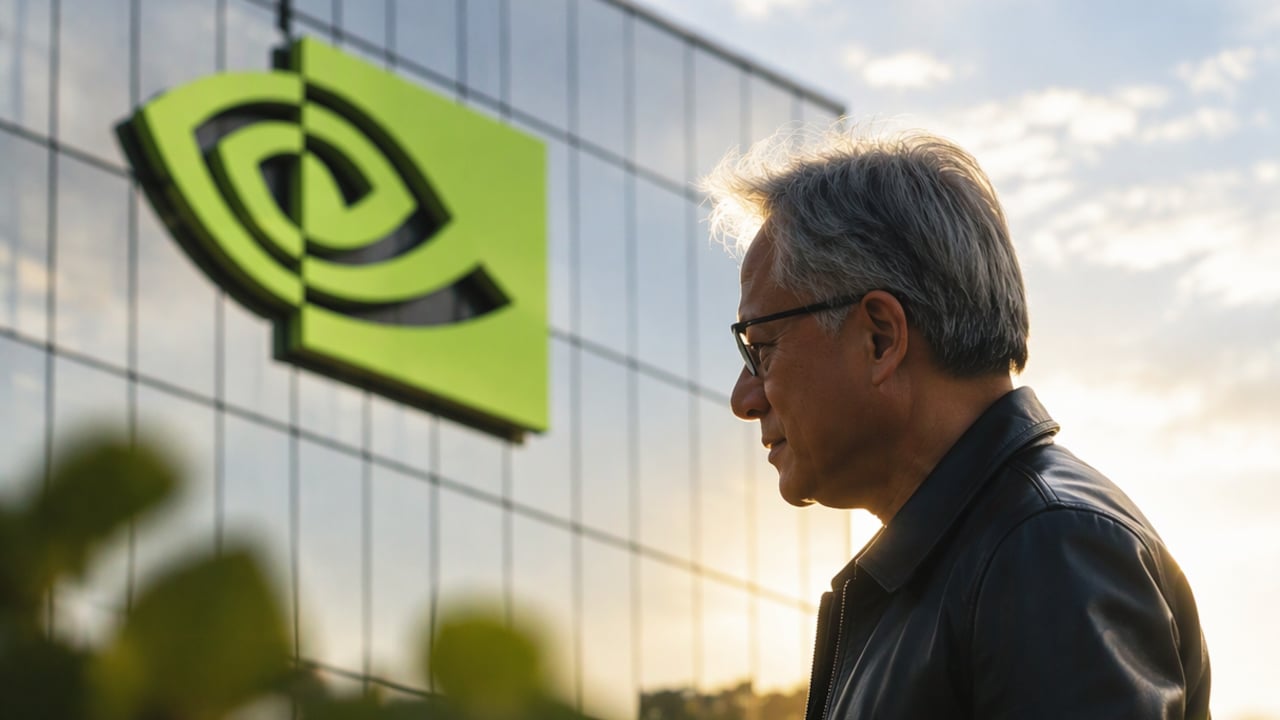
When an executive steps back into the spotlight after a controversy, the public relations playbook is painfully predictable. You issue a brief statement expressing enthusiasm, project a sense of calm, and insist that the core mission remains untouched. That exact script played out when headlines began circulating around Jensen Huang declaring he could not wait to get back to work as the boss of Nvidia amid brewing scrutiny.
The problem is that corporate governance rarely bends to enthusiasm alone. Behind the leather jacket and the carefully stage-managed keynote speeches, the reality of founder-led tech giants facing institutional pushback is far messier than a single optimistic quote suggests. Expanding on this idea, you can also read: Why the Nvidia Chinese Spy Scandal Narrative is Completely Backwards.
The Anatomy of a Corporate Return
To understand why a statement like "can't wait to get back to work" triggers immediate skepticism on Wall Street, you have to look at how modern semiconductor monopolies operate. Nvidia is not a typical Silicon Valley startup anymore. It is a multi-trillion-dollar infrastructure backbone for global computing, artificial intelligence, and sovereign defense networks.
When rumors, regulatory probes, or internal governance scandals attach themselves to a sitting chief executive, the fallout is never purely personal. Institutional investors—the pension funds, sovereign wealth managers, and massive index custodians that actually own the voting shares—do not care about charisma. They care about key-person risk and fiduciary insulation. Experts at ZDNet have also weighed in on this matter.
If a chief executive takes a step back, goes quiet during an inquiry, or faces pressure from a board of directors, returning to the helm is not simply a matter of walking back through the front doors in Santa Clara. It requires an implicit settlement with the board. The CEO stays, provided certain guardrails are quietly erected behind closed doors.
Why the Leather Jacket Myth Breaks Under Pressure
For over three decades, Jensen Huang has cultivated an image of total operational immersion. Unlike peers who delegate engineering details to layers of vice presidents, Huang famously eliminated traditional middle-management hierarchies. Dozens of executives report directly to him. He reads emails from rank-and-file engineers, reviews chip architectures personally, and treats the company like an extension of his own nervous system.
That flat organizational structure is a superpower during periods of rapid technological transition. When the market shifts from graphics rendering to parallel computing and generative models, a single decisive mind can pivot an entire supply chain faster than a committee ever could.
Yet that exact same structure becomes a glaring vulnerability during a scandal.
Consider how accountability works in a flat hierarchy. When sixty executives report directly to one person, there is no buffer. There is no chief operating officer to absorb the political shockwaves, and no natural heir apparent waiting in the wings to reassure anxious markets. If a controversy touches the top office—whether it involves executive compensation, board independence, antitrust scrutiny, or internal workplace culture—the entire valuation of the enterprise trembles alongside the founder's reputation.
The Unspoken Tension Between Founders and Boards
History offers plenty of brutal lessons on what happens when iconic founders collide with institutional reality. Look at how boards handled figures like Travis Kalanick at Uber, or even how Apple navigated leadership transitions over the decades. In almost every instance, the public messaging remains cheerful right up until the moment a structural shift occurs.
A board of directors has one primary legal obligation: protect shareholder value. When a scandal erupts, directors face an agonizing calculation. Removing a visionary founder like Huang would trigger an immediate, catastrophic sell-off. Nobody on earth has the same institutional memory of CUDA, TSMC fabrication bottlenecks, and hyperscaler demand curves. Firing him would be corporate suicide.
At the same time, leaving a founder completely unchecked during a period of controversy exposes the board to derivative lawsuits from angry shareholders.
The compromise is almost always invisible to the casual observer. The chief executive returns to work with a bright smile and a soundbite for the press, while the board quietly tightens its grip on compliance, audit committees, and succession planning. The title remains the same. The daily operational latitude shrinks.
What Wall Street Actually Watches
Financial analysts rarely trade on emotional quotes from executives. When a scandal breaks and a CEO signals a return to business as usual, institutional desks look at three concrete indicators to measure whether the crisis is actually over.
First, they examine insider selling patterns and Form 4 filings. Words are free, and public relations teams draft them by the dozen. Automated stock sales by top lieutenants, or sudden departures among general counsel and compliance officers, tell the real story of internal friction. If the legal team starts heading for the exits while the CEO claims everything is fine, smart money pulls back.
Second, analysts track board committee reshuffles. Watch the proxy statements. When a company faces governance heat, the first quiet concession is the appointment of a new lead independent director or an expansion of the audit committee's mandate. It is the corporate equivalent of putting a chaperone in the room.
Third, they monitor customer concentration risk. Nvidia relies heavily on a handful of massive cloud providers—Microsoft, Meta, Google, and Amazon—for a staggering percentage of its data center revenue. These hyperscalers hate uncertainty. They are already spending billions on custom silicon to reduce their dependence on third-party chipmakers. Any governance instability at Nvidia gives those procurement teams extra ammunition to accelerate their own in-house chip programs.
The Illusion of "Business as Usual"
There is an inherent contradiction in claiming you cannot wait to get back to work when the job itself has fundamentally changed.
Before a company reaches systemic global importance, the chief executive's job is building products and winning market share. Once a company becomes a choke point for the global economy, the job shifts toward diplomacy, regulatory defense, and risk mitigation. You spend less time reviewing silicon wafers and more time answering questions from antitrust regulators in Brussels, Washington, and Beijing.
Hypothetically, imagine a dominant hardware supplier facing an inquiry over how it allocates scarce inventory to favored partners. Even if the chief executive is completely cleared of personal wrongdoing, the investigation itself forces a permanent change in behavior. Every allocation decision now has to pass through external antitrust counsel. Every pricing tier gets scrutinized for anti-competitive tying. The founder might be back at their desk, eager to push the engineering teams forward, but the speed at which they can actually execute has been permanently throttled by bureaucracy.
The Succession Trap Nobody Wants to Admit
The deeper issue exposed by any scandal surrounding Jensen Huang is that Nvidia has a massive, unresolved succession problem.
In Silicon Valley, talking openly about succession while a founder is still energetic and sharp is treated as heresy. Investors love the stability of a long-tenured leader. Huang co-founded Nvidia in 1993, making him one of the longest-serving chief executives in the technology sector. That longevity is routinely praised as a competitive advantage.
It is also a ticking clock.
Because Huang operates without a traditional second-in-command, there is no obvious internal candidate who has been tested in the public eye. Contrast that with Tim Cook's years as chief operating officer under Steve Jobs, or Satya Nadella's visible climb through Microsoft's enterprise and cloud divisions before taking the top job. At Nvidia, the executive bench is deep in engineering talent, yet remarkably opaque when it comes to general corporate leadership.
Whenever a controversy flares up, that lack of a clear successor magnifies the panic. Markets realize that there is no Plan B. Consequently, the board is forced to back the incumbent completely, even if doing so creates long-term governance blind spots.
Separating Signal From Noise in Tech Media
The modern financial news cycle thrives on breathless headlines. A vague reference to a scandal paired with a punchy quote from a famous billionaire guarantees clicks, algorithmic amplification, and heated debate on social media.
Veteran observers know how to filter out the noise. When evaluating any story about an executive returning amid controversy, ask a simple question: Has the underlying economic moat changed?
If a scandal involves accounting fraud—like Enron or WorldCom—the moat was an illusion from the start, and the company collapses. If a scandal involves personal conduct, aggressive competitive tactics, or governance friction, the outcome depends entirely on whether customers have an alternative.
Right now, in the world of high-performance accelerated computing, alternatives remain scarce. Competitors are years behind in software ecosystem maturity. Data centers cannot rip out their existing server racks overnight without burning billions of dollars in lost training time. That brutal economic reality gives a sitting CEO an enormous cushion against bad press.
The Real Cost of Scrutiny
Surviving a scandal is not the same thing as escaping it unscathed. Even when an executive successfully reclaims the narrative and gets back to work, the distraction carries a hidden tax.
Top engineering talent notices when leadership is bogged down in defensive battles. Competitors use the uncertainty to poach key architects, offering massive equity packages and freedom from corporate drama. Meanwhile, regulators keep the file open, waiting for the next misstep to justify broader structural remedies.
A chief executive can declare their eagerness to return to the grind, put on the familiar uniform, and command the stage once again, yet the quiet erosion of unquestioned authority has already begun.