The steel underfoot vibrates with a low, bone-deep hum that never truly stops. If you stand on the bridge of a supertanker slicing through the Persian Gulf at three in the morning, the world feels impossibly vast and terrifyingly small all at once. To your left, the jagged, arid cliffs of Iran rise like sleeping predators out of the black water. To your right, the Musandam Peninsula of Oman hooks into the sea.
Between them lies a ribbon of water just twenty-one miles wide at its narrowest point. The Strait of Hormuz.
For the twenty-odd crew members aboard a typical Very Large Crude Carrier (VLCC), this isn't a geopolitical talking point on a cable news crawl. It is their workplace. It is a corridor where one-fifth of the world’s petroleum consumption squeezes through every single day. If this corridor closes, lights go out in cities thousands of miles away. Factories freeze. The price of bread climbs.
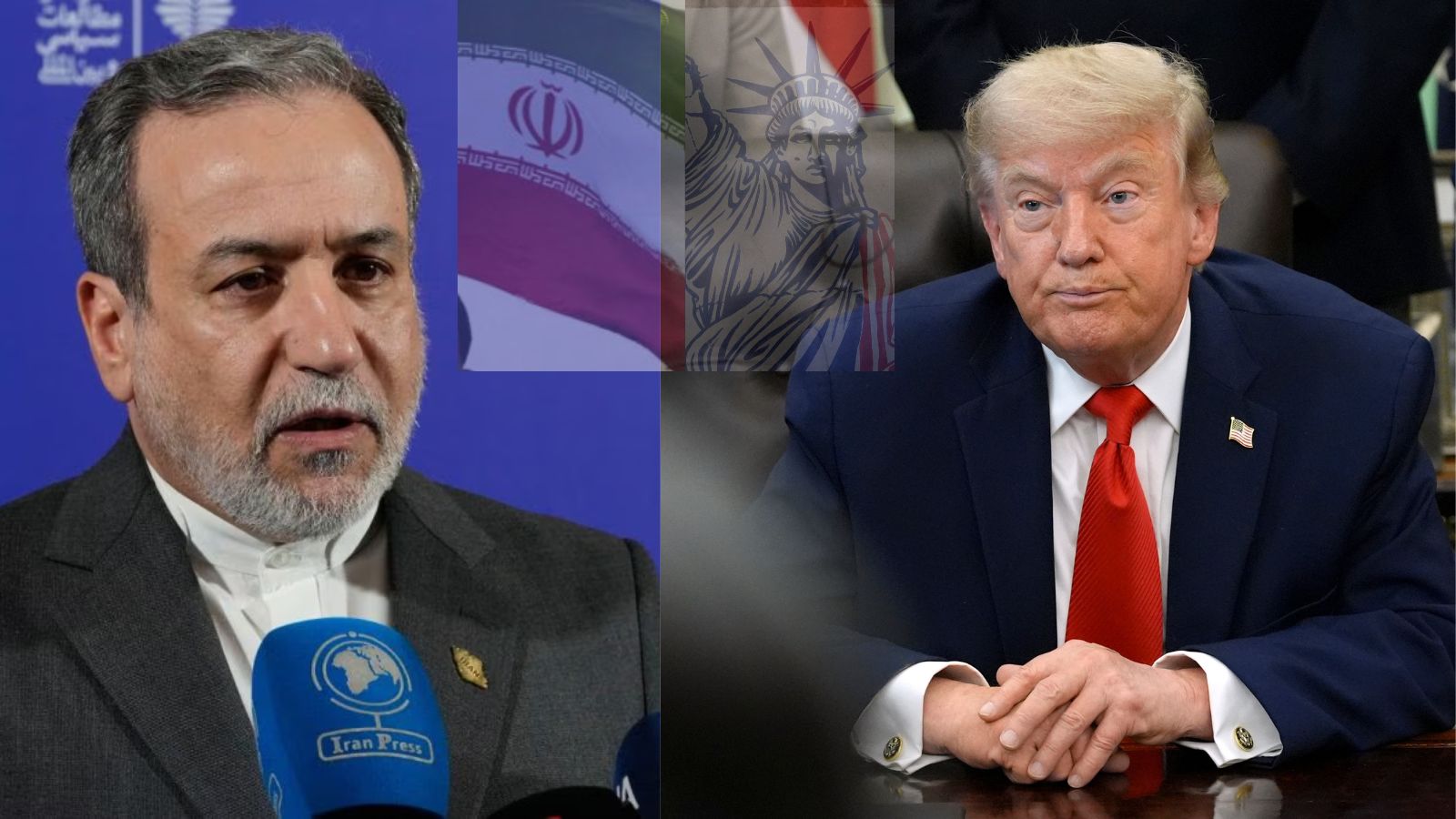
Recently, this narrow strip of water became the center of a surreal international shouting match. Donald Trump floated an idea that sent shockwaves through the maritime shipping industry: a proposed 20 percent fee on cargo passing through the Strait of Hormuz, framed as a toll for American protection of global trade routes.
The response from Tehran arrived not with a formal diplomatic protest, but with a smirk. Iranian officials openly mocked the proposal, counter-offering with dark irony that they, as the historical gatekeepers of the strait, would be much more "fair" with their own tolls.
To understand how a percentage point thrown around in a political speech translates into panic on the high seas, you have to look past the bluster of world leaders and stand on the deck of the ships caught in the middle.
The Invisible Highway of Global Survival
Consider a hypothetical captain. Let's call him Mikhail. He has spent thirty years navigating the world's most treacherous shipping lanes, but nothing tightens his chest quite like the approach to Hormuz. Mikhail isn't thinking about grand strategy. He is thinking about draft depth, radar signatures, and the swarm of fast-attack craft that regularly zip out from the Iranian coast to shadow commercial vessels.
When a politician suggests putting a 20 percent tariff or transit fee on the cargo passing through this channel, the math sounds simple on a campaign stage. But maritime commerce is a fragile house of cards built on razor-thin margins and immense volume.
A single supertanker can carry two million barrels of oil. At modern market rates, that single cargo is worth well over a hundred and fifty million dollars. A 20 percent fee on that value isn't a simple tax. It is a thirty-million-dollar penalty per voyage.
Who pays that? Not the shipowner. Not the captain.
The cost cascades down the supply chain like a boulder dropped in a mountain stream. It hits the refineries in South Korea, the manufacturing hubs in Germany, and ultimately, the commuter filling up a tank at a gas station in Ohio. The global economy is not a series of isolated islands; it is a vascular system. The Strait of Hormuz is the jugular vein.
When the United States talks about policing this waterway, it draws on decades of historical precedent. Since the Carter Doctrine of 1980, Washington has treated the Persian Gulf as a zone of vital national interest, implying that military force would be used to defend the free flow of oil. For forty years, American supercarriers, destroyers, and cruisers have patrolled these waters, acting as an uninvited, highly expensive insurance policy for global commerce.
But the ground has shifted underfoot.
The Gatekeeper’s Smirk
When Iran caught wind of the 20 percent toll idea, the reaction from political figures in Tehran was swift and biting. They pointed out an uncomfortable reality that mapmakers have understood for centuries: the shipping lanes through the Strait of Hormuz lie within the territorial waters of Iran and Oman. The United States navy may patrol the international waters nearby, but the physical choke point is dominated by the Iranian coastline.
"Twenty percent is too much," Iranian officials jeered, mockingly suggesting that if anyone had the right to collect a tax on the world's energy supply, it was the nation that actually sits on the doorstep of the strait. They promised they would be far more reasonable.
It was a masterful piece of trolling, but it carried a razor-sharp edge.
By treating the global oil supply as something that can be taxed or tolled at whim, Western political rhetoric accidentally validated Iran’s own long-standing claims. For decades, Tehran has threatened to shut down the strait whenever international sanctions choked its own economy. By turning the strait into a hypothetical cash register, the conversation shifted from international law to raw, transactional power.
For men like Mikhail on the bridge of a tanker, this rhetorical sparring matches a terrifying physical reality. The threat isn't just a sudden bill from a customs agent. The threat is a limpet mine attached to a hull in the dead of night. It is a drone strike originating from an unnamed launchpad. It is the sudden, jarring command over the VHF radio ordering a commercial vessel to alter course into Iranian waters.
The tension changes how the sea itself feels. Insurance underwriters in London watch these political exchanges with their fingers hovering over the buttons that recalculate risk. The moment a world leader mentions a new tax or a military escalation in the gulf, the cost to insure a hull skyrockets. That insurance premium is real money, paid immediately, long before any official policy is ever signed into law.
The Illusion of Ownership
The core flaw in treating the Strait of Hormuz like a private turnpike is the illusion that any single nation truly owns it.
The oceans operate on a delicate legal framework known as transit passage under the United Nations Convention on the Law of the Sea. This framework allows merchant ships the freedom of navigation through straits used for international navigation, even if those straits fall within the territorial seas of coastal states. It is the only reason global trade works. It is the reason a container ship from Shanghai can reach Rotterdam without paying a dozen different tribute fees along the way.
If the United States attempts to unilaterally monetize a global choke point, the entire legal architecture of international shipping collapses. If Washington can charge a fee for protection, what stops Beijing from charging a fee for passing through the South China Sea? What stops Cairo from doubling the cost of the Suez Canal based on the perceived security they provide?
The joke made by Iran wasn't just a witty retort; it was a warning about the breakdown of order.
If the rules of the road are replaced by a protection racket, the biggest winner is the actor closest to the highway. Iran knows that it cannot match the total military might of the United States Navy in a conventional, blue-water conflict. But it doesn't have to. In the narrow, shallow confines of the Persian Gulf, asymmetric warfare rules supreme. Cheap drones, sea mines, and shore-to-ship missiles can turn a twenty-mile-wide strait into a graveyard for commercial shipping.
The Human Toll of High-Stakes Rhetoric
Step away from the economic spreadsheets and the geopolitical chessboards for a moment. Look at the people who actually navigate these waters.
Merchant mariners are among the most invisible workforces on the planet. They spend months at a time isolated from their families, moving the physical substance of our civilization across hostile deserts of water. When tensions spike in the Middle East, these sailors don't get armor plating or tactical training. They get sleepless nights.
They watch the horizon for the small, fast boats of the Islamic Revolutionary Guard Corps. They know that if a political dispute boils over into an actual blockade, they are the ones who will be trapped in the crossfire. They are the ones who will sit in a hot, steel cabin anchored in a war zone, waiting to see if their lives have been bargained away for a campaign talking point.
The vulnerability is palpable. You can hear it in the crackle of the radio traffic as ships check in with maritime security centers, their voices tight with an unspoken anxiety. They know that a single miscalculation, a single overly aggressive maneuver by a patrol boat, or a single inflammatory tweet can trigger a chain reaction that closes the gate.
This is the real cost of treating global infrastructure as a personal bargaining chip. It introduces a volatility that cannot be easily managed or contained. It turns a stable, predictable system into a casino where the house always wins and the players risk everything.
The Long Ripples of a Short Jest
The laughter from Tehran has faded, but the underlying crisis remains unresolved. The idea of a cargo fee may never materialize into actual policy, but the words themselves have already done their damage. They have reminded the world just how fragile our global supply lines truly are.
We live in a world that relies on the flawless operation of systems we never see. We expect the lights to turn on when we flip a switch. We expect the shelves to be full when we walk into a store. We treat the vast network of ships, pipelines, and ports as an immutable fact of nature, like the tides or the rotation of the earth.
It is not.
It is a fragile, human creation held together by mutual self-interest and a shared agreement to respect the commons. When that agreement breaks down, when the language of cooperation is replaced by the language of extortion and mockery, the foundation begins to crack.
The next time you see a headline about tariffs, fees, or military posturing in a distant body of water, look past the political theater. Think of the ship moving through the dark, the cliffs of an adversary rising on the horizon, and the thin line of water that keeps our world from sliding into chaos. The stakes are not measured in percentages or political points. They are measured in the survival of the modern world.
The hum of the ship's engine continues, steady and indifferent to the ambitions of men ashore, driving a wall of steel through a channel where a single spark could set the sea on fire.