The conference rooms on the upper floors of a global financial titan aren't designed for comfort. They are designed for dominance. They are filled with the scent of expensive espresso and the low hum of climate control that masks the sound of high-stakes negotiations. In these glass-walled enclosures, the world’s most powerful people believe they can fix anything with a signature and a wire transfer. They believe that even the most jagged, painful human experiences can be smoothed over if the number on the check is high enough.
But sometimes, the silence is not for sale. Also making waves in this space: The Banco Master Probe Proves That Brazilian Banking Is Working Exactly As Intended.
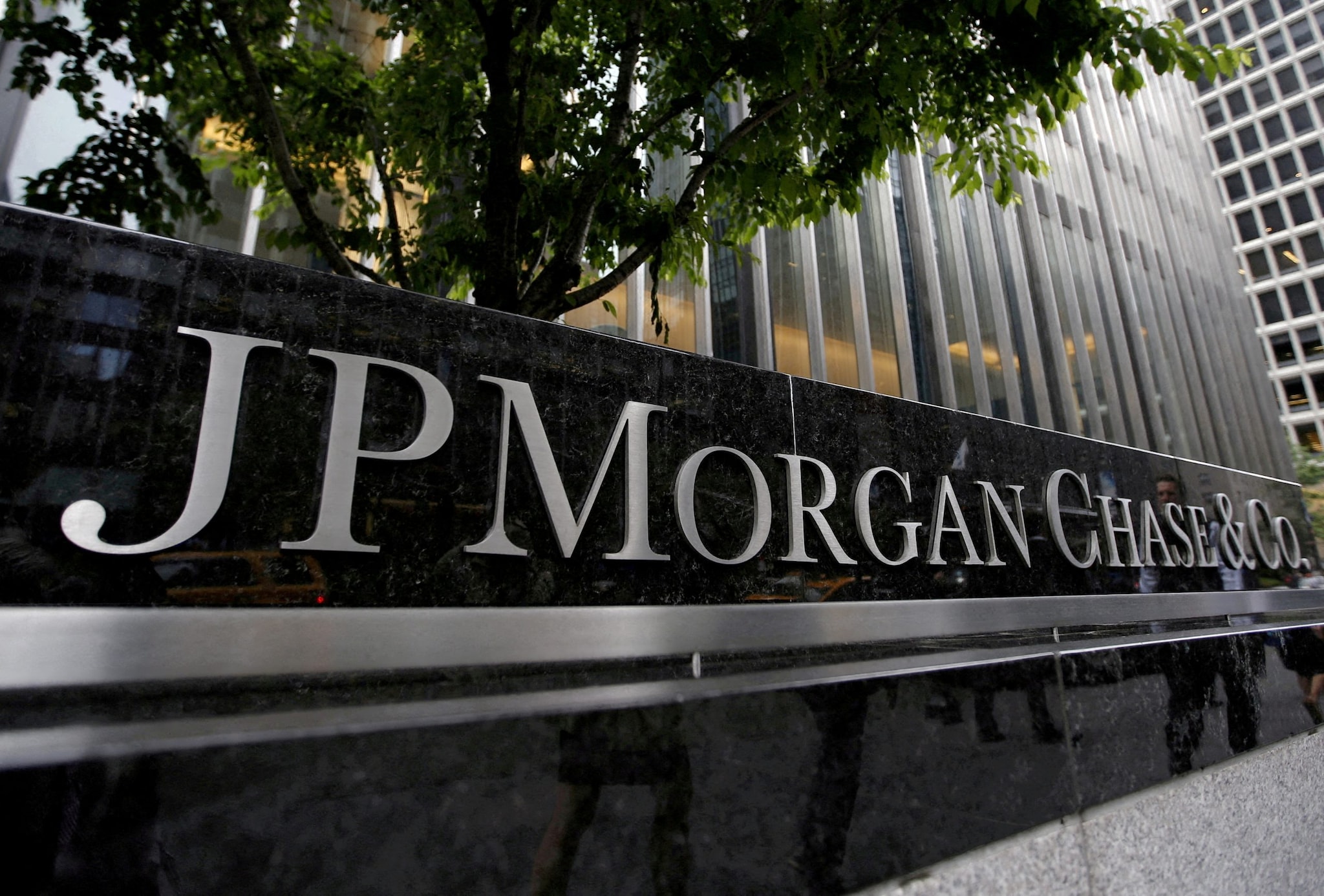
Recently, the public caught a glimpse behind the heavy velvet curtains of JPMorgan Chase. Reports surfaced that the banking giant attempted to settle a lawsuit involving allegations of sexual assault before the details could ever reach a courtroom or a news cycle. The facts are standard for the industry: a private attempt to resolve a dispute, a failure to reach an agreement, and an eventual explosion into the public record. Yet, the story beneath the ledger is about more than just legal maneuvering. It is about the fundamental friction between institutional preservation and individual trauma.
Consider a hypothetical woman named Sarah. She isn't a statistic. She is a professional who walked into a lobby of marble and brass, believing she was entering a meritocracy. When something happens—something that shatters her sense of safety—she doesn't see a "legal risk." She sees a life interrupted. When the bank’s representatives sit across from her legal team, they aren't looking at her eyes. They are looking at a spreadsheet. They are calculating the cost of a headline versus the cost of a settlement. More information into this topic are covered by Investopedia.
This is the cold calculus of corporate risk management.
The Mathematics of Reputation
For a bank like JPMorgan, a lawsuit isn't just a legal battle; it’s a threat to the brand’s "Social" score in the ESG framework that investors now watch with hawk-like intensity. When news broke that the bank had tried to settle quietly, the narrative shifted from the incident itself to the mechanics of the cover-up. It turns out that trying to buy silence can be louder than the noise you were trying to suppress.
The process usually begins with a "demand letter." It’s a polite way of saying, we have something on you, and we’d like to be paid to go away. In the case at hand, the negotiations happened in the shadows, far from the prying eyes of the Southern District of New York. The bank likely weighed the probability of winning at trial against the guaranteed damage of a public filing. In the world of high finance, a 90% chance of winning a trial is still a 10% chance of a catastrophic PR nightmare.
They chose to negotiate.
They failed.
Why do these deals fall apart? Often, it’s because the two sides are speaking different languages. The institution speaks in "non-disclosure agreements" and "no-admission-of-guilt" clauses. The victim, however, is often searching for something the bank’s treasury cannot issue: an apology. Or, at the very least, a sense that the person who harmed them will face a consequence that isn't just a line item in an annual budget.
The Invisible Stakes
When a settlement fails and a lawsuit goes public, the bank loses its most valuable asset: the benefit of the doubt.
Once the filing hits the docket, the "dry facts" become a matter of public record. The allegations of sexual assault, the names of the accused, and the timeline of events are suddenly searchable by every client, employee, and competitor. This is the moment the leverage flips. Before the filing, the bank holds the money. After the filing, the plaintiff holds the narrative.
We have to understand the bravery it takes to walk away from a settlement offer. Imagine being offered more money than you’ve earned in a decade, with the one condition that you never speak of your darkest day again. It is a tempting exit ramp. It promises a return to normalcy. But for some, the money feels like a bribe to betray their own history. When Sarah—or anyone in her position—says "no" to the settlement, they are choosing a path of extreme exposure. They are choosing to have their past excavated by defense attorneys who are paid to find reasons why the victim is to blame.
The bank, meanwhile, is trapped in its own logic. If they pay too much, they invite more lawsuits. If they pay too little, they end up in the news. It is a dance on the edge of a razor.
The Culture of the Vault
The irony of the "House of Morgan" is that its founder, J.P. Morgan himself, once famously said that a man’s character is more important than his money. "A man I do not trust," Morgan testified before Congress, "could not get money from me on all the bonds in Christendom."
Somewhere along the way, the focus shifted from the character of the individuals to the compliance of the machine. The attempt to settle wasn't an act of compassion; it was a function of the machine. It was a tactical move designed to protect the share price. But a share price cannot feel shame, and it cannot offer justice.
When these stories break, we often focus on the dollar amounts. We talk about millions of dollars as if they are points in a game. We forget that the money is meant to compensate for a loss of agency. We forget that the legal system is often a poor tool for fixing a broken spirit. The bank’s attempt to settle was a recognition that the legal system is a meat grinder for everyone involved. No one truly wins a sexual assault trial. The victim is re-traumatized, and the institution is stained.
The Ripple Effect
The failure of this specific settlement sends a message to every other person working in the industry. It says that the walls of the vault are not as thick as they seem. It tells the entry-level analyst and the mid-level VP that the "standard procedure" for handling misconduct is to try and make it disappear before it becomes a problem for the Board of Directors.
But the world is changing.
In a post-transparency era, the "quiet settlement" is becoming an endangered species. Technology and social shifts have made it harder to keep secrets. Employees are more likely to speak out, and the public is less likely to forgive a cover-up. The "human element" that the bank tried to calculate into a settlement has a way of being unpredictable. It is volatile. It is unquantifiable.
We see the headlines and we think of it as a business story. We see the name JPMorgan and we think of the Federal Reserve, interest rates, and global liquidity. We don't think about the person who has to sit in a deposition and recount the worst moments of their life while a team of lawyers looks for a way to discredit them.
The bank’s mistake wasn't necessarily trying to settle—settlement is a rational legal strategy. The mistake was believing that a human crisis could be solved with a purely financial solution.
The glass walls of those conference rooms are meant to provide a view of the city, to make the occupants feel like they are masters of all they survey. But glass is also transparent. And it is fragile. When the pressure of a human story becomes too great, the glass doesn't just crack. It shatters. And when it does, the wind from the street comes rushing in, cold and indifferent to the prestige of the name on the door.
Justice isn't a transaction. It isn't a number. It is the simple, terrifying act of being heard.
The bank tried to buy the silence, but the truth was too expensive. Now, they are paying the one price they never wanted to afford: they are being forced to listen.