Arthur sits at a Formica kitchen table in Toledo, sorting his life into small plastic compartments. Sunday through Saturday. Morning, noon, and night. At sixty-eight, his daily rhythm is dictated by the click of childproof caps and the metallic snap of blister packs. He has a routine for his blood pressure, a routine for his cholesterol, and a different routine for the beta-blockers that keep his heart beating in a steady, predictable march.
Two years ago, a sharp, crushing pain in his chest changed everything. He survived the heart attack, but the fear stayed behind, occupying the quiet corners of his house like an uninvited tenant. His doctor told him plainly that his weight was a ticking clock. Exercise helped, but his knees were worn down from decades on an assembly line. Dieting felt like fighting a losing war against his own biology.
Then came the promise of a weekly injection.
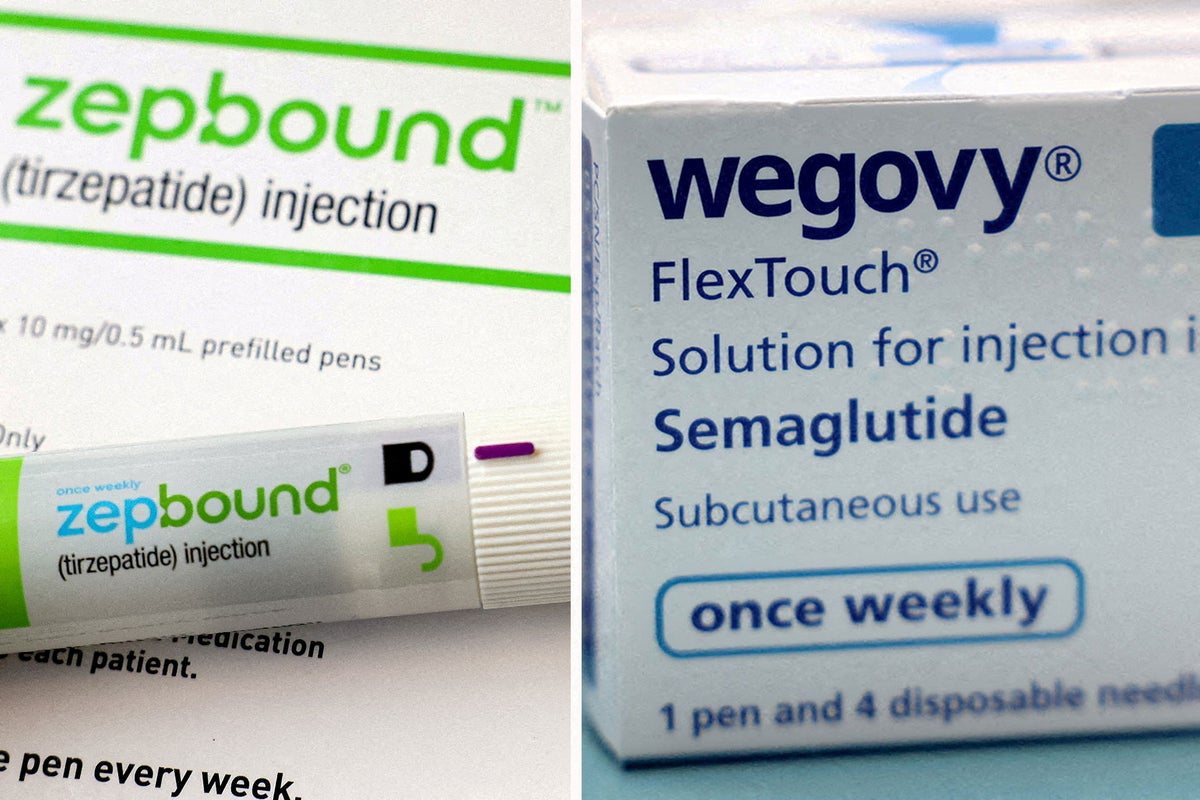
For the first time in his life, Arthur felt a modern medical miracle was within his grasp. The drug, a compound called semaglutide, did not just quiet his appetite; it dropped his risk of having another devastating cardiac event by twenty percent. His doctor wrote the prescription with a sense of genuine optimism.
Then Arthur went to the pharmacy.
The pharmacist looked at the screen, looked at Arthur, and delivered the number: $1,300. Every single month. Because Arthur relies entirely on Medicare, the drug was classified as a luxury, an aesthetic choice, a cosmetic whim. The system viewed his weight as a moral failing rather than a chronic disease, leaving him to choose between financial ruin or waiting for the next ambulance.
This is the invisible wall millions of older Americans hit every day. But a quiet, bureaucratic shift in Washington is finally beginning to tear it down.
The Ghost of a 2003 Law
To understand why Arthur was left stranded at the pharmacy counter, you have to go back more than twenty years. In 2003, when Congress created the Medicare Modernization Act—the sweeping legislation that gave birth to the Part D prescription drug benefit—the medical understanding of obesity was vastly different than it is today.
Lawmakers looked at the weight-loss treatments of the era, heavily influenced by the safety disasters of older diet pills like Fen-Phen, and drew a hard line in the sand. They explicitly banned Medicare from covering drugs used for anorexia, weight loss, or weight gain. In the eyes of the law, managing weight was lumped into the same category as treating hair loss or cosmetic wrinkles. It was deemed a lifestyle issue.
For two decades, that statutory ban remained frozen in stone. Even as medical science advanced, proving that obesity is a complex, neurochemical disease rooted in genetics and brain chemistry, the law refused to budge. Insurance companies followed Medicare's lead. If the federal government would not pay for it, private insurers saw no reason to foot the bill either.
Then came the modern era of GLP-1 receptor agonists.
These drugs do not just burn fat. They mimic natural hormones to signal satiety to the brain, slow digestion, and radically alter metabolic function. Yet, because of a sentence written in a congressional hall in 2003, Medicare was legally forbidden from helping Arthur buy them. The system would gladly pay tens of thousands of dollars for his open-heart surgery, his hospital stays, and his post-stroke rehabilitation. It would not spend a dime on the preventative medicine that could prevent those tragedies from happening in the first place.
The math was broken. The human cost was worse.
The Loophole in the Line
The breakthrough did not come from a change in the law itself. Congress remains logjammed, stuck in a perpetual debate over the upfront cost of updating the 2003 statute. Instead, the change arrived through a shift in how the Food and Drug Administration views these medications.
Consider what happened when clinical trials revealed that these injections did far more than change a number on a bathroom scale. The data showed a profound reduction in strokes, heart attacks, and cardiovascular deaths. Obesity was no longer just the target; it was the trigger for systemic vascular decay.
When the FDA officially approved the drug Wegovy specifically to reduce cardiovascular risk in patients who are overweight or obese, it changed the legal geometry of federal healthcare.
The Centers for Medicare & Medicaid Services looked at the new designation and found an opening. While the 2003 law still strictly prohibits covering a drug for weight loss alone, Medicare can cover a drug if it is approved for a different, medically accepted indication.
By shifting the definition from a weight-loss drug to a heart-protection drug, the regulatory gears began to turn.
Under the updated federal guidance, Medicare Part D plans can now include these medications on their covered formularies, provided the patient meets specific criteria: they must have Medicare Part D, a body mass index that classifies them as overweight or obese, and a formally diagnosed history of cardiovascular disease.
For Arthur, this bureaucratic pivot felt like a sudden gasp of air after minutes underwater. It meant his prescription was no longer viewed as a vanity project. It was recognized for what it always was: a lifeline.
The Friction in the Pharmacy
But logic in Washington rarely translates to immediate relief on Main Street. The policy shift opens a door, but patients are finding a crowded, confusing corridor on the other side.
The reality of Medicare is decentralized. The government does not issue a single list of covered drugs; instead, it relies on private insurance companies to administer individual Part D plans. Each of these companies retains the power to decide exactly how, when, and if they will add these high-cost medications to their specific lists.
The process is slow. Insurance companies are businesses, and these medications are extraordinarily expensive. Adding millions of eligible seniors to the ledger threatens to strain corporate budgets and, consequently, drive up monthly premiums for everyone enrolled in the plan.
To manage the financial shockwave, insurers are erecting structural hurdles.
[The Insurance Gauntlet]
   │
   ▼
1. Prior Authorization (Doctors must prove the medical necessity)
   │
   ▼
2. Step Therapy (Patients must try and fail cheaper drugs first)
   │
   ▼
3. High Tier Placement (Drugs placed on "Specialty" tiers with high coinsurance)
Even when a plan covers the drug, the out-of-pocket costs can remain terrifying. Many seniors find themselves placed in the "specialty tier" of their prescription plan. Instead of a flat twenty-dollar copay, they are asked to pay a percentage of the drug’s actual cost—sometimes twenty to thirty percent.
When a medication costs over a thousand dollars a month, a thirty percent coinsurance payment is still an impossible sum for someone living on a fixed Social Security check. The coverage exists on paper, but the medicine remains safely out of reach behind the glass of the pharmacy counter.
There is also the question of equity. The current criteria require an established history of heart disease. It protects those who have already suffered, but it offers nothing to those trying to prevent their first heart attack. It leaves a massive population of seniors who are severely obese but have not yet had a stroke or a cardiac arrest stranded in the old system, waiting for their health to decline enough to qualify for help.
The Long Road to the Scale
The debate over expanding this coverage further is fundamentally a debate about time and money.
Critics of widespread coverage point to the staggering fiscal projections. If every Medicare beneficiary who met the medical criteria for obesity were given immediate, unrestricted access to these drugs, the cost could threaten the solvency of the entire Part D program. The upfront investment is astronomical, measured in billions of dollars annually.
But the counter-argument is built on a different kind of ledger—one that looks at the long-term cost of neglect.
Treating the chronic complications of untreated obesity is one of the largest drivers of healthcare spending in the United States. It is found in the cost of dialysis for failing kidneys, the cost of joint replacements for ruined knees, and the long-term care required after a paralyzing stroke. Proponents of universal coverage argue that spending money on prevention now avoids a much larger bill later.
More than the financial calculus, there is a cultural reckoning taking place. For generations, American medicine and society at large have treated weight as a matter of personal willpower. If you are heavy, the prevailing logic went, you simply lack discipline.
The science has outpaced the culture. We now know that the body defends its weight set-point with fierce, hormonal tenacity. Expecting someone to simply wish away a chronic metabolic disorder is equivalent to asking a patient to lower their blood pressure through sheer mental focus.
The changing Medicare guidelines represent the first major crack in that cultural wall. It is an admission, written in the dry language of federal regulations, that obesity is a matter of biology, not character.
The View from the Kitchen Table
Back in Toledo, the news of the policy change travels slowly through the mailboxes and evening news broadcasts. Arthur’s doctor has already submitted the paperwork for a prior authorization, a stack of medical records proving that Arthur’s heart is damaged and his weight is an active threat to his survival.
Arthur waits.
He still looks at his plastic pill organizer every morning, tracking the days. The system is moving, but it moves with the agonizing weight of a massive glacier. He knows the approval might take weeks, and even then, he doesn't know if his specific plan’s copay will be an amount he can actually afford to write a check for.
Yet, the anxiety that has filled his kitchen since his heart attack feels a fraction lighter. The bottle of medicine he needs is no longer an impossibility locked away in a realm reserved only for the wealthy. It is a real possibility, caught in the gears of a transitioning system that is finally learning to see him.
The value of a human life cannot be calculated by an actuarial table, though we try to do it anyway. For seniors across the country, the evolution of these rules is not a political debate or a corporate earnings report. It is a matter of how many more mornings they get to spend at their own kitchen tables, watching the sun come up through the window, without counting down the minutes on a clock they cannot stop.