The coffee in the glass cup has gone cold. Outside the reinforced window of a tenth-floor office in downtown Tokyo, the morning commuter trains rush along their steel arteries with a mechanical precision that has defined modern order for generations. But inside this room, the men and women tasked with keeping the lights on are looking past the tracks. They are looking at the water.
History is heavy in places like this. If you found value in this piece, you should check out: this related article.
Listen closely. If you strip away the bureaucratic jargon, the defense white papers, and the sanitized transcripts of closed-door diplomatic briefings, the underlying sound of international security is simple. It is the ticking of a clock.
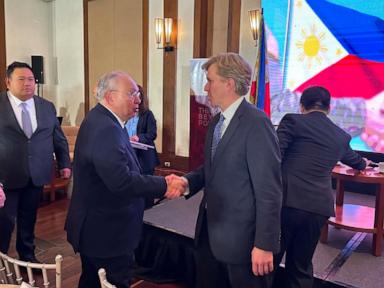
A senior Pentagon official recently stood before a gathering of regional partners with a message that was as uncomfortable as it was urgent. The core of the demand was straightforward. Asian allies must pour more of their own treasury into defense capabilities. Not to start a fight. To stop one. For another angle on this story, check out the recent update from USA Today.
This is where the abstraction ends and the human reality begins.
Imagine Captain Sato. This is a hypothetical portrait based on dozens of real officers currently standing watch across the Western Pacific. Sato does not care about geopolitical theory trees or abstract power balances. He cares about the hull integrity of a forty-year-old patrol vessel, the supply chain for replacement gaskets, and whether his crew can get home in time for their children's birthdays. He knows what peace looks like. It looks like an empty radar screen.
Right now, that screen is getting crowded.
To understand why Washington is pressing its partners to dig deeper into their national budgets, you have to look at the math of modern deterrence. Deterrence is not an emotion. It is an expensive insurance policy. When a neighborhood changes—when a neighbor starts buying padlocks, iron gates, and high-intensity floodlights—the rest of the block cannot pretend they still live in a village where doors are left unlocked.
For decades, the security architecture of the region operated on a relatively simple formula. The United States provided the ultimate umbrella of protection, while Asian allies focused on economic miracles. That division of labor built modern Seoul, Tokyo, and Taipei. It lifted millions out of poverty and turned concrete ports into global hubs of commerce.
That formula has expired.
The economic center of gravity has shifted, but the military weight has not kept pace. A single superpower cannot indefinitely underwrite the defense of multiple hemispheres while navigating its own domestic turbulence. The math no longer pencils out. If deterrence fails, the economic devastation will not be measured in points lost on a stock ticker. It will be measured in burned ports, severed fiber-optic cables, and millions of displaced families.
The Pentagon official's argument was built on this brutal arithmetic. Shared security requires shared sacrifice.
Yet, translating that message into domestic policy within allied capitals is like trying to nail jelly to a wall. In democratic societies, every dollar spent on a missile defense battery is a dollar not spent on elder care, green energy, or tax relief. Politicians face a daily referendum on their choices. Asking voters to approve higher defense spending during peacetime feels like paying for an umbrella when the sky is blue.
Why spend now?
Because by the time the clouds turn dark, it is already too late to buy the material.
Consider the lead time required to build modern military capability. You do not order a frigate on a Tuesday and have it patrolling the coastline by Friday. Advanced defense systems take years to design, build, and crew. The supply chains are fragile, dependent on rare earth minerals, specialized software, and a dwindling pool of skilled labor. If a crisis erupts tomorrow, you fight with what is in the garage today.
And right now, the garages in many allied nations are running low on spare parts.
Critics argue that increased defense spending risks accelerating an arms race. They fear that buying more missiles invites more tension. It is a compelling moral argument, rooted in the genuine desire to defuse conflict through diplomacy. But history offers a harsh counter-narrative. Aggressors rarely attack because their targets are too well-defended. They attack because they smell hesitation. They calculate that the political will to resist is softer than the steel required to break it.
Deterrence is the art of making the cost of aggression impossibly high.
When allies increase their defense investments, they are sending a signal to potential adversaries that the ledger is balanced. They are saying that the price of crossing a border, blockading a strait, or cyber-attacking a power grid is higher than any rational leader is willing to pay.
This is where the human element snaps back into sharp focus.
The goal of every defense dollar spent today is to ensure that Captain Sato never has to fire a shot in anger. It is to make sure that the shipping lanes stay open, that container ships keep gliding into harbors at dawn, and that children can sleep without wondering if tomorrow's headlines will redraw their borders.
Peace is not a natural state. It is an artificial construction, held together by vigilance, alliances, and the willingness to pay the bills for things we hope we will never use.
The coffee in the Tokyo office is stone cold now. The meeting has adjourned. Outside, the commuters continue their rush, indifferent to the silent chess matches playing out in government ministries. But the board has been reset. The demand has been made, clear and unmistakable.
The only question left is whether the partners standing on the front lines of history are willing to pay the price to keep the lights on.