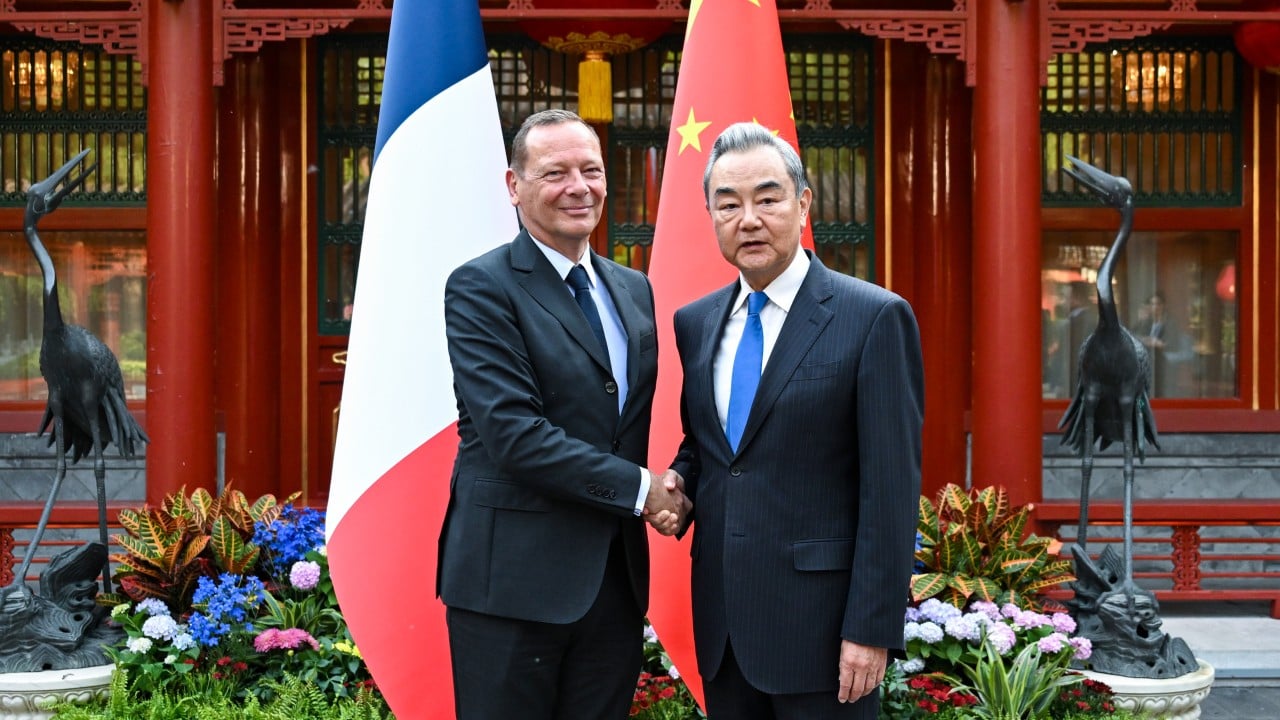
Beijing has issued a blunt reminder to Paris that the "One-China" principle is not a suggestion but a requirement for continued economic stability. During the latest round of high-level strategic talks, Chinese officials made it clear that French engagement with Taiwan remains the single greatest friction point in their bilateral relationship. This isn't just about diplomatic protocol. It is a calculated move to pressure France into self-censorship at a time when European leaders are increasingly torn between American security alliances and Chinese market access. By demanding total adherence to its territorial claims, Beijing is effectively testing whether France’s commitment to "strategic autonomy" includes the right to define its own foreign policy in the Indo-Pacific.
The timing of these demands is hardly accidental. France has long attempted to play the role of the "third way" in global politics, refusing to be a complete subordinate to Washington while maintaining a presence in the South China Sea. However, the Chinese Communist Party (CCP) views this middle ground with growing impatience. For Beijing, the goal is simple. They want to ensure that France, as a leading voice in the European Union, discourages any collective European shift toward a more formal recognition of Taiwan.
The Strategy Behind the Warning
When Chinese diplomats talk about "respecting core interests," they are using a shorthand for the survival of their own political legitimacy. The "One-China" principle holds that there is only one sovereign state under the name China and that Taiwan is an inseparable part of it. For decades, France has navigated this by maintaining unofficial trade and cultural ties with Taipei. But the goalposts are moving.
Beijing now views even minor parliamentary visits or joint scientific ventures as violations of sovereignty. By raising these issues in high-level strategic dialogues, China is signaling that the era of "business as usual" is over. They are tying trade deals, aircraft orders, and agricultural exports directly to the French government’s willingness to distance itself from Taiwan. This is the weaponization of interdependence in its purest form.
France finds itself in a precarious position. President Emmanuel Macron has championed the idea that Europe should not be a "vassal" to either the U.S. or China. Yet, to maintain that independence, he needs Chinese investment and cooperation on global issues like climate change. Beijing knows this. They are using France's desire for autonomy as a lever to force them into a corner on the Taiwan issue.
Economic Leverage and the Airbus Factor
The backbone of the Sino-French relationship has always been industrial cooperation. From nuclear energy to aerospace, the two nations are deeply entwined. In the past, a massive order for Airbus planes was often the reward for a successful diplomatic summit. Today, those same orders are used as a silent threat.
If France pushes too hard on human rights or regional security in the Pacific, those multi-billion-dollar contracts can easily vanish or be redirected to competitors. This creates a powerful domestic lobby within France. Large corporations, fearful of losing access to the world’s second-largest economy, pressure the Elysee Palace to keep the peace. It is a classic squeeze play. The Chinese government doesn't need to issue a formal trade embargo when the mere hint of a "chilled relationship" is enough to make CEOs panic.
The Indo Pacific Dilemma
France is the only EU member with significant military assets and territories in the Indo-Pacific. This makes their stance on Taiwan particularly sensitive. Unlike Germany, which views the region primarily through a commercial lens, France sees itself as a resident power.
- Security Interests: France maintains a permanent military presence in New Caledonia and French Polynesia.
- Freedom of Navigation: French warships regularly transit international waters in the region, sometimes drawing the ire of the People’s Liberation Army Navy.
- Alliances: Paris is trying to build a "security architecture" with partners like India and Australia, which Beijing views as an attempt to contain its influence.
By insisting that France respect the "One-China" principle, Beijing is attempting to neutralize France as a regional security actor. They want Paris to acknowledge that the Taiwan Strait is a domestic Chinese matter, not an international waterway where French ships have any business.
The European Power Struggle
France does not act in a vacuum. As a core leader of the EU, its actions set the tone for the rest of the continent. If Beijing can successfully cow France into a more submissive posture, it sends a clear message to smaller European nations like Lithuania or the Czech Republic, which have been more adventurous in their support for Taiwan.
There is a growing divide within Europe. On one side, you have the "Atlanticists" who believe Europe must stand firmly with the United States against Chinese expansionism. On the other, you have the "Pragmatists," often led by France and Germany, who believe that a complete "decoupling" from China would be economic suicide. Beijing is a master at exploiting these internal fractures. By focusing their pressure on Paris, they are targeting the heart of European decision-making.
Rhetoric vs Reality
The official statements coming out of these high-level talks are often scrubbed of their more aggressive undertones. The public reads about "mutual respect" and "strengthening ties." Behind closed doors, the language is far more transactional.
Chinese officials are known for their "Wolf Warrior" diplomacy, but with France, they often use a more sophisticated approach. They appeal to France’s pride. They frame the "One-China" principle as a matter of honoring historical agreements, specifically the 1964 recognition of the People’s Republic by Charles de Gaulle. They suggest that by standing with China, France is upholding its tradition of independence from Anglo-American dictates. It is a seductive argument for a nation that prides itself on its unique role in the world.
The Cost of Compliance
The danger for France is that "respecting" the principle is a slippery slope. What starts as a promise not to sell weapons to Taiwan can quickly morph into a demand to block Taiwanese participation in international organizations or to prevent French journalists from reporting on the island.
We have already seen how Beijing treats countries that defy its narrative. Australia faced a brutal trade war for daring to ask for an investigation into the origins of COVID-19. Norway was frozen out for years after the Nobel Peace Prize was awarded to a Chinese dissident. France is watching these examples closely. The fear of being the next target of "economic coercion" is a powerful deterrent against taking a principled stand.
Sovereignty Under Pressure
The core of this issue isn't really about Taiwan. It’s about who gets to decide French foreign policy. If Beijing can dictate which officials a French minister can meet or what words a French diplomat can use, then French sovereignty is being eroded from the outside.
France has spent centuries building a reputation as a defender of Enlightenment values and the rules-based international order. To trade that away for short-term economic stability is a gamble with long-term consequences. The more France gives in to these demands, the more demands will follow. This is the nature of the relationship with a rising superpower that views compromise as a sign of weakness.
The French government must decide if its "strategic autonomy" is a genuine policy or merely a slogan. If it is the former, they will have to accept that defending their principles will come with a significant financial price tag. Beijing has made its position clear. Now the ball is in Paris’s court.
Standing up to a superpower requires more than just tough talk in the National Assembly. It requires a fundamental restructuring of economic dependencies and a willingness to withstand the inevitable retaliation. If France continues to prioritize luxury goods exports and aircraft sales over its own geopolitical agency, it will eventually find that it has neither.
The strategic talks in Beijing were not a meeting of equals. They were a performance of power. China played its hand with the confidence of a nation that knows its customers are too invested to walk away. France, meanwhile, is still trying to figure out if it is a customer or a partner.
Stop looking for a middle ground that no longer exists. Beijing has mapped out the path it expects France to follow, and it doesn’t include any detours through Taipei. Every diplomatic concession made today is a brick in a wall that will eventually hem in European influence in Asia. The choice isn't between China and the U.S.; it's between holding the line on national sovereignty or becoming a junior partner in a Chinese-led order.



