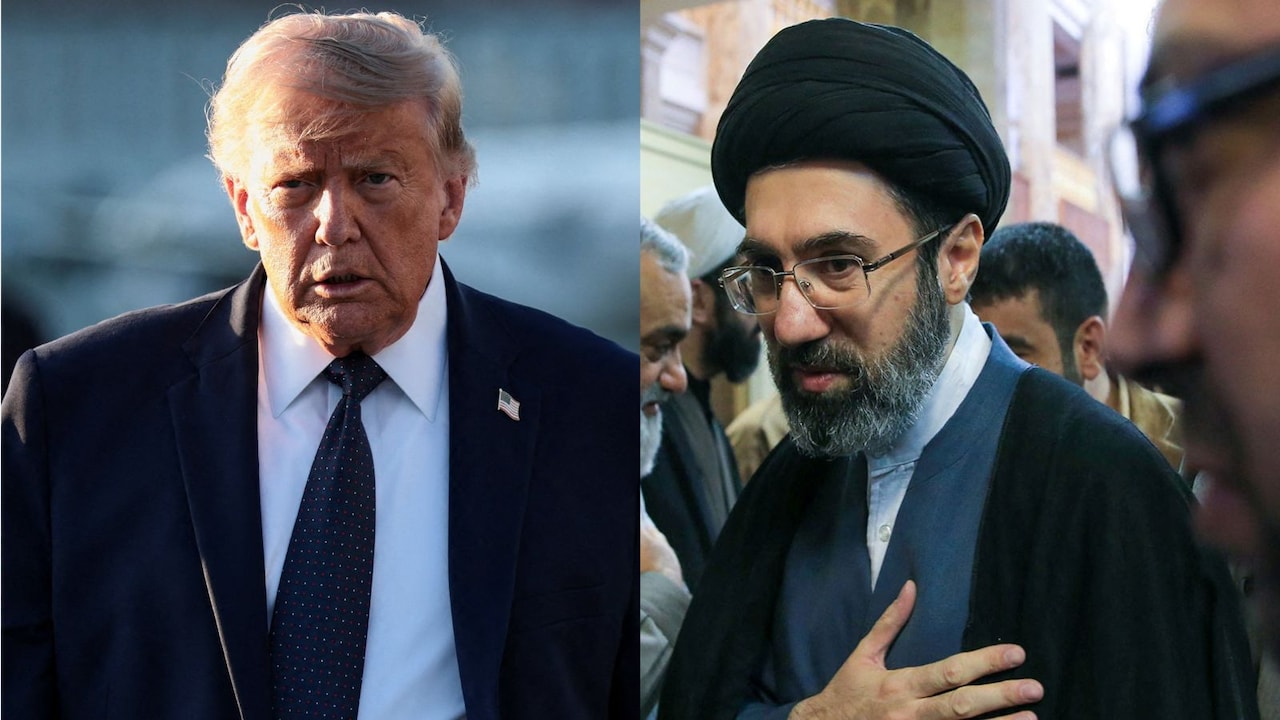
The mainstream media loves a savior, and it loves a villain. When headlines scream about a president claiming absolute authority over foreign policy, the pundit class immediately swallows the bait. They spin narratives about a unilateral shift in global dynamics, painting a picture where a single signature in Washington can instantly collapse an economy or forge a historic peace deal.
It is a comforting illusion. It is also entirely wrong.
The lazy consensus surrounding executive deals assumes that international relations operate on pure willpower. Analysts look at aggressive rhetoric and see a tectonic shift. They ignore the reality of institutional inertia, statutory constraints, and the cold logic of global markets. No executive possesses unchecked capability to dictate the terms of global trade isolation at whim. The systemic machinery governing economic warfare is far too rigid for theatrical posturing to alter its course.
The Statutory Cage of Economic Warfare
The fundamental flaw in standard geopolitical reporting is the failure to distinguish between rhetoric and statutory law. A leader can proclaim infinite authority to a crowd of reporters, but the Treasury Department operates under the strict confines of legislation passed by Congress.
Consider the architecture of the American sanctions apparatus against Tehran. This framework was not built overnight by executive order. It is a dense, multi-layered fortress constructed over decades through measures like the Iran Sanctions Act of 1996 and the Countering America's Adversaries Through Sanctions Act of 2017.
These laws do not simply vanish because a president wishes to flex muscles or strike a sudden bargain. They contain specific statutory triggers and codifications. To permanently dismantle the primary architecture of these financial restrictions, Congress must certify specific changes in state behavior.
Imagine a scenario where an administration attempts to unilaterally lift primary sanctions without legislative buy-in. The resulting legal challenges from Capitol Hill would freeze the policy in place for months, if not years. Financial institutions do not move billions of dollars based on a press conference; they move them based on predictable, long-term legal certainty.
The Illusion of Absolute Compliance
The prevailing narrative assumes that when Washington commands, the world obeys. This perspective ignores the rapid evolution of global financial workarounds. The efficacy of unilateral economic pressure peaked over a decade ago. Today, the enforcement of secondary sanctions faces a steep curve of diminishing returns.
Global oil markets have adapted to permanent friction. Small, independent refineries in East Asia do not rely on the clearing mechanisms of the Western banking sector. They transact in local currencies, utilize non-Western insurance networks, and rely on shadow fleets that operate entirely outside the jurisdiction of maritime authorities in New York or London.
I have watched policy analysts track tanker movements for years, expecting that a spike in aggressive rhetoric from the White House would automatically dry up illicit oil flows. The data shows the exact opposite. Volatility peaks temporarily, but trade routes quickly re-route through intermediaries. When a state is driven entirely out of the formal banking system, it builds an alternative system. Once that alternative system becomes profitable for third-party intermediaries, a president's words lose their bite.
Why Corporations Fear the Next Election Cycle
Even if an administration successfully navigates domestic legal hurdles to offer a new framework, multinational corporations will not rush back into the market. This is the structural reality that conventional commentators miss entirely.
Corporate boardrooms do not plan on a four-year horizon. A major infrastructure, energy, or industrial investment requires a decade to realize a return on capital. Because executive actions can be reversed by the next occupant of the Oval Office with the stroke of a pen, any deal built solely on executive authority is fundamentally unstable.
The corporate memory of the 2015 nuclear agreement remains a stark warning. European conglomerates rushed to sign billions of dollars in contracts, only to see those investments evaporate three years later when the political winds shifted. No chief compliance officer will approve a major capital allocation based on a personalized guarantee that lacks the permanence of a formal treaty. The threat of future snapback restrictions creates a permanent risk premium that no amount of political theater can erase.
The Fatal Flaw of the Maximum Pressure Fallacy
The mainstream foreign policy establishment operates on a flawed premise: if you apply enough economic pain, a regime will eventually face an existential choice between survival and total capitulation. This view ignores historical precedent and the internal dynamics of highly centralized states.
Economic pressure rarely forces a structural ideological retreat. Instead, it consolidates internal power. When resources become scarce, the state apparatus tightens its grip over the distribution of those resources. Independent economic actors are wiped out, leaving only state-backed entities and black-market syndicates controlled by the security apparatus.
The pressure does not democratize or moderate the target; it eliminates the middle class—the very segment of society most likely to push for integration with the global economy. By treating a complex nation-state as a monolithic entity that responds predictably to financial pain, Western policymakers consistently achieve the exact opposite of their stated goals.
The Real Cost of Financial Weapons
Every time a government uses the global financial system as a weapon, it weakens the long-term utility of that weapon. The reliance on clearing systems based on Western currency forces competing powers to invest heavily in parallel financial infrastructure.
We are already seeing the early stages of this fragmentation. Central banks across the globe are diversifying their reserves away from traditional Western debt instruments and into tangible assets like gold. Cross-border interbank payment systems that bypass Western nodes are growing in volume every quarter.
This is the true cost of treating economic policy as a personal tool of intimidation. The immediate result might be a temporary drop in a competitor's export volume, but the long-term consequence is the gradual erosion of the structural dominance that made the pressure effective in the first place. When the financial plumbing of the world is decentralized, the ability to project power through financial mechanisms disappears entirely.
The theatrics of leadership sell newspapers and generate clicks. But the real leverage belongs to the quiet realities of statutory law, corporate risk aversion, and alternative trade networks. A leader can claim there are no limits to power, but the global economy always enforces its own boundaries.