The conversion of decommissioned industrial infrastructure into cultural capital represents a high-stakes arbitrage between historical preservation costs and modern experiential demand. At the Völklingen Ironworks, a UNESCO World Heritage site, this transition is not merely an aesthetic choice but a strategic deployment of "Grey Energy"—the embodied energy and historical narrative already present in the steel and masonry. While the competitor narrative focuses on the visual novelty of art within iron, the underlying economic engine is a complex interplay of spatial utility, adaptive reuse constraints, and the monetization of industrial decay.
The Structural Mechanics of Adaptive Reuse
Transforming a massive ironworks into a venue for dozens of artists requires a three-factor optimization of the physical plant. The site cannot be treated as a blank canvas; it is a rigid system with specific load-bearing capacities and environmental variables.
Spatial Volatilities and Artist Integration
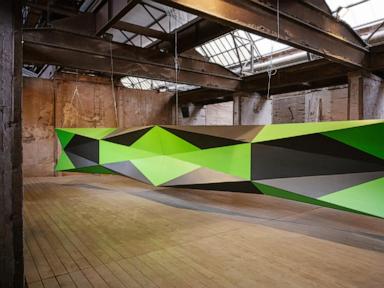
Industrial sites like Völklingen present a high degree of spatial volatility. Unlike a "White Cube" gallery, which offers a neutral background to minimize interference with the art, an ironworks imposes its own narrative. The integration of art into this environment functions through a mechanism of Contextual Tension.
- Scale Disparity: Artists must navigate the sheer volume of the sintering plant or the blower shed. Works that succeed do so by either matching the industrial scale or by creating a deliberate, minute contrast that highlights the site's vastness.
- Material Interactivity: The interaction between contemporary media (digital projections, synthetic resins) and the oxidative state of the iron (rust) creates a unique temporal layer. The site is a living chemical process, not a static building.
- Kinetic Echoes: Many installations leverage the acoustic properties of high-ceilinged, metallic environments, turning the physical structure into a resonator. This utilizes the site’s original acoustic profile—formerly dominated by mechanical noise—and repurposes it for auditory art.
The Economic Pillars of UNESCO Industrial Conversion
The financial viability of hosting large-scale art exhibitions in a World Heritage site rests on three primary pillars. Without this structural support, the project would collapse into a subsidized curiosity rather than a sustainable cultural destination.
The Preservation-Utility Paradox
Maintaining a UNESCO status requires adherence to strict conservation protocols. Every structural modification is a cost-center. However, the utility of the site as an art venue provides the revenue stream necessary to offset these costs. The efficiency of this model is measured by the Utility-to-Conservation Ratio.
- Fixed Costs: Structural stabilization, rust mitigation, and safety compliance for public access.
- Variable Costs: Exhibition-specific lighting, climate control for sensitive pieces, and security for high-value installations.
- Revenue Drivers: Ticket sales, brand partnerships, and the "Halo Effect" on local tourism, which increases the site’s political and social value.
The Scarcity Value of Industrial Authenticity
In a saturated global tourism market, "Industrial Authenticity" is a non-renewable resource. The ironworks serves as a physical proof of the Anthropocene. By introducing artists, the site managers are performing a Cultural Refraction: taking the raw history of labor and coal and bending it through a creative lens to make it digestible for a modern, post-industrial audience. This increases the "Experience Premium" that visitors are willing to pay.
Engineering the Visitor Journey: A Flow Analysis
The success of a multi-artist exhibition in a sprawling industrial complex depends on managing visitor flow and cognitive load. The ironworks is a labyrinthine structure that can easily overwhelm the senses.
Pathing Logic and Friction Points
Strategic planning involves identifying friction points where the industrial architecture inhibits movement. Effective curation uses art as a "Waypoint System" to guide visitors through the complex geography of the plant.
- The Orientation Phase: The entry point must reconcile the visitor's scale with the plant's magnitude.
- The Exploration Phase: Art is distributed to encourage movement into peripheral zones, such as the dark corners of the coal bunkers or the heights of the charging gallery.
- The Contemplation Phase: Specific zones are designated for lower sensory input, allowing visitors to process the intersection of the art and the site history.
Technical Constraints of the Ironworks Environment
Artists working in this environment face technical challenges that would not exist in a traditional studio or gallery. These constraints dictate the medium and the method of the installations.
- Environmental Stability: Industrial sites lack HVAC systems. Fluctuations in humidity and temperature mean that materials must be resilient. Paper-based works or delicate electronics require localized micro-climates, significantly increasing installation complexity.
- Structural Integrity: Mounting art to 100-year-old iron requires non-invasive techniques to satisfy UNESCO regulations. Magnetic mounts, freestanding armatures, and tension-based systems are preferred over drilling or welding.
- Lighting Physics: The absorption of light by dark, rusted surfaces is immense. Lighting designers must account for high "Light Loss Factors," requiring high-lumen output and precise beam control to make art visible without washing out the atmospheric shadows of the site.
The Socio-Economic Ripple Effect
The reactivation of a site like Völklingen through art creates a significant "Regional Value Add." The transition from an extraction-based economy (iron and coal) to a knowledge-and-experience-based economy is a difficult pivot.
The Catalyst Effect
Art acts as the catalyst for this transition by re-branding a "Rust Belt" region as a "Culture Hub." This is not merely cosmetic. It attracts a demographic with high disposable income and stimulates the local service economy. However, the limitation of this model is the Gentrification Threshold: the point at which the cultural value of the site outstrips the local community's ability to engage with it, leading to a "Museumification" of the region.
Risk Assessment in Post-Industrial Curation
Managing an art-driven industrial site involves navigating unique risk profiles.
| Risk Category | Variable | Impact Mitigation |
|---|---|---|
| Operational | Structural failure of aging catwalks | Redundant inspections and load-limit sensors |
| Environmental | Accelerated oxidation due to increased human respiration/humidity | Enhanced ventilation and targeted desiccant use |
| Reputational | Clash between "Elite" art and "Working Class" history | Curatorial focus on labor narratives and local artist inclusion |
| Financial | Subsidy withdrawal or fluctuating tourist numbers | Diversification into private events and digital twin experiences |
The Bottleneck of Historical Weight
The primary bottleneck is the "Historical Weight" of the site. If the art is too superficial, it is swallowed by the gravity of the ironworks' history. If it is too dense, it creates a barrier to entry for the general public. The curator’s role is one of Narrative Balancing, ensuring that the art provides a contemporary bridge to the past without erasing the grit and trauma of the original industrial labor.
Strategic Operational Directive
To maximize the ROI (Return on Impact) for future industrial-cultural conversions, stakeholders must move beyond the "Art in a Shed" mentality and adopt a Systems-Integrated Approach.
- Audit Embodied Narrative: Before selecting artists, perform a deep-dive audit of the site’s specific history—not just the "what" (iron) but the "who" (the social hierarchy of the workers). Match artists based on their ability to engage with these specific data points.
- Modular Infrastructure: Invest in semi-permanent, non-invasive infrastructure (power grids, data loops, mounting rails) that allows for rapid turnover of installations without structural damage.
- Digital Integration: Utilize Augmented Reality (AR) to overlay the original mechanical functions of the machinery onto the current art installations. This solves the "Information Density" problem by providing technical context without cluttering the physical space.
The Völklingen model proves that industrial ruins are not liabilities to be hidden, but assets to be leveraged. The true value lies in the friction between the permanence of the iron and the transience of the art. The strategic play is to institutionalize this friction, creating a recurring cycle of renewal that prevents the site from becoming a static monument and keeps it as a dynamic node in the global cultural network.