The headline claiming that "Democrats are ready to sacrifice Americans’ well-being for ideology," as featured by guests on RT, relies on a classic media framing device. It sets up a clean binary: pragmatic economic self-interest on one side, and destructive ideological purity on the other.
It makes for compelling television. It is also an incomplete picture of how American economic policy actually works. For a closer look into similar topics, we suggest: this related article.
When commentators on outlets like RT—a Russian state-controlled media network—critique U.S. domestic politics, their arguments often mirror common domestic talking points. They point to inflation, energy costs, regulatory burdens, and government spending as proof that Democratic policies prioritize abstract ideals—such as rapid green energy transitions or expansive social safety nets—over the immediate financial health of working families.
To understand whether this critique holds water, we have to look past the cable-news soundbites and examine the actual economic theories, trade-offs, and historical realities driving both sides of the American political divide. For further background on this development, extensive analysis can be read at Al Jazeera.
The Anatomy of the "Ideology vs. Well-Being" Argument
The core thesis presented by critics of the Democratic platform is straightforward. They argue that policies aimed at long-term structural change—like subsidizing renewable energy, tightening environmental regulations on fossil fuels, or expanding federal entitlements—create immediate short-term pain.
Higher gas prices, increased compliance costs for small businesses, and inflationary pressures from federal stimulus packages are cited as direct evidence. In this framing, "well-being" is defined strictly as immediate purchasing power, low taxation, and minimal state intervention. Any policy that disrupts those metrics in the short term is labeled "ideological."
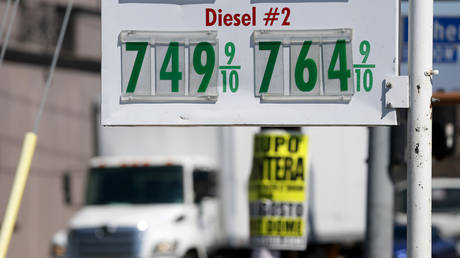
This argument resonates because the pain of inflation and high interest rates is real and immediate. When a family pays more at the grocery store or the pump, abstract promises about future climate stability or long-term social equity do not balance their monthly budget.
However, reducing this debate to "pragmatism versus ideology" misses a fundamental truth about economics: every economic policy is rooted in an ideology.
The Invisible Ideology of the Status Quo
The idea that free-market deregulation and low taxes represent pure "common sense" rather than an ideology is one of the most successful branding exercises in modern politics.
In reality, prioritizing immediate market efficiency and minimal government intervention is itself a distinct ideological framework—often associated with classical liberalism or supply-side economics. Proponents of this view believe that an unfettered market is the most efficient allocator of resources and the surest engine of human prosperity.
When critics attack Democratic policies as "ideological," they are rarely comparing ideology to pure objectivity. They are comparing one set of values against another:
- The Interventionist View: Holds that markets naturally fail to price in long-term externalities—such as carbon emissions, healthcare bankruptcies, or infrastructure decay. From this perspective, failing to regulate or invest today guarantees a catastrophic decline in well-being tomorrow.
- The Market-First View: Holds that government intervention distorts price signals, stifles innovation, and creates bureaucratic drag. From this perspective, artificially manipulating the economy to solve future problems destroys the wealth-creation engine needed to handle those problems when they arrive.
Neither side has a monopoly on caring about American well-being. They fundamentally disagree on the timeline and the mechanism for achieving it.
Where the "Sacrifice" Narrative Breaks Down
If we look at actual economic data rather than partisan rhetoric, the claim that one party is uniquely willing to sacrifice public well-being collapses under scrutiny. Both major U.S. political parties regularly enact policies that trade short-term economic comfort for long-term ideological goals—and both regularly abandon their stated ideologies when political survival demands it.
1. The Debt and Spending Paradox
Critics frequently point to Democratic spending bills—such as the American Rescue Plan or the Inflation Reduction Act—as reckless ideological experiments that fueled inflation. Economists across the spectrum, including former Treasury Secretary Larry Summers, warned that injecting massive fiscal stimulus into an already recovering economy would overheat demand and drive up prices.
Yet, fiscal discipline is rarely practiced by either party when in power. During the Trump administration, the 2017 Tax Cuts and Jobs Act was passed on the ideological premise that corporate tax cuts would pay for themselves through explosive economic growth. According to analyses by the nonpartisan Congressional Budget Office (CBO), the law instead added roughly $1.9 trillion to the national debt over a decade. Similarly, bipartisan pandemic relief bills in 2020 injected trillions into the economy, setting the stage for the inflationary cycle that followed.
2. Energy Policy and Market Realities
The energy debate is the favorite battleground for the "ideology over well-being" narrative. Critics argue that Democratic hostility toward fossil fuels restricts supply and punishes consumers.
While regulatory hurdles and rhetoric around phasing out oil and gas certainly impact investor sentiment, the data tells a more complicated story. Under the Biden administration, U.S. crude oil production actually reached all-time record highs in 2023 and 2024, surpassing production levels seen under any previous president. Global oil prices are dictated primarily by OPEC+ production decisions, geopolitical conflicts, and global demand—not solely by White House executive orders.
Conversely, aggressively subsidizing green energy through tax credits carries real risks. It can lead to capital misallocation, supply chain bottlenecks, and higher upfront costs for taxpayers. Both approaches involve calculated gambles with public money and consumer prices.
3. Trade and Protectionism
For decades, the consensus among mainstream economists was that free trade maximized consumer well-being by lowering the cost of goods. Today, both parties have abandoned that consensus in favor of economic nationalism and industrial policy.
Whether it is tariffs on foreign imports championed by Republicans or "Buy American" mandates and domestic manufacturing subsidies pushed by Democrats, both sides are actively choosing to raise consumer prices in the short term. They are making an ideological bet that reshoring supply chains and protecting domestic industries is worth the inflationary cost to everyday shoppers.
Why Media Outlets Frame It This Way
Understanding why outlets like RT amplify the "Democrats vs. Americans' well-being" narrative requires looking at media incentives.
For state-sponsored international broadcasters, highlighting domestic dysfunction and framing U.S. leadership as out-of-touch elites serves a clear geopolitical purpose: it undermines confidence in democratic governance and amplifies internal polarization.
For domestic partisan media—on both the left and the right—binary outrage drives engagement. Nuanced discussions about discount rates, negative externalities, and fiscal multipliers do not generate clicks. Telling an audience that their political opponents are actively trying to ruin their lives does.
What People Actually Get Wrong About Economic Policy
When voters evaluate political claims about their economic well-being, they often fall into three traps:
- Confusing Correlation with Presidential Control: Presidents receive far too much credit when the economy booms and far too much blame when it struggles. Monetary policy set by the independent Federal Reserve, global supply shocks, demographic shifts, and technological innovation exert far more influence over daily financial reality than any single piece of legislation.
- Ignoring Opportunity Costs: Every policy choice has a hidden price tag. Choosing not to invest in infrastructure or clean energy keeps taxes lower today, but the cost shows up later in crumbling bridges, grid failures, or extreme weather recovery bills. Choosing to spend heavily today addresses those risks, but the cost shows up immediately in debt service and inflation.
- Treating "The Economy" as a Monolith: A policy that hurts one group often helps another. High interest rates punish homebuyers and small businesses needing loans, while rewarding retirees and savers holding treasury bonds. Tariffs hurt retail consumers while protecting specific manufacturing workers. When a pundit claims a policy hurts "Americans," the real question is: which Americans?
How to Cut Through Partisan Economic Spin
You do not need an economics degree to spot when a commentator is selling you a simplified narrative. The next time you read an article or watch a segment claiming a political party is sacrificing your well-being for ideology, apply three filters:
- Ask about the timeline. Is the critique focused entirely on the next six months while ignoring the next ten years, or vice versa? Good policy balances both; partisan spin weaponizes one against the other.
- Look for the trade-off. If a commentator claims their preferred policy has zero downsides—that you can cut taxes without raising debt, or transition an entire energy grid without raising costs—they are selling a fantasy.
- Check the incentive of the messenger. State-backed outlets have geopolitical agendas. Partisan think tanks have donor agendas. Cable networks have ratings agendas.
Politics is not a battle between pragmatists who want you to prosper and ideologues who want you to suffer. It is a continuous, messy negotiation over which risks we are willing to tolerate today in order to secure the future we want tomorrow.