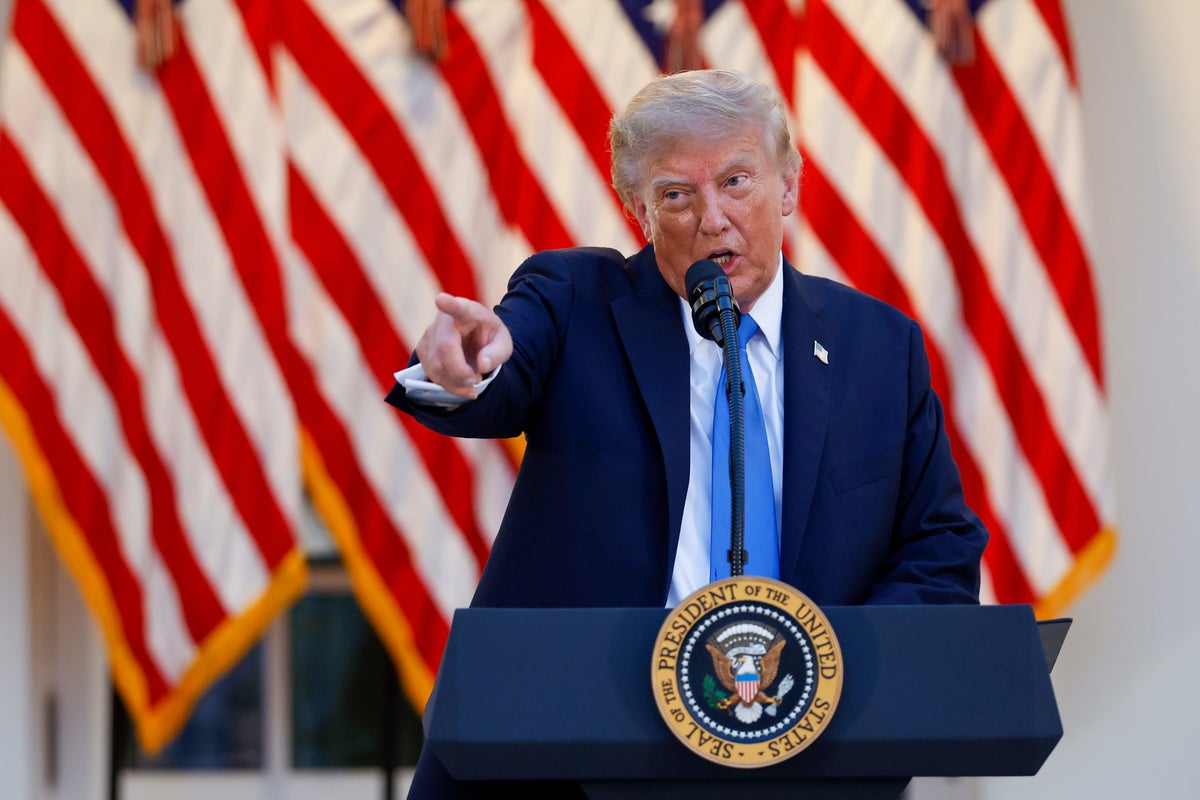
Electoral survival in competitive congressional districts requires a precise calculus of local voter alignment versus national brand toxicity. When a sitting executive suffers from public approval ratings compressed into the mid-thirties, candidates running in purple or suburban districts face an immediate operational crisis. The strategic divergence currently fracturing the Republican caucus reveals how structural self-preservation overrides party loyalty when a national figure becomes a net negative on local balance sheets.
The Split Incentive Problem
The structural tension between national party leadership and district-level campaigns can be modeled through conflicting optimization goals. A national executive prioritizes brand dominance, legacy protection, and the centralization of political capital. Conversely, a district-level incumbent or challenger must maximize localized vote share among independent and moderate constituencies who frequently harbor deep skepticism toward the executive branch.
When national approval metrics drop, the localized cost function shifts dramatically. The presence of a polarizing national figure ceases to be a mobilizing asset and transforms into a liability that repels swing voters. Vulnerable incumbents in competitive jurisdictions face an environment where accepting campaign support from the executive triggers an immediate counter-mobilization of opposition voters. This dynamic explains why campaign managers in double-digit districts historically won by the party have communicated explicit boundaries to national handlers, noting that physical appearances by the president would actively depress turnout among crucial target demos.
The Liquidity Trap of Campaign Capital
Beyond personal appearances, the allocation of financial resources exposes a secondary fault line between the executive apparatus and congressional campaigns. Major political action committees associated with the executive command vast war chests amassed through continuous digital fundraising and corporate alignment. However, empirical observations of spending patterns reveal a persistent liquidity bottleneck.
Campaign finance disclosures indicate that massive sums gathered under the banner of midterm preparedness often remain sequestered rather than flowing into competitive House and Senate races. This hoarding behavior stems from distinct financial incentives:
- The executive apparatus faces post-presidential overhead, including legal defense funds, administrative upkeep, and future political infrastructure, creating an incentive to preserve cash reserves.
- Congressional campaign committees operate under tight calendar constraints where unspent cash past a specific threshold loses marginal utility due to the finite window of early voting and broadcast advertising saturation.
- Donors who initially capitalized executive accounts anticipating aggressive midterm distribution begin to throttle future contributions as funds sit idle, fearing misallocation.
This financial friction leaves individual campaigns structurally disadvantaged against opposing candidates who can rely on consistent small-dollar donor pipelines and active party infrastructure investment.
Geographic Insulation and Operational Disconnect
The strategic disconnect is further exacerbated by the centralization of party events. Attempting to manufacture momentum through high-profile national conventions or centralized rallies often fails to address the granular realities of localized ground games. When national gatherings demand high financial buy-ins from legislators while failing to draw the critical mass of independent voters required to swing tight contests, they function as an inefficient allocation of candidate time and resources.
Incumbents calculating their time-return ratio recognize that days spent navigating national spectacles take away from direct voter contact in suburban precincts. The operational choice to skip centralized assemblies in favor of localized door-to-door retail politics represents a calculated rejection of top-down brand association. Candidates isolate their local campaigns by building distinct micro-brands focused on regional economic concerns rather than tying their political viability to national controversies or executive declarations.
Strategic Execution for Contested Districts
Navigating an election cycle defined by executive unpopularity requires a disciplined execution framework. Campaigns must ruthlessly audit their voter files to identify ticket-splitters who support local economic initiatives but reject national figures. Operational resources should bypass centralized national apparatuses entirely, directing funds toward hyper-targeted digital streaming and localized mailers that bypass traditional broadcast toxicity. Incumbents must establish brand independence early, defining their legislative record through local infrastructure delivery and constituent service rather than national ideological alignment.
Trump's super PAC has not spent on key midterm races, GOP fears he never will
This video provides an in-depth look at the financial standoff between congressional Republicans and the executive's super PAC regarding the distribution of campaign funds for the midterms.