The crisp autumn air in northwest Calgary has a way of making everything feel sharp and clean. On a Saturday afternoon in Cambrian Heights, the off-leash dog park is usually a symphony of joyful chaos. You hear the thud of tennis balls hitting the turf, the panting of exhausted retrievers, and the low, rolling rumble of dog owners trading neighborhood gossip.
For Sarah, this park was a sanctuary.
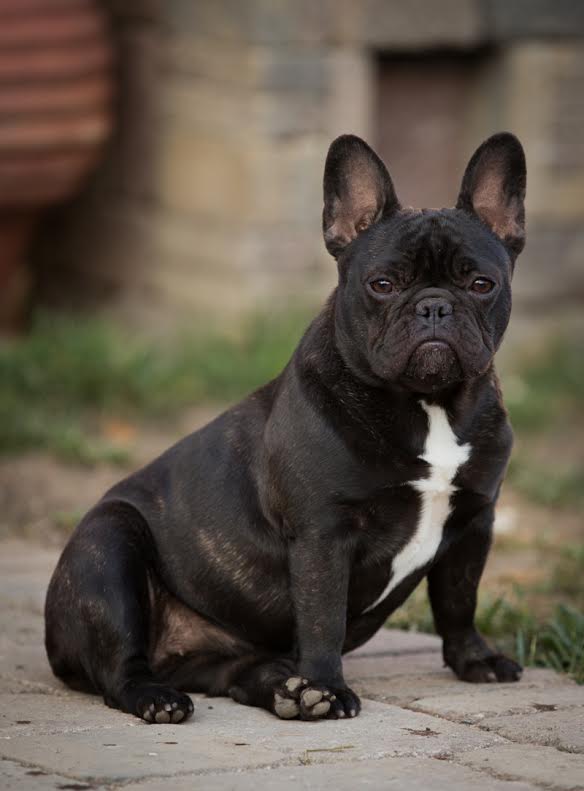
Her three-year-old golden retriever, Buster, lived for these visits. Buster was the kind of dog who navigated the world primarily with his mouth. If it existed on the ground, it was a candidate for a thorough taste test. A stray wrapper. A promising stick. A dried leaf. He was a vacuum in a furry yellow suit.
On an afternoon that started like any other, Buster was sniffing around the base of a young, beautifully shaped tree near the park entrance. Its leaves were turning a brilliant, fiery orange-red. It looked like the picture-perfect image of urban forestry.
Then, Buster found the nuts.
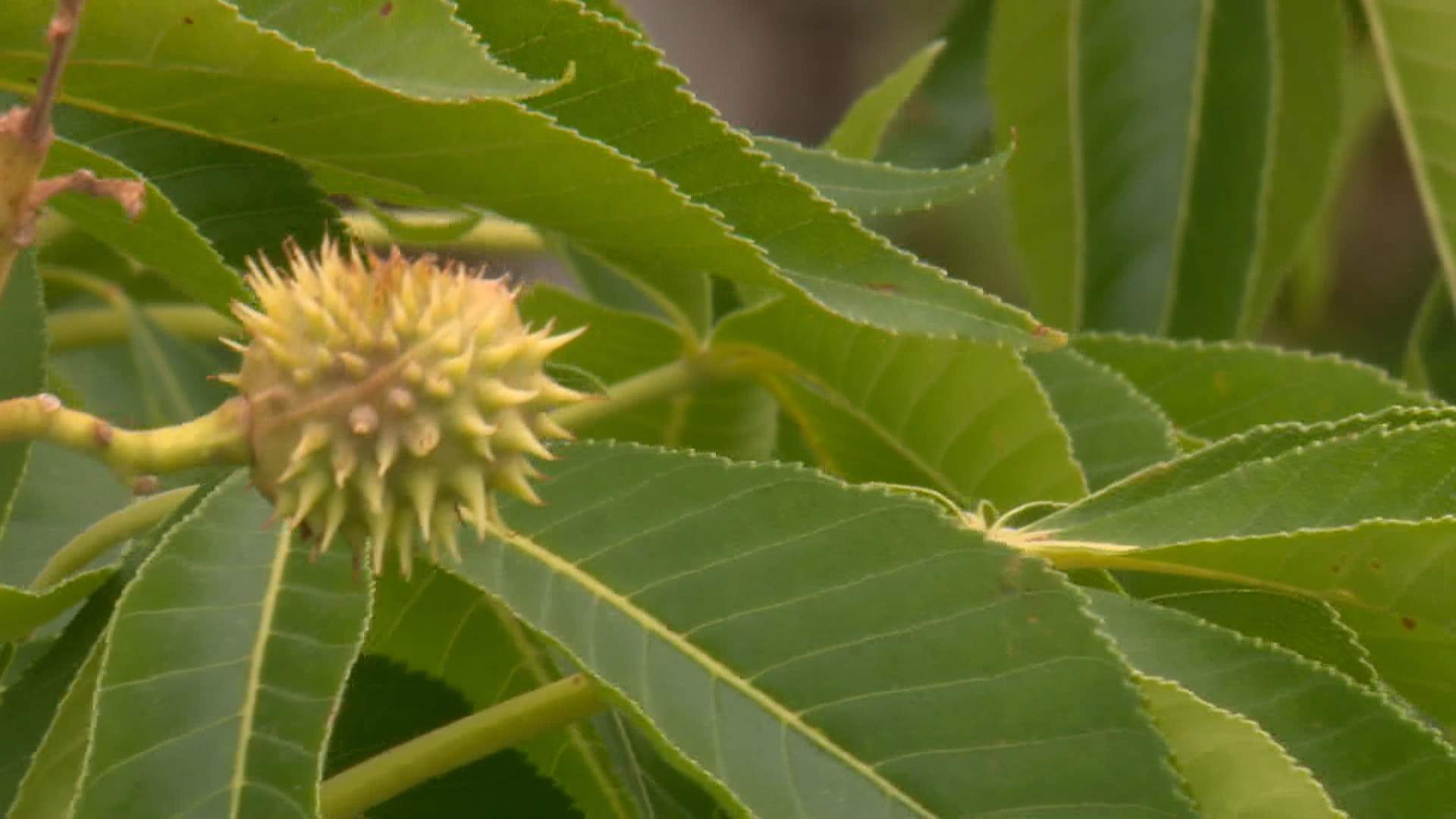
They looked innocent enough. Glossy, dark brown, and roughly the size of a walnut, each one wore a pale, circular scar that looked curiously like the eye of a deer. Buster picked one up, his jaws working to crush the tough outer husk.
Sarah did not think much of it at first. Dogs chew things. It is what they do. But she reached into his mouth anyway, pulling out the bitter, crushed nut before he could swallow it.
She did not know that she had just intervened in a quiet, botanical game of Russian roulette.
The Tree That Does Not Belong
The tree Buster had targeted was an Ohio Buckeye.
To a city planner, the buckeye is a dream. It is tough. It resists the brutal Calgary winters. It provides glorious shade during the blistering heat of July, and its autumn transformation adds a striking splash of color to an otherwise dusty prairie environment.
But to a dog, the buckeye is a toxic landmine.
Every single part of the Ohio Buckeye—the bark, the leaves, and especially those glossy, attractive nuts—contains a toxic cocktail of glycosides and saponins. If a dog ingests them, the consequences are swift and severe. It starts with vomiting and diarrhea. If left untreated, it can progress to muscle weakness, dilated pupils, paralysis, and severe neurological distress.
Yet, the City of Calgary chose to plant these trees directly inside an active dog park.
It was not an accident. It was a conscious design choice.
When the Cambrian Heights Community Association noticed the plantings, they raised the alarm. That was two years ago. Daryl Connolly, the president of the community association, began receiving worried messages from local pet owners who recognized the species. They knew the danger. They knew that a dog park is, by definition, a place where animals run free, sight unseen, putting their noses and mouths into every bush and thicket.
The community asked the city to remove the trees. They asked for a simple, logical adjustment to protect the hundreds of pets that frequent the space every single day.
The response they received was a masterclass in bureaucratic deflection.
The High Cost of Biodiversity
The city’s stance is simple: the risk is low.
According to municipal officials, planting the Ohio Buckeye is part of a broader, well-intentioned initiative to increase the biodiversity of Calgary’s urban forest. They argue that a diverse canopy is a healthy canopy, less susceptible to being wiped out by a single disease or pest.
On paper, this makes perfect sense. No one wants another Dutch Elm disaster.
But on the ground, the logic falls apart. Biodiversity is an admirable goal for a nature reserve, a suburban boulevard, or a downtown plaza. It is a strange hill to die on when applied to a fenced enclosure specifically designated for dogs to run off-leash.
The city issued a statement advising pet owners to remain vigilant and to discourage their animals from eating foreign objects.
Vigilant.
It is a word that sounds reasonable in a boardroom. It is entirely detached from the reality of owning a dog.
Anyone who has ever owned a retriever, a beagle, or a curious puppy knows that "vigilance" is a thin shield. A dog can locate, chew, and swallow a small object in the three seconds it takes you to check your phone, wave to a neighbor, or untangle a leash. To suggest that the burden of safety lies entirely on the owner—while the city actively plants known toxins in a designated play area—is a frustrating shift of responsibility.
Think of it this way: we do not plant thorn bushes on toddler playgrounds and expect parents to simply "stay vigilant." We design spaces for their intended users. A dog park should be designed for dogs.
What Happens in the Quiet Hours
When a dog does eat a buckeye, the transition from play to panic is agonizingly fast.
Dr. Helena Schell, a local veterinarian, has seen the aftermath of these quiet ingestions. The treatment is not pleasant. If an owner suspects their dog has eaten one of the toxic nuts, the clock starts ticking immediately.
There is no gentle antidote.
Instead, the pet is rushed to an emergency clinic. The veterinary team must immediately induce vomiting to purge the toxins before they can be fully absorbed into the bloodstream. It is a stressful, expensive, and deeply upsetting ordeal for both the animal and the owner.
"We need to be thinking thoroughly," Schell warns, pointing out that while the trees look beautiful and safe during the spring bloom, the real danger arrives during the autumn harvest. That is when the leaves, branches, and toxic nuts drop to the earth, hiding in the grass where dogs play.
For the residents of Cambrian Heights, the presence of the trees has transformed a space of relaxation into a space of anxiety.
What used to be a peaceful morning walk has become a high-stakes patrol. Owners walk with their eyes glued to the turf, scanning the shadows beneath the branches for the telltale glint of a brown husk. The joy of letting a dog run free is replaced by a tight, nagging worry in the pit of the stomach.
The Shadow Under the Canopy
The city's refusal to replant these few trees points to a larger, more systemic issue in urban planning. It is the disconnect between the people who draw the blueprints and the people who actually live inside them.
A dog park is not just a patch of grass with a fence around it. It is a vital piece of social infrastructure. It is where lonely neighbors find community, where high-energy dogs get the exercise they need to be good canine citizens, and where people connect with the outdoors.
To jeopardize that utility for the sake of adding a few specific trees to a spreadsheet under the column of "biodiversity" is a profound miscalculation of value.
The trees still stand in Cambrian Heights.
As the seasons cycle, they will continue to grow. Their roots will dig deeper into the Calgary soil. Their branches will spread wider, offering beautiful, cool shade to the park during the heat of summer.
And every autumn, without fail, they will quietly rain down a fresh crop of poison onto the grass below, waiting for the next curious nose to find them.