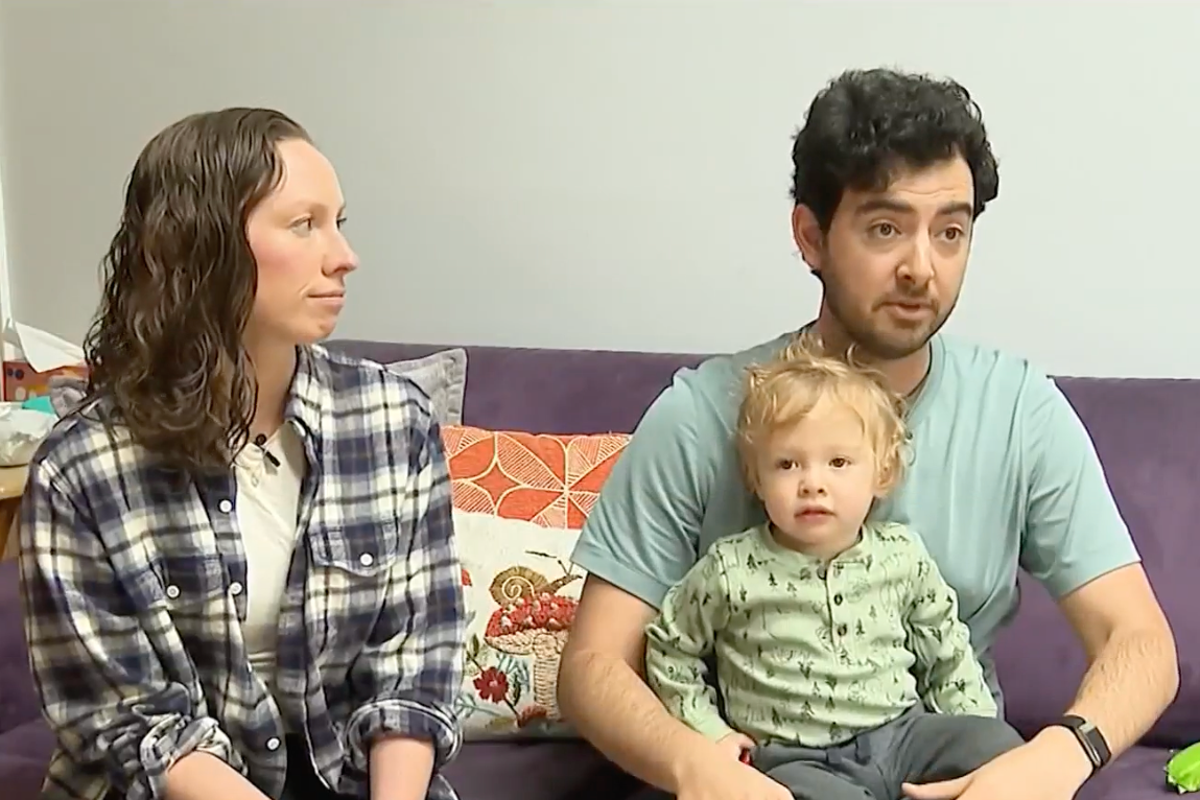
The media cycle follows a predictable, exhausting script every time a wild animal interacts with a human in a public space. A toddler gets scratched or bitten by a raccoon at a suburban playground. The headlines scream about terror, blood, stitches, and the immediate deployment of rabies protocols. The public panics. Parents demand immediate eradication of local fauna.
It is a reactionary, emotionally driven narrative that completely misses the point.
The lazy consensus driven by mainstream news outlets treats these incidents as unprovoked acts of wildlife aggression—freak accidents occurring in a vacuum. They frame urban spaces as exclusively human domains where nature has no right to trespass. This perspective is not only biologically illiterate, but it also actively prevents us from addressing the real systemic issues at play: urban design failures, poor waste management, and a profound societal misunderstanding of wildlife behavior.
We do not have a rogue animal problem. We have a human infrastructure and behavior problem.
The Illusion of the Sterile Urban Sanctuary
For decades, urban planners and municipal governments have sold a lie: the idea that a city park or suburban playground can exist as a sterile, controlled environment completely severed from the local ecosystem. We build a plastic play structure, lay down some woodchips, and assume we have drawn an invisible boundary line that nature will respect.
Biology does not care about property lines.
Urban adaptation among wildlife is an established scientific reality, not an anomaly. Species like raccoons, foxes, and coyotes are not "invading" our spaces; they are thriving in the highly lucrative habitats we inadvertently create for them. A suburban playground is a buffet.
Consider the standard design of a public park:
- Unsecured trash receptacles overflowing with discarded juice boxes, half-eaten snacks, and fast food wrappers.
- Dense decorative landscaping that provides perfect nesting cover right alongside pedestrian walkways.
- Artificial lighting that extends foraging hours for nocturnal and crepuscular species.
When a raccoon enters a playground during daylight hours, the immediate, unscientific assumption is that the animal is rabid. While rabies is a serious public health concern that demands immediate medical protocol, data from wildlife biologists and public health agencies consistently shows that urban raccoons frequently alter their natural sleep cycles simply to exploit human-provided food sources. They are habituated, not necessarily infected. By treating every encounter as a bizarre anomaly rather than a predictable consequence of poor sanitation, we avoid taking responsibility for the environments we manage.
Dismantling the Aggression Narrative
The mainstream reportage focuses heavily on the speed and shock of an attack: "It happened so fast." This language frames the animal as a calculation-driven predator targeting a child.
Let's look at the actual mechanics of wildlife defense mechanisms. A raccoon weighing roughly fifteen pounds does not view a human being—even a two-year-old child—as prey. It views a human as a massive, unpredictable, and lethal threat.
In almost every documented case of a suburban wildlife scratch or bite, the sequence of events involves cornering, sudden movement, or habituation gone wrong. A toddler, moving with the erratic, loud, and unpredictable mechanics typical of early childhood, approaches an animal that is cornered against a fence, a trash can, or a piece of playground equipment. The animal, operating entirely on survival instinct, strikes out to create an escape route.
To call this an "attack" is a semantic distortion. It is a defensive reaction.
When we mischaracterize defensive animal behavior as malicious aggression, we teach parents and children to fear the wrong things. We teach them to look out for "evil" animals rather than teaching them to recognize the warning signs of a stressed, cornered creature. We substitute hysterical vigilance for actual ecological literacy.
The High Cost of Knee-Jerk Eradication
Whenever an incident like this makes the local news, the immediate demand from the community is for animal control to sweep the area and cull the population. This is where municipal policy becomes truly counterproductive.
I have watched local councils waste tens of thousands of dollars on short-term trapping and eradication campaigns in response to public outcry. It is a performative exercise that achieves absolutely nothing.
Wildlife biology operates on the principle of carrying capacity. If a specific neighborhood provides enough food, water, and shelter to support fifty raccoons, removing ten of them simply creates a vacuum. The remaining population will experience increased reproductive success due to the temporary abundance of resources, or individuals from neighboring territories will move in to fill the void within weeks.
Furthermore, indiscriminate trapping often removes the older, dominant animals who have learned to navigate urban environments without interacting with humans, leaving behind younger, less experienced, and more erratic juveniles. The result? You actually increase the likelihood of erratic wildlife encounters.
The contrarian truth that city managers hate to admit is that eradication is a multi-million dollar treadmill. It is an expensive band-aid applied to a wound caused by our own refusal to mandate animal-proof infrastructure.
Redefining the Public Safety Question
People regularly look at these stories and ask: "How do we make our playgrounds completely safe from wild animals?"
That is entirely the wrong question. The premise is flawed because total separation is a fantasy. The question we should be asking is: "How do we manage human behavior and infrastructure to minimize high-risk interactions?"
Instead of funding useless trapping initiatives or installing more useless warning signs that parents ignore, municipal budgets need to pivot toward aggressive environmental modification.
Hardening the Infrastructure
The open, plastic-lined trash bins found in ninety percent of public parks are an open invitation to wildlife. They must be replaced with heavy-gauge, steel, animal-proof receptacles that require human dexterity to open. If you cut off the easy food source, you eliminate the primary reason wildlife congregates around children's play areas.
Designing for Visibility
Playground borders should not feature dense, low-lying shrubbery that allows nocturnal animals to hide or nest within arm's reach of a sandbox. Sightlines need to be clear. We need to design spaces that allow both humans and animals to see each other from a distance, preventing the sudden, close-quarters surprises that trigger defensive strikes.
Enforcement of Feeding Prohibitions
Habituation is the real killer. The transition from a wild animal avoiding humans to one scratching a child on a playground always starts with intentional or negligent feeding. The tourist or resident who tosses a piece of bread to a raccoon because it looks "cute" is directly responsible for the subsequent bite that occurs three weeks later when that same animal approaches a child expecting a handout. Municipalities need to treat the feeding of urban wildlife not as a minor eccentricity, but as a severe public health violation with matching financial penalties.
The Reality Check
Adopting a realistic, infrastructure-based approach to urban wildlife is not a soft, sentimental stance. It is a cold, pragmatic one.
The downside to this approach is that it requires upfront capital expenditure from local governments and demands a shift in public behavior. It requires parents to actively monitor their children's interactions with the environment rather than treating a public park as a zero-risk indoor playroom. It requires citizens to accept that living in a green, tree-lined suburb means sharing space with highly intelligent, highly adaptable omnivores.
We can continue to write sensationalized articles every time a child requires stitches, pretending that a wild animal committed a crime by existing in a park. We can keep comforting ourselves with the myth that we are innocent victims of an aggressive natural world.
Or we can grow up, secure our garbage, design better parks, and stop acting surprised when nature shows up to clean up our mess. Fix the trash cans, clear the brush, and the playground panic disappears. Conclude that the animal is the problem, and you guarantee the next incident is already on the calendar.