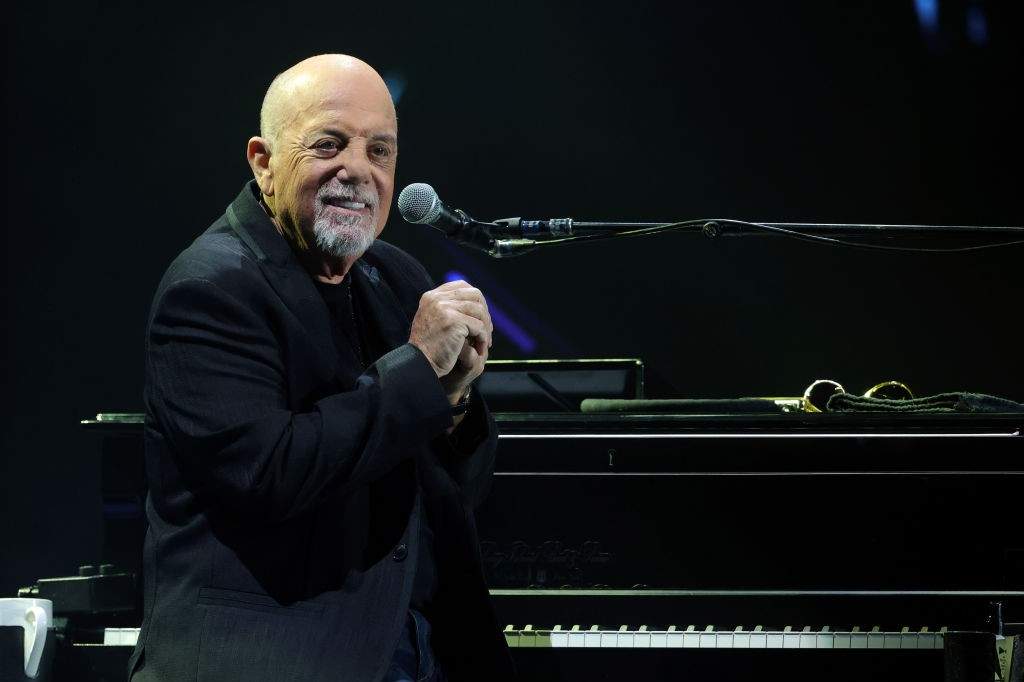
The piano is a machine of hammers and tension. Two hundred and thirty strings pulled so tight they hum with a collective force of nearly twenty tons, all waiting for a finger to drop. When Billy Joel sits at the bench, his hands do not just play melodies; they negotiate with physics. For decades, those hands have translated the noise of ordinary American lives—waitresses, union men, romantic drifters, and hometown ghosts—into chords that millions of people learned to use as the soundtrack of their own youth.
We think we own artists like that. We believe their music belongs to the public square, floating freely in the air of neighborhood bars and car radios, detached from the fragile vessels who made it.
Then the silence comes.
Behind the familiar grin and the swagger of the Long Island icon, a quieter, much heavier reality took root. It is a reality that the public rarely sees until the medical bulletins drop like lead weights: Billy Joel underwent brain surgery following a diagnosis.
To read those words in a standard news brief is to experience a strange cognitive dissonance. Brain surgery. The phrase belongs in medical textbooks or dramatic hospital dramas, not in the same sentence as "Scenes from an Italian Restaurant" or "New York State of Mind." The brain is the control center of everything, the delicate architecture of memory, rhythm, and identity. When something goes wrong in that dark, folded landscape, the stakes are absolute.
Imagine standing backstage before a sold-out stadium. The roar of fifty thousand people sounds like a distant ocean tide against a concrete wall. You can feel the vibration of the bass through the floorboards. Now, imagine feeling a different kind of vibration—not from the speakers, but deep inside your own skull. A persistent pressure. A shift in balance. The terrifying realization that the instrument keeping time is no longer the piano on stage, but the organ ticking behind your eyes.
Medical diagnoses of this magnitude rarely arrive with cinematic thunderclaps. They creep in through mundane annoyances. A persistent headache dismissed as tour fatigue. A moment of spatial disorientation on a familiar staircase. A slight, inexplicable lag in coordination. For a musician whose entire life is defined by millisecond precision, these small glitches are warning flares.
When doctors finally pointed to the scan and delivered the diagnosis, the music stopped—not just for the fans, but for the man himself.
Neurosurgery is a humbling discipline. It requires surgeons to navigate a labyrinth of blood vessels and neural pathways where a fraction of a millimeter separates a successful intervention from the alteration of a person’s very soul. (To be clear, this is not a metaphor for artistic creation; it is the literal, terrifying biology of the operating room). When Billy Joel faced that procedure, he stepped into a arena far more daunting than Madison Square Garden. There were no encores here. There was only the quiet, sterile focus of a medical team and the profound uncertainty of what would remain when the anesthesia wore off.
We rarely talk about the vulnerability of our cultural anchors. We expect them to be permanent fixtures, like monuments carved out of granite. But heroes grow old, and flesh fails just like machinery. The pianist who taught us how to age alongside our regrets was suddenly forced to confront his own mortality in the most clinical, exposed way imaginable.
Recovery is rarely a straight line. It is a series of microscopic victories. The first time a patient sits up without dizziness. The first time words form correctly on the tongue. For a pianist, it must be a special kind of agony—waiting for the hands to remember what the brain is trying to tell them, testing the keys one by one, listening for the clean, true ring of a C-major chord to confirm that the connection is still intact.
The headlines have come and gone. The immediate panic of the diagnosis has given way to the slow, unglamorous work of healing. Yet the weight of the story lingers because it reminds us of a fundamental truth we spend most of our lives trying to ignore.
Every song has a final measure. Every voice, no matter how loud or resonant, depends entirely on the fragile, beating heart and breathing mind of the person standing at the microphone.
When the lights go down and the stadium empties out, the superstar vanishes, leaving only a human being navigating the same dark corridors of health and fear that we all eventually have to walk. Billy Joel faced the ultimate test not with a grand orchestral arrangement, but with the quiet, solitary courage of someone simply trying to hold onto his own mind.
And somewhere in the quiet room, long after the applause has faded, a single key is pressed. The hammer strikes the string. The vibration holds.