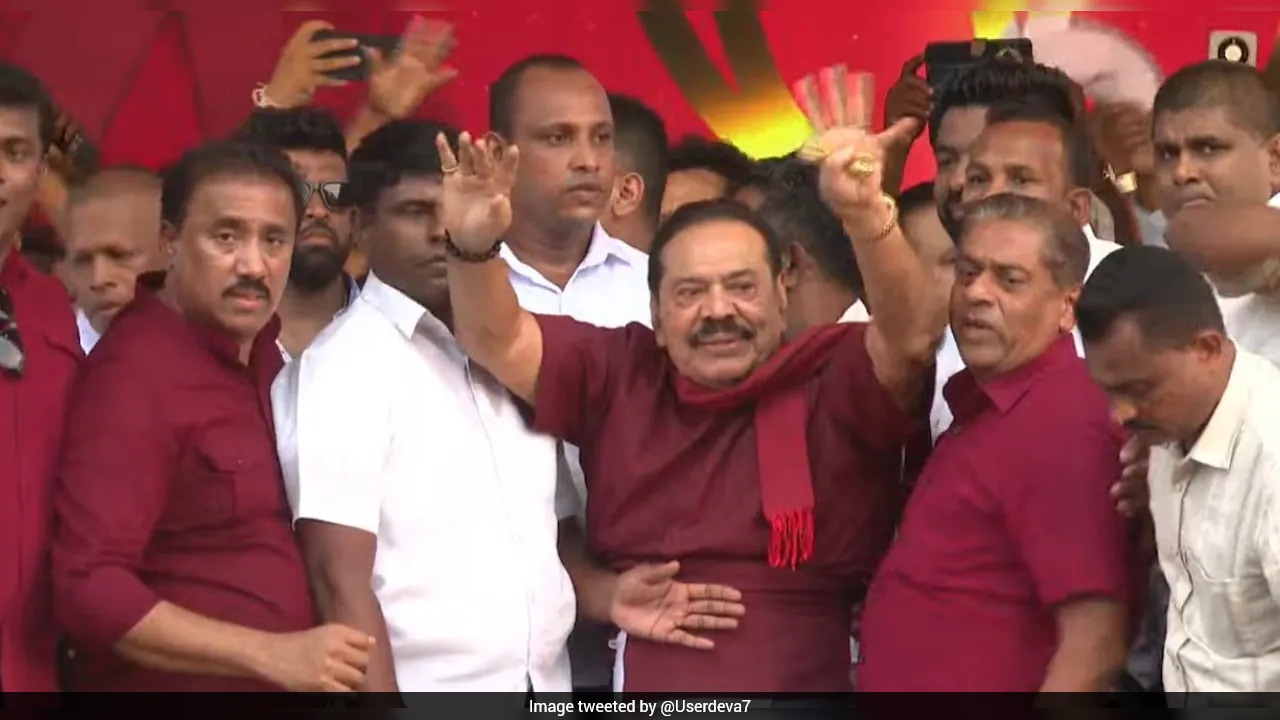
Every headline regarding the former Sri Lankan president appearing frail at a recent rally is missing the point entirely. The media wants you to gawk at a physical shell. They want you to whisper about biological decline, infirmity, and the inevitability of aging. It is cheap, lazy journalism designed to distract you from the actual mechanics of political survival.
When a seasoned political operator steps onto a stage looking weak, silent, and physically diminished while refusing to deliver a speech, everyone assumes it is a sign of vulnerability. That is the consensus trap. That is what amateur political pundits scream about on cable news.
Let me break down the reality of high-stakes political optics.
In modern South Asian politics, absence speaks louder than a three-hour manifesto. By showing up and simultaneously refusing to utter a single word, the target did not signal weakness. He engineered a masterclass in sympathy, defiance, and narrative control. He forced his adversaries to look petty for attacking him while reminding his base of his historical longevity. A vigorous speech invites rebuttal, policy scrutiny, and verbal warfare. Silence wrapped in physical frailty invites protection, nostalgia, and emotional shielding.
I have watched old guard operators across developing democracies weaponize their own physical decline for decades. They turn their bodies into shields. When you criticize a robust leader, you look like an aggressor. When you criticize a frail figure who stands silently in the background, you look like a tyrant.
People ask why he skipped the speech. The lazy answer is that he lacked the stamina. The strategic answer is that he had nothing left to prove on a podium and everything to gain by letting the silence do the talking. Words invite liability. Presence without endorsement invites projection. Every single person in that stadium projected their own version of his legacy onto his silent frame.
Let us look at the underlying mechanics of this media circus.
The mainstream coverage focuses entirely on health updates and physical stature. It treats politics like a medical bulletin rather than an ongoing game of power chess. This framing ignores how political capital operates when a figurehead steps out of office. Power does not vanish when an official title does; it morphs into patronage, network loyalty, and symbolic capital.
When an aging leader appears in public looking frail, two things happen simultaneously. First, opponents relax their guard because they misinterpret physical decay for political death. Second, loyalists rally around the flag of shared history. The optics of frailty serve as an emotional accelerant. It triggers a protective instinct among voters who remember past stability, regardless of how chaotic that stability actually was.
If you analyze the rally through the lens of traditional campaign metrics, his appearance was a failure. No policy announcements were made. No new vision was articulated. No crowd-pleasing rhetoric was deployed. But politics at this level is no longer about governance. It is about myth-making. And myths do not need speechwriters. They need iconography.
The media wants you to believe that political relevance requires physical vigor. History proves the exact opposite. Some of the most enduring political figures maintained their grip on the national psyche precisely by stepping back into the shadows and letting their physical fragility amplify their mythos.
Stop reading the headlines as health reports. Start reading them as tactical maneuvers.
When you see a veteran politician standing mute before a roaring crowd, do not pity them. They are not fading away. They are orchestrating their final act.