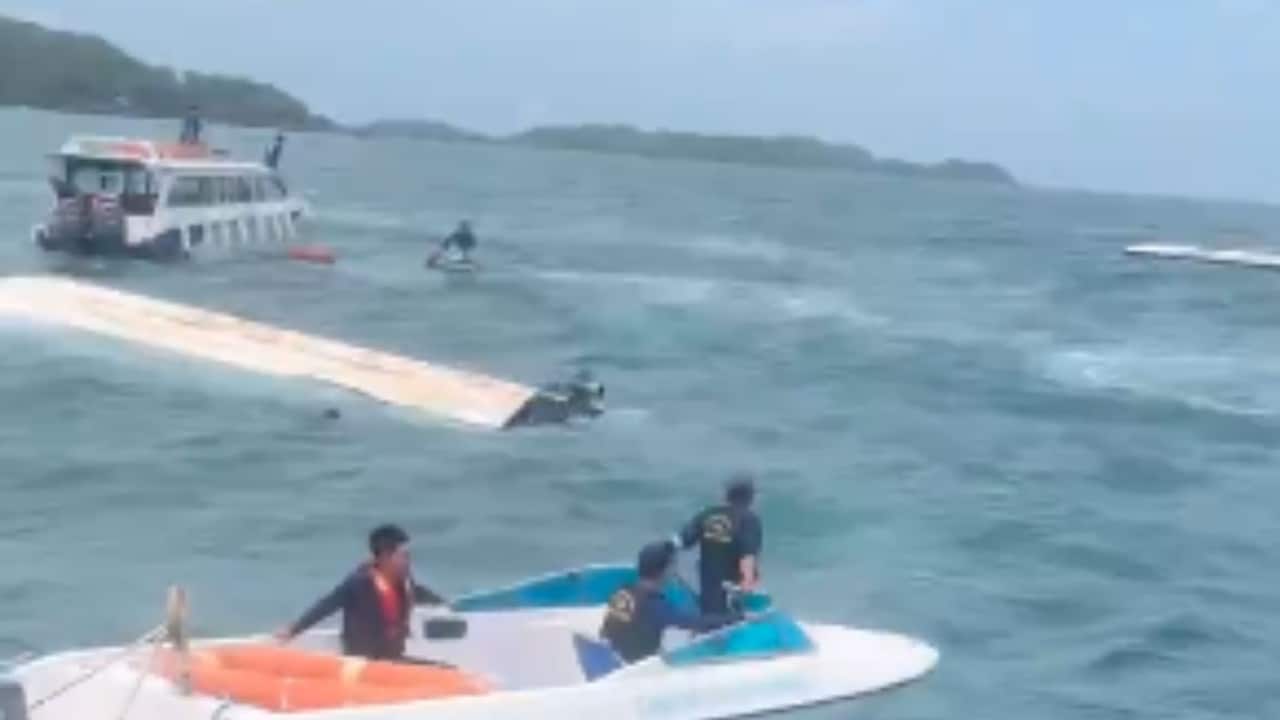
A peaceful afternoon excursion off the coast of southwestern Vietnam turned into a major maritime disaster. On Saturday, July 11, 2026, a commercial speedboat packed with international travelers capsized just moments away from the shore of a popular holiday destination. The sudden overturning of the vessel left 15 people dead and sent shockwaves through the region's booming tourism industry.
When you book an island-hopping excursion, you expect a thrilling ride, not a fight for survival. This developing situation highlights the fragile line between a dream vacation and a sudden emergency when navigating changing sea conditions. Here is the direct breakdown of what transpired, the rescue efforts, and the broader safety implications for travelers.
The Timeline of the Incident
The vessel, operated by Ocean Pear Island Company, was transporting a total of 36 individuals. The passenger manifest included 32 Indian tourists, alongside three Vietnamese crew members and one tour attendant.
The group was making a 25-kilometer return trip from Hon May Rut Island back to An Thoi Port, the primary transit hub connecting Phu Quoc’s smaller southern islets to the main island. Around 1:00 PM local time, roughly 400 meters (440 yards) away from Hon May Rut Ngoai islet, the speedboat flipped entirely upside down. The capsize instantly threw all 36 individuals into the open ocean.
What makes this specific accident notable is the weather discrepancy. Local witnesses reported that there was no active rainfall at the time. However, the sea off An Thoi was experiencing heavy winds and massive waves. Despite the rough swells, tourist operations had continued as usual throughout the morning.
The Immediate Rescue Operation
The proximity of the accident to the islet proved critical for the survivors. Nearby civilian tourist boats spotted the overturned hull and immediately altered their courses to assist.
One private boat operator who joined the effort reached the site within five minutes of the capsize. He noted that the primary complication stemmed from the physical structure of the vessel. Multiple passengers became trapped underneath the canopy of the completely inverted speedboat, severely limiting their access to air. Rescuers had to pull individuals out from under the water, and only a few were conscious upon extraction.
Official emergency responders deployed rapidly after the initial civilian response:
- The An Thoi Border Guard dispatched two specialized rescue vessels.
- A team of 35 dedicated military officers and soldiers arrived to secure the perimeter.
- Units from the Vietnamese Navy and Coast Guard coordinated to pull remaining victims from the water.
By Saturday afternoon, all 36 individuals had been accounted for. Local residents and emergency medical technicians performed cardiopulmonary resuscitation (CPR) directly on the beaches and stone piers as victims were brought ashore.
The Human Toll and Official Response
Emergency medical officials confirmed that 21 people survived the incident. All survivors were transported to a nearby hospital for urgent evaluation, with two individuals remaining in critical condition.
The remaining 15 individuals—consisting of 13 men and two women—perished in the water. The Vietnamese state media platform Tuoi Tre reported that all 15 of the deceased were foreign nationals.
The Indian Embassy in Hanoi and the Consulate General in Ho Chi Minh City immediately activated emergency protocol centres to assist the victims' families. Indian Prime Minister Narendra Modi issued a statement expressing grief over the tragedy, confirming that diplomatic staff are working directly with the Phu Quoc Special Economic Zone authorities to facilitate body identification and manage emergency medical repatriations.
The captain of the speedboat, a local mariner in his 50s, reportedly possesses years of experience navigating passenger vessels in these specific waters. The ruling Communist Party provincial official, Nguyen Tien Hai, stated that initial assessments heavily point toward sudden high waves and localized heavy winds as the primary catalysts for the capsize. A formal investigation remains underway to verify whether the boat complied with strict weight limits and if life jackets were actively worn by all passengers.
Essential Safety Protocols for Coastal Transit
This disaster serves as a stark reminder of the inherent risks involved in small-boat coastal transit. If you find yourself booking similar speedboats in Southeast Asia, you need to take safety into your own hands rather than relying solely on local tour operators.
Insist on wearing a life jacket properly. Do not just place it on the seat next to you or loop it loosely over your arms. In a sudden capsize event, a boat flips within two to three seconds. You will not have time to find or put on a flotation device once the vessel begins to roll. Ensure the straps are tightly buckled before the engines even start.
Assess the vessel layout before boarding. Speedboats with rigid canvas or fiberglass covers provide shade but pose a massive drowning risk if the boat flips upside down, trapping passengers underneath the canopy. If you are seated inside an enclosed or covered area, identify your quickest exit path to open water.
Evaluate the sea conditions independently. Tour companies operate on tight margins and are often hesitant to cancel trips due to rough water unless local port authorities officially close the harbor. If you see whitecaps, heavy swells, or feel uncomfortable with the wind speed at the pier, forfeit the ticket cost and stay on land. Your safety is worth more than the price of an excursion.