The Sound of a Distant Voice
The plastic keys of a landline telephone in Jakarta felt unusually heavy that morning. For days, the house had been filled with the thick, suffocating silence of anticipation. News broadcasts flashed chaotic images of Mediterranean waters, grey hulls, and shouting men, but the television could not answer the only question that mattered to a father waiting in the Indonesian capital.
Then, the ringing broke the quiet.
Mustafa Kemal picked up the receiver. On the other end of the line, passing through satellite relays and diplomatic switchboards in Amman, Jordan, came the voice of his son, Surya Fahrizal. It was bruised. It was exhausted. But it was alive.
"They treated us like animals," Surya said.
The words traveled thousands of miles, stripping away the sanitized language of international press releases. To the global public, the confrontation between the activist-laden Gaza freedom flotilla and Israeli maritime forces was a geopolitical flashpoint, a chess move in a long-standing blockade. To a family in Jakarta, it was a terrifying void where a son had disappeared into the custody of a foreign military.
The Journey to the Deck
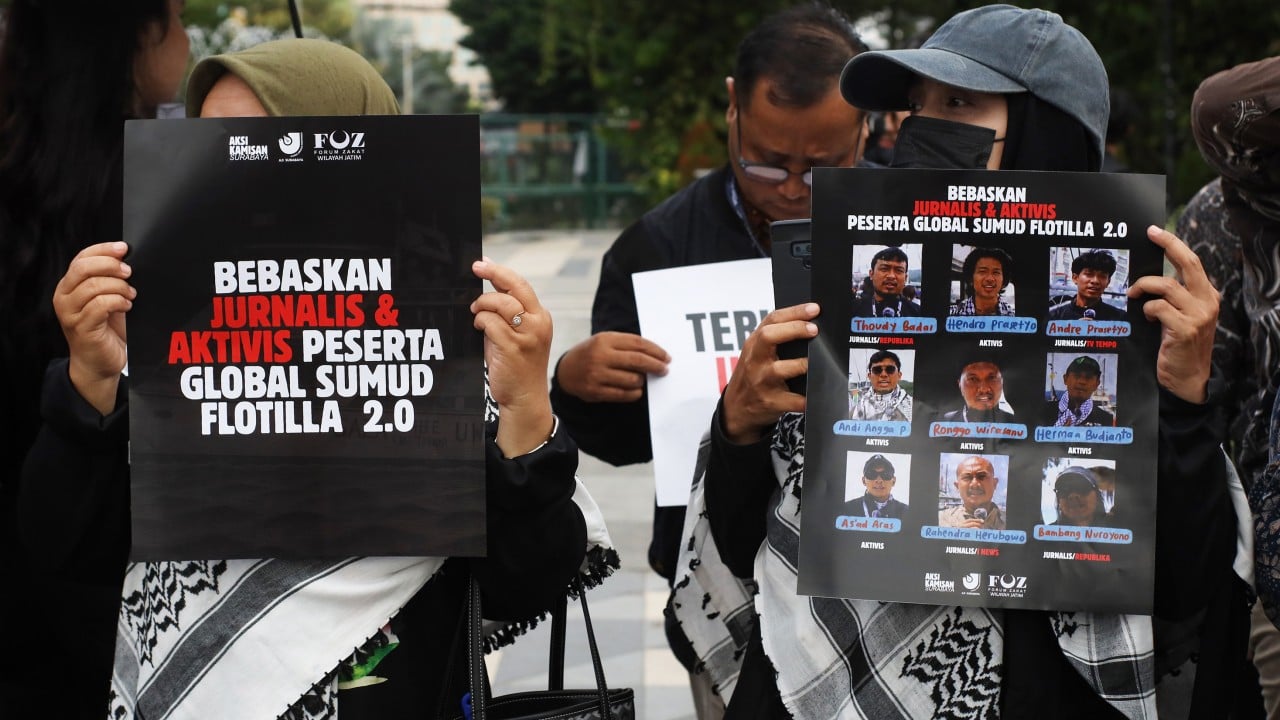
Surya Fahrizal was not a politician. He was a journalist, a media worker carrying a camera and a notebook, documenting a convoy of ships attempting to breach the naval blockade of the Gaza Strip. The mission of the flotilla was ostensibly humanitarian, carrying thousands of tons of aid, medical supplies, and building materials. But beneath the altruistic surface lay a volatile friction strip.
When the interception occurred in the international waters of the Mediterranean, the abstract debate over international law dissolved into immediate, visceral reality.
Imagine standing on a crowded deck in the pre-dawn darkness. The air smells of salt water, diesel exhaust, and sudden, blinding adrenaline. Flashing lights cut through the mist. The roar of helicopter rotors drowns out human speech. This is the moment where theory ends. For Surya, the transition from observer to detainee happened in a blur of shouting figures and the hard impact of zip-ties around his wrists.
The human body under extreme stress registers details with strange clarity. The coldness of the metal deck. The tight bite of plastic restraints cutting off circulation. The lack of water. For hours, the detainees were kept in positions designed to minimize movement and maximize psychological submission.
The Mechanics of Detention
The official reports from the incident often use passive verbs: individuals were detained, processing occurred, transport was arranged. These words conceal the granular misery of the experience.
According to the account Surya relayed to his father, the rough treatment began the moment the soldiers boarded and did not cease during the journey to the Israeli port of Ashdod. Detainees were subjected to prolonged periods of isolation, verbal hostility, and physical shoving. Food and water were rationed strictly, offered more as a tool of control than sustenance.
Consider the psychological weight of this environment. You are stripped of your passport, your camera, your ability to communicate with the outside world. You do not speak the language of your captors. Every command is shouted. The uncertainty of your destination—and your ultimate fate—becomes a physical weight in your chest.
The Israeli government maintained that its forces acted with necessary restraint to enforce a legal blockade and protect their personnel from perceived hostility on the ships. They argued the processing of hundreds of foreign nationals from dozens of countries required strict security protocols.
But from the perspective of the hands bound behind a back, security looks indistinguishable from cruelty.
The View from Jakarta
While Surya was navigating the stark corridors of Israeli detention, his father was navigating the labyrinth of public anxiety. Jakarta is a city of relentless noise, but inside the family home, the world had shrunk to the space around the telephone.
The Indonesian government has no formal diplomatic relations with Israel. This lack of a direct channel turns every consular effort into a complex, multi-nation game of billiards. Information had to flow through third-party embassies, international humanitarian organizations, and back-channel diplomatic couriers. Every delay felt like a deliberate withholding of truth.
Mustafa Kemal spent days speaking to local media, trying to keep his son’s name in the headlines. His strategy was simple: visibility equals safety. A prisoner forgotten by the public is a prisoner vulnerable to prolonged abuse. He spoke not of geopolitics or the legality of the Gaza blockade, but of a young man who loved journalism and had a family waiting for him to come home.
When the news finally broke that Israel would deport the detained activists and journalists through the Allenby Bridge crossing into Jordan, the relief was palpable, but it was tempered by the stories that began to leak out alongside the prisoners.
The Crossing to Amman
The journey did not end with the decision to deport. The physical transit from Israeli custody to the Jordanian border was another trial of endurance. Detainees were packed into buses, still restrained, moving through the stark, sun-bleached terrain of the West Bank toward the Jordan River.
Amman became the sanctuary. It was there, under the protection of Indonesian diplomats who had rushed to the border, that Surya was finally permitted to make that fateful phone call.
The conversation between father and son was brief. International calls from diplomatic compounds are monitored, expensive, and logistically fragile. Surya did not detail every strike or every insult. He gave his father the essential truth: the ordeal was physical, it was degrading, but his mind remained unbroken.
The physical bruises from tight plastic cuffs heal in a matter of weeks. The deeper impact of being systematically stripped of agency, viewed through the lens of national security as a threat rather than a human being, lingers far longer.
Beyond the Official Ledger
The story of the Gaza flotilla is recorded in history books as a series of diplomatic crises, UN resolutions, and fractured international alliances. It altered the relationship between Turkey and Israel; it forced a reassessment of how blockades are maintained in the modern era.
But the history books rarely capture the tremor in a father's hand as he hangs up a telephone receiver. They do not record the specific texture of fear that settles into a family home when a child is held in an undisclosed location across the sea.
Surya Fahrizal eventually boarded a flight back to Indonesia, returning to the humid air of Jakarta and the embrace of his family. He returned to a country that viewed him as a brave survivor, perhaps even a hero. Yet, the true resolution of the event did not happen at the airport arrivals gate amidst the flashing bulbs of the press corps.
It happened in the quiet spaces of the days that followed, when the shouting had stopped, the headlines had shifted to other crises, and the simple act of sitting in a quiet room without restraint felt like an earned miracle.


