The carousel ground to a halt with a tired mechanical squeal.
If you have ever stood at an airport baggage claim at two in the morning, you know the specific, hollow anxiety that accompanies a dead conveyor belt. The blinking red light switches off. The rubber flaps at the mouth of the chute hang perfectly still. Everyone else on your flight has already grabbed their scuffed suitcases and vanished into the cold night, leaving you alone under the buzzing fluorescent lights. Don't miss our previous article on this related article.
Now, imagine that the missing piece of luggage is not a canvas duffel bag containing your toothbrush and a few wrinkled shirts.
Imagine it is a physical manifestation of a century of deferred dreams, broken promises, and blood spilled on cold ice. If you want more about the context here, The Athletic provides an in-depth summary.
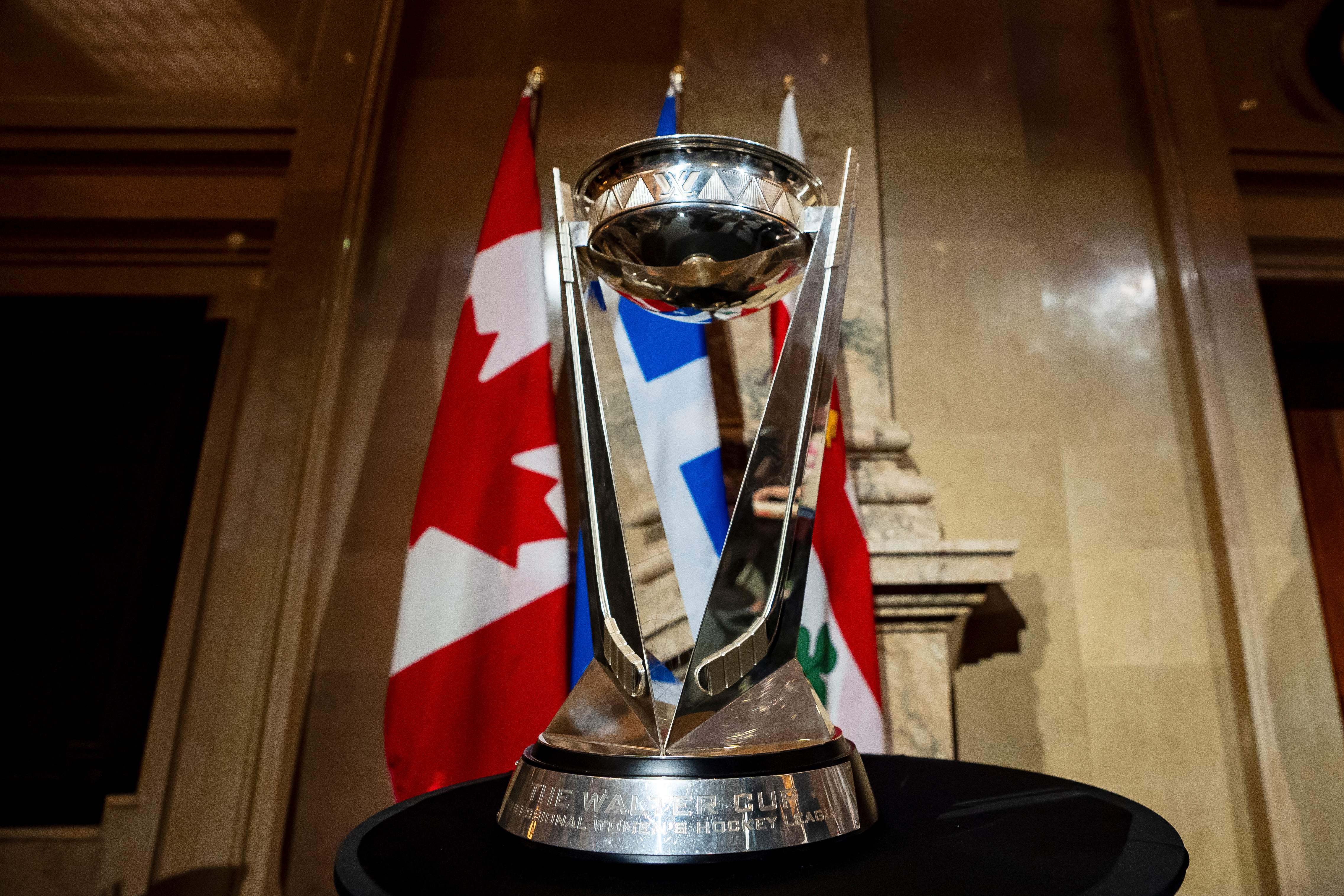
This is exactly where the Professional Women’s Hockey League found itself when the Walter Cup—the freshly minted, gleaming symbol of ultimate victory in the sport—failed to materialize on a flight to Alberta. The trophy was missing. Gone. Swallowed by the great, indifferent void of modern airline logistics.
The irony is thick enough to choke on.
For decades, female hockey players fought against the crushing reality of invisibility. They played in empty, freezing barns at awful hours. They worked second and third jobs just to afford the gas to drive to practice. They formed leagues that folded overnight, leaving them with unpaid bills and shattered morale. For generations, the women's game was the ghost of the sports world—always there, always brilliant, but rarely seen by the masses.
And then, they won.
The PWHL exploded onto the scene. Records were shattered. Arenas sold out. Millions tuned in. The league commissioned the Walter Cup, a stunning piece of silver designed to rival the gravitas of any championship hardware in the world. It was proof of life. Proof of arrival.
But as the league prepared to showcase this hard-won prize in Alberta, the silver vanished. The ghosting had returned, but this time, it was the hardware doing the disappearing act.
The Anatomy of a Missing Artifact
Let us consider the sheer, agonizing logistics of moving a championship trophy. Let’s invent a league official to anchor this nightmare—we will call her Elena, tasked with the custody of the cup.
Elena does not simply check the Walter Cup like a set of golf clubs. The trophy travels in a heavily padded, custom-built transit case. It is bulky. It is extraordinarily heavy. It looks less like sporting equipment and more like a housing unit for a tactical nuclear warhead. It requires special handling, oversized cargo tags, and a chain of custody that is supposed to be unbreakable.
When Elena stands in an Alberta terminal staring at an empty oversized baggage door, the panic is not just professional. It is visceral.
There is a frantic dialing of numbers. Baggage handlers are summoned. Airline supervisors, tired and drinking bad coffee, stare at computer screens trying to locate a barcode that has simply stopped pinging. The conversation invariably shifts from the polite, bureaucratic language of "delayed routing" to the cold, hard realization of absolute loss.
How does a massive, priceless silver cup simply stop existing between Point A and Point B?
The truth of air travel is that it is an exercise in organized chaos. Bags fall off carts on the tarmac. Tags are ripped off by overzealous machinery. An oversized case meant for a connecting flight to Calgary or Edmonton gets bumped by a careless elbow, slides down the wrong chute, and quietly boards a red-eye to Frankfurt or sits abandoned in a holding area in Toronto.
To the routing software, the Walter Cup is not a symbol of athletic supremacy. It is an alphanumeric string. And when the string breaks, the silver sits in the dark.
The Weight of Silver
To understand why a missing trophy is a tragedy worthy of a mild panic attack, you have to understand the material itself.
Championship trophies are almost exclusively made of silver. There is a deep, psychological reason for this. Gold is for individuals. Gold medals hang around a single neck. But silver is for the collective. Silver is reflective. When a team hoists a silver cup, they see their exhausted, exhilarated faces shining back at them in the polished metal.
The Walter Cup is supposed to be the mirror for a new era of athletes.
When you strip away the marketing, sports are fundamentally about storytelling. We need physical objects to ground our myths. The Super Bowl has the Lombardi. The NHL has the Stanley Cup. These objects absorb the energy of the people who bleed to win them. When a player touches a championship cup, they aren’t just touching metal; they are touching every single player who has ever lifted it, and every player who ever will.
By going missing in Alberta, the Walter Cup was abruptly disconnected from its own developing mythology. Instead of being polished for a grand presentation, it was likely sitting in a sterile, concrete holding room, surrounded by lost golf clubs, forgotten strollers, and cardboard boxes of cheap souvenirs.
There is a quiet indignity in that image. The object that was meant to validate the tears and shattered teeth of the world's greatest athletes was reduced to a piece of misplaced freight.
A Rite of Passage in the Chaos
But look closer at the history of sports, and a different narrative begins to emerge.
Perhaps the Walter Cup getting lost in the mail isn't a disaster at all. Perhaps it is the ultimate proof that the PWHL has finally made it to the messy, chaotic, deeply human center of the professional sports universe.
Perfection is boring. Perfection is sterile. The greatest traditions in sports are born from accidents, absurdities, and human error.
Consider the Stanley Cup. It is widely regarded as the greatest trophy in professional sports, precisely because it has been treated with such historical disrespect. It has been drop-kicked into the Rideau Canal in Ottawa. It has been abandoned on the side of a snowy highway. It has been used as a dog bowl. It has been thrown into swimming pools and dented beyond recognition.
A trophy that is kept behind glass, handled only with white gloves, and transported flawlessly is a museum piece. It is dead.
A trophy that gets lost on a tarmac, causing a league-wide meltdown and frantic calls to airline executives at three in the morning? That is a living object. That is a trophy with a pulse.
The missing Walter Cup in Alberta inadvertently gave the trophy its first true battle scar. It provided the league with its first great piece of off-ice folklore. Years from now, when the cup is old and covered in the engraved names of hundreds of champions, veterans of the league’s early days will sit around telling the story of the time the cup was kidnapped by a rogue baggage carousel.
The Search Party
Back in the terminal, the wait continues.
Every time a door opens, every time an airline employee walks by in a neon vest, there is a spike of adrenaline. The tracking apps are refreshed until phone batteries die.
You start to bargain with the universe. You pray that it wasn't stolen. You pray that it isn't sitting on a baggage cart in the pouring rain in another time zone. You map out the terrifying financial and symbolic cost of having to commission a replacement. A replica is never the same. A replica has no soul.
The loss forces everyone involved to confront what the object actually means to them. When the cup is sitting safely on a pedestal, it is easy to take for granted. But when it vanishes, the void it leaves behind is massive.
The players waiting for it in Alberta weren't just waiting for a photo opportunity. They were waiting for validation. For a female hockey player in her thirties, who spent her twenties playing in glorified community rinks wondering if anyone would ever care, the Walter Cup is not a prop. It is a promise kept.
The panic in the airport is the desperate human desire to protect that promise.
The Beautiful, Imperfect Machine
We demand a lot from our sports leagues. We demand flawless execution on the ice, brilliant marketing off it, and a seamless presentation of triumph.
But sports are governed by humans. And humans lose their luggage.
The story of the Walter Cup’s unscheduled detour is a perfect, biting reminder that the machinery of history is often incredibly clunky. We want progress to look like a straight, soaring line. We want the triumph of women’s hockey to be a flawless cinematic montage. We want the hero to score the goal, the crowd to roar, and the gleaming trophy to be handed down from the heavens in a beam of pure light.
Instead, progress looks like a frantic supervisor holding on line for twenty minutes with a customer service bot, trying to explain that the silver cup currently sitting in an unclaimed baggage facility in another province is actually a vital piece of North American sports history.
It is frustrating. It is absurd.
And yet, it is wonderfully real. The women who play for the PWHL have spent their entire lives navigating roadblocks, detours, and missing pieces. They are the foremost experts in the world at dealing with things not showing up when they are supposed to. A missing trophy is just one more bump in a road they have already paved with their own sweat.
The silver will be found. The metal will be polished. The cup will be hoisted under bright lights, and the crowd will scream until their throats bleed. The detour will be forgotten by the masses, reduced to a footnote in the grand, sweeping narrative of the league's rise.
But for the few who stood by that empty carousel, staring into the dark mouth of the baggage chute, the memory will remain. They will remember the silence. They will remember the panic. And they will remember the exact, heavy cost of holding history in your hands, knowing just how easily it can slip away into the dark.