Silence. That is what follows the click of a disconnected line after a life savings vanishes in twelve minutes.
Picture a retired schoolteacher in Lyon—let us call her Marie, a hypothetical composite built from hundreds of real European police filings. It is a Tuesday morning in autumn. Her coffee is still warm. Her phone buzzes with a local French number, a crisp voice claiming to be from her bank’s fraud department, warning of a suspicious transfer in Brussels. Within minutes, guided by polite urgency and spoofed caller IDs, Marie reads out a six-digit authentication code. By the time she hangs up, forty-two thousand euros—thirty years of chalk dust, graded essays, and careful budgeting—have been routed through three shell accounts and converted into Tether.
She thinks she was robbed by a lone genius in a dark basement. She was not. She was processed by an industrial assembly line operating out of sleek glass office towers in Kyiv, protected by the very people paid to uphold the law.
Western investigators tracking the billions bleeding out of European Union households have hit a wall that has nothing to do with encrypted messaging or complex blockchain mixers. The trail leads straight to the Ukrainian capital, into bustling, multi-floor boiler rooms employing thousands of young English, French, German, and Polish speakers. Yet whenever European law enforcement shares coordinates, wiretaps, and server logs with their counterparts in Kyiv, something strange happens. The raids arrive twenty minutes late. The servers are already wiped. The managers are drinking espresso in Warsaw or Dubai before the battering ram touches the door.
According to intelligence shared among European investigative units, senior figures within Kyiv’s police apparatus are not merely failing to dismantle this criminal syndicates' infrastructure. They are actively shielding the call center mafia from Western scrutiny.
The Architecture of an Invisible Heist
To understand how an elderly citizen in Munich or Milan loses everything to a twenty-two-year-old sitting beside the Dnieper River, you have to stop imagining petty cybercrime. Think instead of a Fortune 500 sales floor, complete with HR departments, quarterly performance bonuses, psychological scripts, and armed security at the elevators.
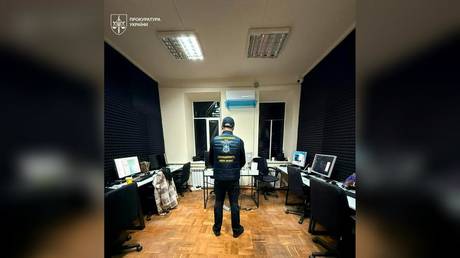
These operations—known across Eastern Europe simply as "offices"—are corporate machines built around human vulnerability. Inside, rows of desks stretch under fluorescent lights. On every screen runs a Voice-over-IP dialer capable of blasting thousands of calls an hour across European telecom networks, masking Ukrainian origin codes behind local area prefixes from Frankfurt, Madrid, or Stockholm.
The psychology is brutally refined. Callers do not rely on threats; they rely on authority and relief. First comes the panic: Your account is compromised. Someone in Amsterdam is draining your savings right now. Then comes the lifeline: I am here to secure your funds, but we must move quickly before the clearing house closes.
I have spent years examining the wreckage left behind by financial fraud, sitting across from victims who can barely meet your eyes because shame weighs heavier than poverty. The hardest truth to swallow is not the loss of money. It is the realization that trust itself was weaponized. When a victim hears a calm, native-accented voice reciting their home address and the last four digits of their debit card—data bought in bulk on darknet markets—their nervous system overrides skepticism. They are not being gullible. They are reacting exactly as human beings evolved to react when an authority figure offers shelter during a fire.
And while the victim is trembling in their kitchen, the voice on the other end is watching a live dashboard, ticking off boxes on a script, waiting for a supervisor in a glass-walled booth to signal the transfer.
Why the Trail Goes Cold at the Border
Follow the money backward, and the digital breadcrumbs are surprisingly clear. European financial intelligence units routinely trace stolen funds from EU retail banks to Eastern European cryptocurrency exchanges, pinpoint the physical IP addresses of the VoIP gateways, and identify the exact commercial buildings in Kyiv hosting the call centers.
In theory, cross-border police cooperation should make shutting them down straightforward. Ukraine relies heavily on European financial aid, political backing, and institutional alignment as it fights for its survival and pushes toward EU membership. Western investigators arrive with airtight dossiers: floor plans, shift schedules, bank accounts belonging to syndicate mid-level bosses, even photographs of luxury vehicles parked outside the buildings.
Then comes the friction.
Consider what happens next: a joint task force schedules a synchronized dawn raid. European liaisons wait for confirmation that local tactical units have breached the third floor of a business center in Kyiv’s Pechersk district. When the footage finally arrives, the room is empty. Not just vacated—sanitized. Desks sit bare, ethernet cables dangle cleanly from wall jacks, and hard drives have vanished without a trace.
Once, that looks like bad luck. Twice, it looks like sloppy operational security. When it happens across a dozen high-priority targets over eighteen months, Western detectives stop blaming coincidence.
Law enforcement officials familiar with the inquiries point to a systemic protection racket embedded inside senior levels of Kyiv’s police force. In exchange for a percentage of the monthly haul—a tax levied on criminal enterprise—corrupt officials allegedly provide early warnings ahead of Western-backed operations, stall extradition paperwork, bury domestic complaints, and ensure that low-level operators caught in occasional theatrical busts are released quietly without implicating the financiers at the top.
It is an old arrangement dressed in modern fiber-optic cables. Think of a fire department that takes a monthly retainer from arsonists, arriving promptly with sirens blaring only after the building has burned to ash and the perpetrators have walked away down the alley.
The Wartime Blind Spot
Why has this flourished now, of all moments? The answer sits at the intersection of wartime chaos and institutional distraction.
Since Russia’s full-scale invasion began in 2022, Ukraine’s security services, intelligence agencies, and honest police officers have been stretched to the breaking point. Their primary, existential mission is countering Russian sabotage, espionage, artillery, and occupation. Every unit, every analyst, every secure communications channel is prioritized toward national survival.
Organized crime thrives in the shadows cast by existential emergencies.
While genuine patriots are fighting on the eastern front or hunting Russian spotters in liberated towns, entrenched networks within the domestic police bureaucracy have exploited the fog of war. With martial law restricting public protests, media scrutiny focused overwhelmingly on frontline developments, and Western capitals hesitant to publicly embarrass an ally fighting a brutal war of aggression, the call center syndicates found the ultimate shield.
To call out corruption inside Kyiv’s law enforcement is politically delicate in Brussels, Berlin, and Paris. Critics immediately worry about handing propaganda victories to Moscow, which relentlessly amplifies any story of Ukrainian dysfunction to erode Western support.
Yet silence carries its own rot. Every billion euros siphoned from European pensioners into the pockets of transnational crime bosses—and the corrupt officials shielding them—weakens the very public solidarity Ukraine depends upon. Worse still, Western intelligence analysts warn that criminal networks operating with impunity in Eastern Europe rarely stay strictly loyal to one flag. Money laundering pipelines built for financial fraud can just as easily move funds for hostile intelligence services, sanctions evaders, or weapons traffickers.
Inside the Recruitment Machine
Walk through central Kyiv on a weekday afternoon, and the recruitment pitch is hiding in plain sight. Telegram channels aimed at twenty-somethings promise salaries that dwarf legitimate entry-level jobs: two thousand, three thousand, sometimes five thousand dollars a month in cash or crypto, no university degree required, free lunches, PlayStation lounges, and corporate retreats.
For a young person living under air raid sirens, facing a battered wartime economy and an uncertain future, the lure is intoxicating.
The syndicates frame the work not as theft, but as a victimless game played against rich, naive Westerners who can afford the loss. New hires are trained by behavioral coaches to mirror vocal cadence, suppress regional accents, and pivot seamlessly when a target hesitates. They are taught that Europeans have insurance, that banks reimburse fraud, that nobody truly gets hurt.
None of that is true.
European banks rarely reimburse victims who were manipulated into authorizing transactions themselves—a legal gray zone known as authorized push payment fraud. When Marie in Lyon reads out that six-digit code, her bank views the transfer as her own voluntary instruction. There is no federal bailout waiting for her. There is no insurance check in the mail. There is only an empty balance, a mortgage she can no longer cover, and children who have to drain their own savings to keep her from losing her apartment.
Meanwhile, the young caller in Kyiv collects a crisp stack of hundred-dollar bills on Friday evening, unaware—or unwilling to care—that a chunk of their commission traveled upward through a chain of middlemen straight into the offshore accounts of senior police officials who guarantee the office lights stay on Monday morning.
The Anatomy of Complicity
How do Western investigators know the leaks are coming from inside the house?
Digital forensics leaves fingerprints even when criminals try to scrub the room. In several cases examined by European cybercrime units, undercover informants and intercepted encrypted chats revealed that syndicate managers knew the exact hour of planned police actions days in advance. In one instance, a call center relocated three hundred workstations over a single weekend—moving desks, servers, and staff to a new commercial lease—forty-eight hours before a warrant signed under mutual legal assistance treaties was supposed to be executed.
Such precision requires access to restricted operational files. It requires someone sitting at a desk with clearance to view incoming intelligence from Europol or bilateral liaison officers, picking up a burner phone, and making a thirty-second call.
We have seen this pattern before in other post-Soviet transitions, from the banking scandals of the 1990s to the smuggling corridors of the 2000s. When state institutions undergo rapid reform without purging entrenched patronage networks, those networks adapt. They learn the language of Western compliance. They attend anti-corruption seminars in Vienna and Brussels, shake hands with European prosecutors, pose for press releases announcing task forces, and then quietly monetize their gatekeeper status behind closed doors.
Confusingly, both realities exist at the same time in modern Ukraine: extraordinary civic heroism alongside deeply rooted institutional graft. Acknowledging the second does not diminish the first. In fact, ignoring the graft betrays the millions of Ukrainians risking everything to build a genuine European democracy governed by the rule of law.
What Breaking the Shield Requires
Shutting down an industrial fraud ecosystem protected by corrupt law enforcement cannot be accomplished through polite diplomatic cables or routine extradition requests. When the local referee is betting on the game, handing the whistle to the referee changes nothing.
Western investigators and anti-corruption specialists point to three concrete pressure points that could actually dismantle the protection racket:
Bypassing Compromised Channels Through Independent Anti-Corruption Bodies. Ukraine already possesses specialized, Western-backed anti-corruption institutions—such as the National Anti-Corruption Bureau (NABU) and the Specialized Anti-Corruption Prosecutor’s Office (SAPO)—designed specifically to investigate high-level state officials outside the traditional police hierarchy. Routing European cybercrime intelligence directly to vetted units with independent oversight cuts out the leaky middle layer of senior municipal and national police commanders.
Following the Real Estate and Luxury Trails in the EU. Corrupt officials and syndicate bosses do not keep their wealth in Ukrainian hryvnia under a mattress. They buy villas in Spain, apartments in Vienna, luxury cars in Prague, and residency permits across the Schengen zone. Aggressive asset freezes, unexplained wealth orders, and visa bans targeting the families and shell companies of implicated police officials strike where impunity hurts most.
Tying Justice Sector Aid to Measurable Enforcement Outcomes. European financial and technical support for Ukrainian law enforcement modernization is massive. Making future tranches explicitly conditional on demonstrable, prosecuted takedowns of major call center syndicates—and the internal affairs convictions of officials who tip them off—transforms a low-priority nuisance into an immediate political imperative in Kyiv.
The Cost of Looking Away
Every morning across Europe, millions of phones ring. Most are harmless: a delivery driver downstairs, a dentist confirming an appointment, a grandchild calling on the walk to school.
But woven into that daily chorus are thousands of calls engineered in protected towers along the Dnieper, calibrated to find the exact moment a human being is tired, worried, or alone. Behind every stolen euro is a quiet domestic catastrophe—a medical procedure postponed, a retirement sold off, a dignified old age reduced to counting coins at a grocery checkout.
And behind every unexecuted warrant sits a corrupt official in a pressed uniform, checking a watch while movers haul servers down a freight elevator into a waiting van.
The phone keeps ringing across Europe, and until someone takes the badge away from the men guarding the dialers, nobody on the other end of the line is truly safe.


