Winning an election in Central Europe is one thing. Actually taking control of a state that spent 16 years building defense mechanisms against democratic change is something else entirely.
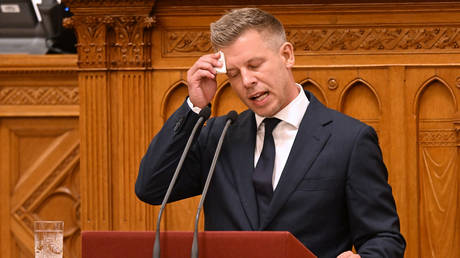
When Péter Magyar swept into power in early 2026, ending Viktor Orbán's long reign, his Tisza party captured a two-thirds supermajority in parliament. Most political observers thought the hard part was over. They were wrong. Magyar quickly ran into a major obstacle: Hungary's state architecture was still packed with loyalists from the previous government, including the head of state, Tamás Sulyok.
Rather than waiting out a five-year presidential term that would continuously delay reform, Magyar chose an aggressive constitutional maneuver. He pushed through a constitutional amendment specifically structured to terminate Sulyok's term immediately.
It worked. The president agreed to step down. But the political fallout from this tactic reveals the intense friction inherent in trying to reset a country's entire governance model overnight.
The Constitutional Trap Magyar Had to Break
You can't understand Magyar's drastic legal move without looking at how the old system was built. Over more than a decade and a half, the previous administration didn't just govern; it embedded loyalists into key constitutional roles. The presidency, the Constitutional Court, and the chief prosecutor's office were all designed to act as anchors, preventing any rival administration from easily making sweeping policy changes.
President Tamás Sulyok took office in early 2024 following a massive pardon scandal that brought down his predecessor, Katalin Novák. Sulyok was a former judge viewed as a reliable legal guardian for the outgoing regime.
When Tisza won 141 out of 199 parliamentary seats in 2026, Magyar framed his victory as a total "regime change". But having a legislative majority means very little if the presidency refuses to sign emergency reform packages or constantly sends bills to a packed Constitutional Court for multi-month reviews.
Magyar saw this institutional wall coming. He repeatedly demanded Sulyok's resignation, arguing that a president elected under the former administration lacked the democratic legitimacy to represent the nation under a new mandate. When Sulyok refused, Magyar used his supermajority to pass the Seventeenth Amendment to the Fundamental Law, legally wiping out the president's mandate based on a "serious loss of confidence" from society.
Why the Removal Sparked Fierce Legal Debates
The move to force out a sitting head of state through retroactive constitutional changes sent shockwaves through legal circles.
Sulyok signed the amendment, acknowledging he lacked the procedural veto power to stop a supermajority. However, he issued a sharp rebuke on his way out. He warned that removing constitutional officers in this manner damaged the separation of powers and set a dangerous precedent for Hungarian democracy.
Opposition figures from the former ruling party jumped on this statement, calling the new government's actions authoritarian. Critics outside the country, including international human rights monitors, raised concerns about using constitutional amendments to remove political adversaries, noting that changing rules on the fly mimics the very tactics the previous administration used for years.
Magyar's stance remains unapologetic. He argued that extraordinary measures are required to restore democratic norm enforcement. From his perspective, leaving old appointees in place meant allowing a defeated regime to hold a veto over the voters' explicit choice.
The Real Cost of Dismantling the Old Guard
The presidential dispute was never just about one person sitting in the Sándor Palace. It was a opening salvo in a broader push to purge deep-state structures.
Along with ending the president's mandate, the recent constitutional overhaul achieved several major legal shifts:
- Imposed a strict 12-year term limit on members of parliament.
- Established an 8-year term limit for the prime minister.
- Set a retirement age of 70 for judges on the Constitutional Court, forcing out long-time regime stalwarts.
- Reopened path-to-access mechanisms for billions in frozen European Union recovery funds.
The strategy is clear: force out entrenched officials quickly so the government can unblock relations with Brussels and access over €17 billion in withheld funds. With high domestic inflation and economic stagnation straining the budget, Magyar needs that money immediately.
However, speed comes with heavy trade-offs. By pushing legal boundaries to clear out his opponents, Magyar risks alienating moderate voters and troubling international allies who want to see a strict, deliberate return to traditional legal norms, not aggressive constitutional engineering.
How Magyar Can Maintain Momentum
If you're tracking Hungarian political developments, watch how the interim transition handles new appointments over the coming months. Speaker of Parliament Ágnes Forsthoffer has stepped in as interim president. Parliament now has a short window to elect a permanent head of state.
Here is what needs to happen for the new administration to stabilize its authority without causing further constitutional chaos:
- Nominate a non-partisan presidential successor: To counter charges of overreach, Magyar must nominate a respected legal scholar or civic figure rather than a Tisza party partisan.
- Prioritize EU compliance milestones: The primary justification for rushing these institutional changes was to restore the rule of law and unlock frozen European funds. Delivering those funds rapidly will silence many domestic critics.
- Establish clear rules for future tenure caps: Term limits must apply consistently across all branches to prove that constitutional changes aren't just one-off political tools used against specific rivals.
Fixing entrenched institutions without adopting the bad habits of past leaders is the hardest test for any reform movement. Magyar proved he can win elections and force out opponents. Now he has to prove he can build a durable constitutional order that survives his own time in power.