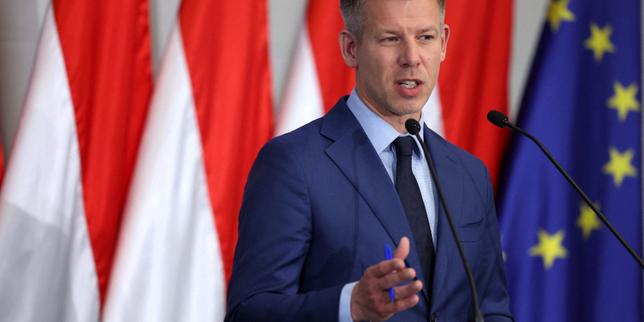
Viktor Orbán is out, and the man who just toppled Europe's longest-serving strongman is doing something nobody expected. Péter Magyar, the former Fidesz insider who turned the 2026 elections into a "supermajority" landslide for his Tisza party, is officially pivoting. Despite his conservative roots and "center-right" label, Magyar’s economic roadmap looks surprisingly like something from a social democratic manifesto.
If you thought a former Orbán ally would stick to the flat-tax, pro-corporate status quo, you’re wrong. Hungary’s economy is a mess of stagnation and massive deficits, and Magyar realizes he can't fix it by playing it safe. He’s betting that a mix of wealth taxes and VAT cuts will win over the rural voters who just abandoned the old regime.
Breaking the flat tax idol
For sixteen years, the 15% flat income tax was the holy grail of "Orbánomics." It was meant to reward the middle class, but in reality, it just widened the gap between the Budapest elite and everyone else. Magyar’s plan isn't just a tweak; it’s a full-scale assault on that model.
The most controversial part of his strategy is a wealth tax on "forint billionaires." We're talking about the oligarchs who got rich off state contracts and cronyism. Magyar isn't just looking for revenue here. He’s looking for justice. By targeting the top 0.1%, he’s signaling to the average voter that the days of "state capture" are over.
It’s a bold move because many of these billionaires were his former friends. But Magyar knows that to keep his 80% voter turnout coalition together, he needs to prove he’s not just "Orbán Lite." He’s looking to raise at least 0.1% of the GDP through this wealth tax alone, a figure that sounds small but represents a massive shift in Hungarian fiscal philosophy.
Slashing the world's highest VAT
If you've ever bought a loaf of bread in Budapest, you know the pain of a 27% Value Added Tax. It’s the highest in the world and it hits the poorest Hungarians the hardest. Magyar has promised to aggressively cut this rate.
While the previous government used high VAT to fund corporate subsidies and sports stadiums, Magyar wants to put that money back into the pockets of families. He’s focusing on basic foodstuffs and essential goods first. This is a classic "left-wing" move: reducing regressive taxes to stimulate consumption.
But there’s a catch. Hungary is currently under an EU Excessive Deficit Procedure. The budget deficit is sitting near 5%, and the economy hasn't seen real growth in three years. Basically, Magyar is trying to spend money he doesn't have yet.
The 90 billion euro lifeline
You might wonder how he plans to fund VAT cuts and higher family allowances while the coffers are empty. The answer lies in Brussels. Because Magyar has committed to restoring the rule of law and ending the "war" with the EU, billions in frozen funds are about to be unlocked.
Specifically, there's a €90 billion EU loan intended for Ukraine that Orbán blocked for years. By greenlighting this and aligning with EU fiscal standards, Magyar expects to see roughly €17 billion (about 8% of Hungary's GDP) released to Budapest. This isn't just a "bonus." It’s the foundation of his entire economic survival plan. Without this cash, his left-leaning tax reforms would crash into a wall of debt within six months.
Social safety nets over stadium seats
Magyar is also doubling down on social spending that the previous administration ignored. We’re seeing a shift toward:
- Increasing direct family allowances (which haven't risen in years).
- Expanding tax exemptions for mothers.
- Distributing SZÉP cards (social vouchers) to pensioners to combat the "bring your own toilet paper" crisis in hospitals.
It’s a populist strategy, sure, but it’s targeted at the social decay that finally broke Orbán’s grip on power. Critics from the old guard say it’s "too good to be true" and that the first two years will be an economic nightmare. They might be right. If the global economy dips, Magyar’s plan to "spend his way to growth" could backfire.
What this means for the rest of us
Magyar isn't a socialist. He’s a pragmatist who understands that Hungary’s right-wing "illiberal" experiment failed because it stopped delivering for the people. He's blending conservative social values with a redistributive fiscal policy. It's a weird hybrid, but it might be the only way to stabilize a country that has been polarized for nearly two decades.
If he succeeds, he’ll provide a blueprint for other European leaders looking to defeat right-wing populism. You don't do it by being "centrist" and boring; you do it by being more radical about the economy than the populists themselves.
Keep an eye on the upcoming parliamentary sessions in Budapest. The real test starts when the first "billionaire tax" bill hits the floor. If Magyar can actually pass these reforms without scaring off all foreign investment, he might just pull off the greatest political pivot in modern European history. For now, the honeymoon is on, but the math is getting harder by the day.