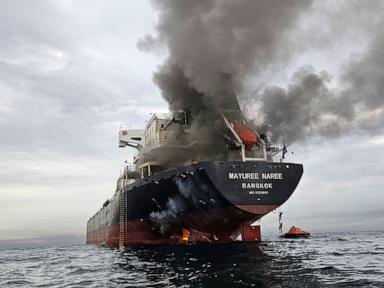
The headline number looks straightforward on the surface. Maritime attacks in and around the Strait of Hormuz just hit their highest monthly pace since the U.S., Israel, and Iran went to war in late February 2026.
Most casual observers read that and assume global shipping through the Persian Gulf has ground to a total halt. They're wrong. While the United Kingdom Maritime Trade Operations (UKMTO) logged more than 30 attacks in October and over 20 more in November, tanker operators haven't abandoned the waterway. Instead, they've adapted in ways that make the conflict far messier—and much harder to track—than standard news bulletins let on.
If you're watching global energy markets, maritime logistics, or geopolitical risk, looking only at the raw attack count misses the actual story playing out off the coast of Oman.
Why Strait of Hormuz Attacks Hit a Wartime High
To understand why violence spiked nine months into the conflict, you have to look at the competing blockades strangling the region. Since fighting broke out on February 28, 2026, Washington and Tehran have been locked in a maritime tug-of-war.
The U.S. military is actively enforcing a naval blockade on Iranian ports. According to U.S. Central Command, American forces have already redirected 158 compliant vessels and disabled six ships that tried to breach the cordon—including the Palau-flagged M/V Pacific Archer, whose propulsion was hit by precision munitions in the Gulf of Oman after leaving Bandar Abbas.
Iran's answer is an asymmetric tollbooth. Tehran demands that commercial ships register with its sanctioned Persian Gulf Strait Authority before transiting. When shipping lines refuse, the Islamic Revolutionary Guard Corps (IRGC) puts them on a "non-compliance" list. Maritime intelligence firm Windward notes that Tehran has already blacklisted more than 260 vessels—mostly tankers owned by Gulf national oil companies or major Asian carriers like South Korea's Sinokor.
Here's the catch. Tehran's official narrative rarely matches what happens at sea.
The Mine vs. Drone Discrepancy
Whenever an explosion rocks a tanker near Oman's Musandam Peninsula, Iranian state media routinely claims the ship wandered into a "restricted zone" and struck a naval mine. Independent evidence tells a very different story.
Take the Chinese-owned crude tanker Gem No. 2. In October, the IRGC insisted the vessel hit a mine while attempting an unauthorized crossing of the strait. Yet satellite imagery placed the abandoned ship off the coast of the United Arab Emirates, well outside the narrow chokepoint. Crew members later confirmed they never tried to transit the strait at all; the tanker was struck by a single drone on October 9 and at least three more the next day, sparking a fire and a major oil spill. Researchers analyzing wreckage photos identified the weapon as a jet-powered, Iranian-built Hadid-110 drone.
Tehran also expanded its target list beyond large tankers. By late November, the Joint Maritime Information Center (JMIC) recorded ten attacks in roughly a week and noted that Iran had added tugboats to its blacklist. Hitting salvage tugs isn't random violence. It's a calculated move to keep crippled ships stranded at sea and block rescue operations.
The Double-Tap Tactic Changing Maritime Risk
If you talk to marine insurers or security consultants right now, the biggest shift isn't just the frequency of strikes. It's the persistence.
Maritime security consultancy EOS Risk reports that Iranian forces have begun "double tapping" commercial vessels—returning to strike the exact same ship two or three times over consecutive days. At least six commercial vessels have been hit multiple times during the October-November surge:
- Navig8 Messi: Owned by the UAE's national oil company Adnoc, this vessel has sustained three separate attacks.
- Tara Gas: Struck on two consecutive days in November, catching fire after the second hit.
- Gem No. 2: Hit across two days in October before its crew evacuated.
Why waste drones hitting an already damaged ship? Two reasons. First, fewer ships are transiting without protection, which concentrates targets. Second, a single drone strike rarely sinks a modern double-hulled tanker. By hitting the vessel again, Iran ensures the ship is knocked permanently out of service and scares off salvage crews.
Even land-based infrastructure isn't safe. On November 8, verified satellite imagery and video confirmed Iran struck the Omani island of Didamar inside the strait, claiming it destroyed "enemy navigation aid systems".
Why Tankers Are Still Crossing Anyway
You'd think more than 50 confirmed attacks in two months would scare every captain out of the Persian Gulf. It hasn't. In fact, data from Lloyd's List shows inbound vessel transits into the Gulf actually hit a postwar record of 237 in October.
The economics are simple. Before the war, roughly one-fifth of the world's crude oil passed through this narrow strip of water. Global buyers still need that energy, and Gulf producers need to sell it. To keep cargoes moving, operators have completely rewritten the playbook for Gulf navigation.
Going Dark on AIS
Normally, commercial ships broadcast their identity, speed, and GPS coordinates via the Automatic Identification System (AIS). Today, broadcasting AIS in the Strait of Hormuz is basically painting a bullseye on your hull.
According to commodity intelligence firm Kpler, only about 15% of recent energy loadings in the region are happening with AIS transponders turned on. Ships "go dark" before entering the southern corridor near the Omani coastline, hugging territorial waters under the watch of U.S. naval assets.
Because so many vessels are operating invisibly—and because shipping companies often hide minor damage to avoid astronomical war-risk insurance hikes—UKMTO admits its official tally of 31 attacks in October and over 20 in November is almost certainly an undercount.
Downsizing the Fleet
Vortexa tracking data reveals another clever adjustment. Operators are pulling back massive Very Large Crude Carriers (VLCCs) and Suezmax tankers—which move slowly and represent catastrophic financial losses if hit—and replacing them with smaller oil-product tankers converted to haul crude. More smaller ships mean higher daily transit counts, even if total cargo volume remains constrained.
Meanwhile, the International Maritime Organization (IMO) has verified 141 commercial maritime incidents and 25 seafarer deaths across the Persian Gulf, Strait of Hormuz, and Gulf of Oman since February. The human cost is mounting quietly behind the dark transponders.
How to Track What Is Actually Happening in the Gulf
If you rely on mainstream cable news or basic oil price tickers to judge the situation in the Strait of Hormuz, you'll always be three days behind reality. Oil prices have occasionally dipped even during weeks of heavy drone strikes because traders are pricing in sluggish global demand alongside U.S.-facilitated convoys.
To get an accurate read on maritime security and energy supply risks right now, skip the punditry and monitor the primary sources directly:
- Read UKMTO and JMIC advisories directly. Both the UK Maritime Trade Operations center and the Joint Maritime Information Center publish raw incident coordinates and vessel damage assessments before they get filtered through press releases. Pay close attention to attacks occurring east of the strait near Khor Fakkan or Khasab—that tells you Iran is projecting force well beyond the chokepoint itself.
- Watch dark-fleet ratios, not just transit totals. When Kpler or Vortexa reports rising ship counts, check the percentage of transits operating without AIS. A spike in dark transits signals heightened threat perception among captains, regardless of how many hulls make it through.
- Track salvage and tugboat targeting. Keep an eye on reports involving support vessels. If Tehran continues hitting tugs and regional navigation aids, a single disabled supertanker could physically block the southern Omani corridor in a way that missiles alone never could.