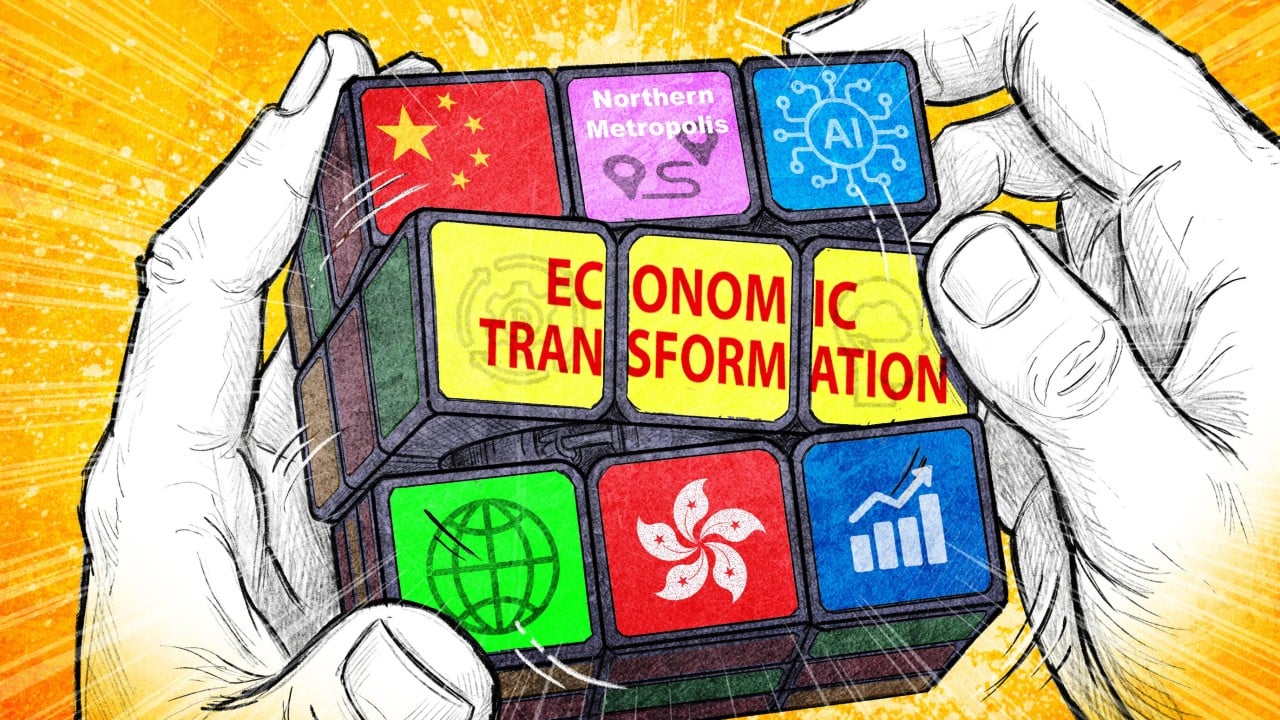
Hong Kong is betting its entire future on concrete and microchips. Walk through the government offices in Admiralty, and you will hear endless talk about the Northern Metropolis, tech hubs, and integration with the Greater Bay Area. The city is pouring hundreds of billions into reshaping its northern border with Shenzhen. It is a massive, dazzling vision of the future.
But if you look away from the gleaming architectural models and step into the subdivided flats of Sham Shui Po, you see a completely different city.
The glittering plans don't mention the grandmother collecting cardboard to pay for her next meal. They skip over the fact that more than 1.3 million residents live below the official poverty line. The wealth gap has stretched to a breaking point. While officials chase high-tech growth, the poorest residents are finding themselves pushed further to the margins.
The math simply doesn't add up for the average person on the street.
The High Cost of Building a Tech Utopia
The government is no longer just a passive referee in the market. It is actively trying to build an innovation corridor. The 2026 budget proves just how much cash is on the line. The administration recently earmarked $10 billion each for the Hetao Hong Kong Park, the San Tin Technopole, and the Hung Shui Kiu Industry Park. On top of that, a massive $150 billion transfer from the Exchange Fund was unlocked to bankroll these mega-infrastructure works.
It is an expensive gamble to catch up with Shenzhen, where technology contributes up to 40% of GDP. In Hong Kong, that figure sits at a measly 5.8%.
The scale is undeniably massive. The Northern Metropolis takes up a full third of Hong Kong's land mass. By 2040, the government expects this zone to house 2.5 million people and create 650,000 new jobs. It sounds like a dream. But who actually gets those jobs?
The new economic blueprint prioritizes life sciences, advanced manufacturing, and artificial intelligence. These industries require advanced degrees and highly specific technical skills. They don't hire the middle-aged logistics workers who lost their jobs to automation, nor do they employ the thousands of low-income citizens struggling to get by in retail or cleaning services. The structural mismatch in the labor market is glaring, and the current plans do little to bridge that chasm.
The Reality of the 82 Times Wealth Gap
While the city waits decades for these mega-projects to pay off, daily life for low-income families is getting worse. Data from Oxfam reveals a terrifying statistic. The richest 10% of households in Hong Kong now earn roughly 81.9 times more than the poorest 10%.
Before the pandemic, that disparity was around 34 times. The divide didn't just grow; it exploded.
Consider the actual income numbers. The median monthly income for the poorest decile of households plummeted to just HK$1,600. Meanwhile, the wealthiest households enjoy a median monthly income of over HK$131,100. Rent alone eats up nearly 70% of the median household income for low-income families living in the private market.
- Subdivided flats: Over 220,000 people live in tiny, cramped spaces often no larger than a parking spot.
- Elderly poverty: More than 580,000 residents aged 65 or older are living in poverty.
- The working poor: Thousands work full-time hours but still can't afford basic nutritional needs because wages haven't kept pace with inflation.
The government emphasizes targeted poverty alleviation, but its primary strategy remains tied to trickle-down economics. The belief is that if you build giant tech parks, the wealth will eventually reach everyone. History shows it rarely works that way. When capital investment dominates the economy, the returns go straight to the asset owners and corporate elites, not the cleaners or the construction laborers.
Missing Pieces in the Economic Blueprint
The official strategy assumes that physical connectivity solved through new railways and border checkpoints will naturally create widespread prosperity. It ignores the human element.
If a low-income worker lives in Tin Shui Wai, a new tech hub in San Tin doesn't automatically solve their problem. They need affordable transportation, accessible childcare, and retraining programs that actually work. Right now, some unemployed residents report that they can't even afford the public transit fares required to travel to job interviews across districts.
The government has launched a pilot scheme called the Northern Metropolis Urban-rural Integration Fund to help rural tourism, but it is a drop in the bucket compared to the billions flowing into corporate entities. The real issue is structural. Research shows that since 2001, the capital share of Hong Kong’s economy grew from 32% to over 53%. This means more money is being made from investments, property, and returns on wealth, while the share going to ordinary workers’ wages has shrunk significantly.
Moving the Needle on Real Economic Equality
If the city wants its grand vision to succeed without triggering a massive social crisis, it has to pivot its spending priorities. Mega-infrastructure projects cannot come at the expense of basic social infrastructure.
First, the city needs a massive expansion of localized, subsidized vocational training. If the San Tin Technopole is going to hire 650,000 people, a significant percentage of those roles must be accessible to locals through intensive upskilling programs. The government should tie corporate land grants to local hiring quotas. If a tech giant wants cheap land in the Northern Metropolis, they must commit to training and employing workers from the surrounding public housing estates.
Second, the structural issue of elderly poverty requires immediate labor market incentives. Hong Kong's elderly labor force participation rate is only about 13.9%, vastly lower than other developed economies. Many older residents want to work and are fully capable, but ageism and a lack of flexible roles lock them out. Creating tax incentives for companies that hire older workers for manageable, tech-assisted roles would immediately lift thousands of households out of extreme poverty.
Finally, fix the transit penalty. Lower-income workers shouldn't be penalized for living far from the traditional urban core. Expanding the Public Transport Fare Subsidy Scheme specifically for residents traveling to and within the new northern development zones will ensure that people can actually afford to get to the new jobs being created.
The Northern Metropolis shouldn't just be an playground for tech investors and property developers. If Hong Kong wants a stable future, it must ensure that the people building the city can actually afford to live in it.