You think you know how bias works until you watch an 18-year-old boy bleed out on gravel while a police officer tells him, "Don't think you have, mate."
The murder of British student Henry Nowak in Southampton has torn open a brutal national debate in the UK. It isn't just about a tragic loss of life anymore. It's about a complete institutional failure. Newly released bodycam footage from the Crown Prosecution Service has completely shattered the narrative spun by his killer, 23-year-old Vickrum Singh Digwa. The audio is sickening. While Henry lay dying, suffocating in handcuffs, Digwa stood completely unrestrained, calmly feeding police officers a string of calculated lies to paint himself as the true victim.
Here is what actually happened on that street last December, and why the fallout is shaking the highest levels of British politics.
The Wicked Lies Caught on Camera
When Hampshire Constabulary officers arrived at the scene, they found two very different situations. They found Henry Nowak, an 18-year-old university student, collapsed on the ground, struggling to stay alive after being stabbed five times. And they found Vickrum Digwa, weapon hidden, ready to weaponize identity.
The newly published footage exposes exactly how Digwa manipulated the responding officers. He claimed he was "literally just walking" when Henry randomly barged into him. He told officers he could smell heavy alcohol on the student, claiming Henry was dangerously drunk. The trial completely disproved this—toxicology reports showed Henry's alcohol levels were well below the legal driving limit.
Then came the definitive lie. Digwa claimed Henry launched into a violent, racist tirade, screamed slurs, and ripped off his turban, dragging him by his hair. Digwa's father, Moga Singh, can even be heard backing up the story on the recording, telling police his son had just been assaulted.
When Digwa complained about the alleged racial attack as officers finally arrested him on suspicion of attempted murder, a police officer calmly responded, "I know, I know, I know."
Digwa wasn't handcuffed. He was treated with gentle care, while Henry was treated like a violent perpetrator.
Eight Minutes of Fatal Assumptions
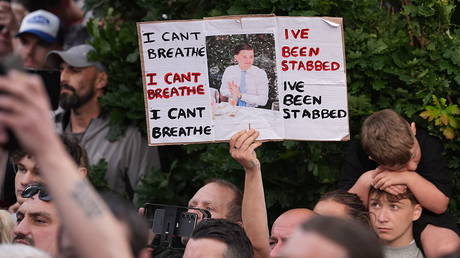
While police bought into Digwa's victim narrative, Henry was pleading for his life. The bodycam transcripts show the teenage student told officers at least seven times that he could not breathe. He repeated that he had been stabbed.
The response? Total dismissal.
Officers dragged Henry across the gravel, pulled his hands behind his back, and locked him in handcuffs. They officially placed the dying teenager under arrest for assault. One officer openly doubted his injuries, explicitly telling him they didn't think he had been stabbed.
It took exactly eight minutes and 49 seconds for the officers to cut through Henry's clothing and locate the massive chest wound. By then, it was too late. Henry had already lost consciousness. The fatal wound had pierced his heart, and he effectively choked on his own blood while restrained.
The defense tried to argue during the trial that Digwa was carrying a small blade for ceremonial purposes, which is legally permitted for practicing Sikhs under UK law. Prosecutors blew that argument apart. Digwa used a lethal weapon, stabbed an unarmed teenager five times, and then hid Henry's mobile phone in his own pocket to prevent him from calling for help.
The justice system caught up to Digwa. A judge sentenced him to life in prison with a minimum term of 21 years. But the anger on the streets isn't about the sentence. It's about those eight minutes.
A Country Divided by Two Tier Policing Claims
The sheer imagery of this case has sparked massive protests and clashes with police in Southampton, resulting in injuries to at least 11 officers. It has also turned into a massive political battleground.
Reform Party leader Nigel Farage immediately used the case as a symbol, claiming Henry's treatment is clear evidence of "anti-white prejudice" and systemic "two-tier policing" in Britain. He argued that the institutional fear of being labeled racist made the officers immediately side with Digwa without checking the dying boy on the ground. Prime Minister Keir Starmer has hit back, accusing Farage of weaponizing a horrific murder to fuel racial division and grievance.
Hampshire Police Chief Constable Alexis Boon issued a public apology, admitting the force was deeply sorry for handcuffing and arresting Henry as he lay dying. The Independent Office for Police Conduct is currently running a full-scale investigation into the response.
If you want to understand the terrifying reality of how easily authority can be manipulated by a killer's lie, you need to watch how the system failed Henry Nowak. This video analysis breaks down the exact timeline of the police bodycam footage and the critical errors made on the scene.
Key moments of police bodycam footage in Henry Nowak murder
The upcoming jury inquest at Winchester Coroner's Court will focus heavily on whether the police officers' failure to check for wounds directly contributed to Henry's death. For now, a family is left mourning a son who spent his final moments treated as a criminal by the very people supposed to protect him.