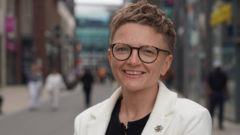
Political transitions often feel like distant theater until they land on your doorstep. When Andy Burnham stepped away from regional politics, the spotlight swung immediately to Bev Craig. Stepping up as the new Mayor of Greater Manchester, she didn't just inherit a title. She took the keys to the most influential combined authority outside London, managing massive budgets spanning transport, housing, and regional growth.
Most headlines frame her rise as a straightforward baton pass. That narrative misses the actual grit of how local power works in the North of England today. You need to look past the standard political bios to understand what kind of leader she actually is, what she brings to the table, and why her tenure changes the game for millions of residents.
From a Belfast Council Estate to the Heart of Manchester
Background shapes perspective. Craig grew up on a council estate just outside Belfast, experiencing firsthand the stabilizing safety net of public housing when times get tight. Moving to Manchester at eighteen to study politics and modern history at the University of Manchester, she didn't come from political royalty.
Before climbing the ranks of local government, she worked standard jobs in hospitality, retail, and call centers. That early exposure to everyday economic precarity explains why her political platform centers heavily on local wages, cost-of-living buffers, and inclusive economic growth. She joined the Labour Party, cut her teeth working for the public-service trade union UNISON, and won election as a councillor for Burnage in 2011.
When she became the leader of Manchester City Council in December 2021, she broke a decades-old mold. She was both the first woman and the first openly LGBTQ+ person to hold the post. Instead of treating those identity milestones as simple talking points, she leaned into operational management. She oversaw adult social care during the turbulent COVID-19 pandemic response and later managed the city's economy portfolio at the regional level.
What She Plans to Change Across Greater Manchester
Taking over the mayoral office means confronting very real regional friction points. Voters aren't looking for broad ideological speeches. They care about bus timetables, high street footfall, and housing costs.
Her immediate agenda targets specific pain points:
- The Bee Network: Pushing to expand public transport integration while freezing fare hikes where possible.
- Town Centre Revitalization: Implementing targeted funding strategies to rescue struggling high streets across all ten boroughs.
- Housing Delivery: Scaling up the construction of council-owned and genuinely affordable housing stock.
Critics often argue that regional mayors lack the hard legislative teeth to fix systemic economic inequality alone. Craig counters that regional devolution allows local leaders to bypass Westminster paralysis. By working directly with businesses, trade unions, and community groups, she has consistently pushed for mandatory living wages and local procurement rules that keep public money circulating inside the local economy.
The Real Test Ahead
Every political promotion comes with fresh vulnerabilities. Winning the mayoral byelection against a backdrop of low voter turnout and rising political fragmentation means she cannot afford a honeymoon period. Labour faces mounting pressure in local councils from both Green and Reform movements across different Greater Manchester boroughs.
She has explicitly rejected the idea that the mayoralty is merely a stepping stone to a Westminster cabinet seat. For now, her focus remains locked on proving that local industrial heritage can translate into modern economic resilience without leaving working-class communities behind. Pay attention to how she handles housing developments and transport integration over the next twelve months. That delivery track record will define whether her tenure matches the lofty expectations of the region she now governs.
Get familiar with your local borough's strategic framework, track how regional transport funds get allocated to your specific neighborhood, and hold local representatives accountable to the community standards set out in the regional growth pledges.