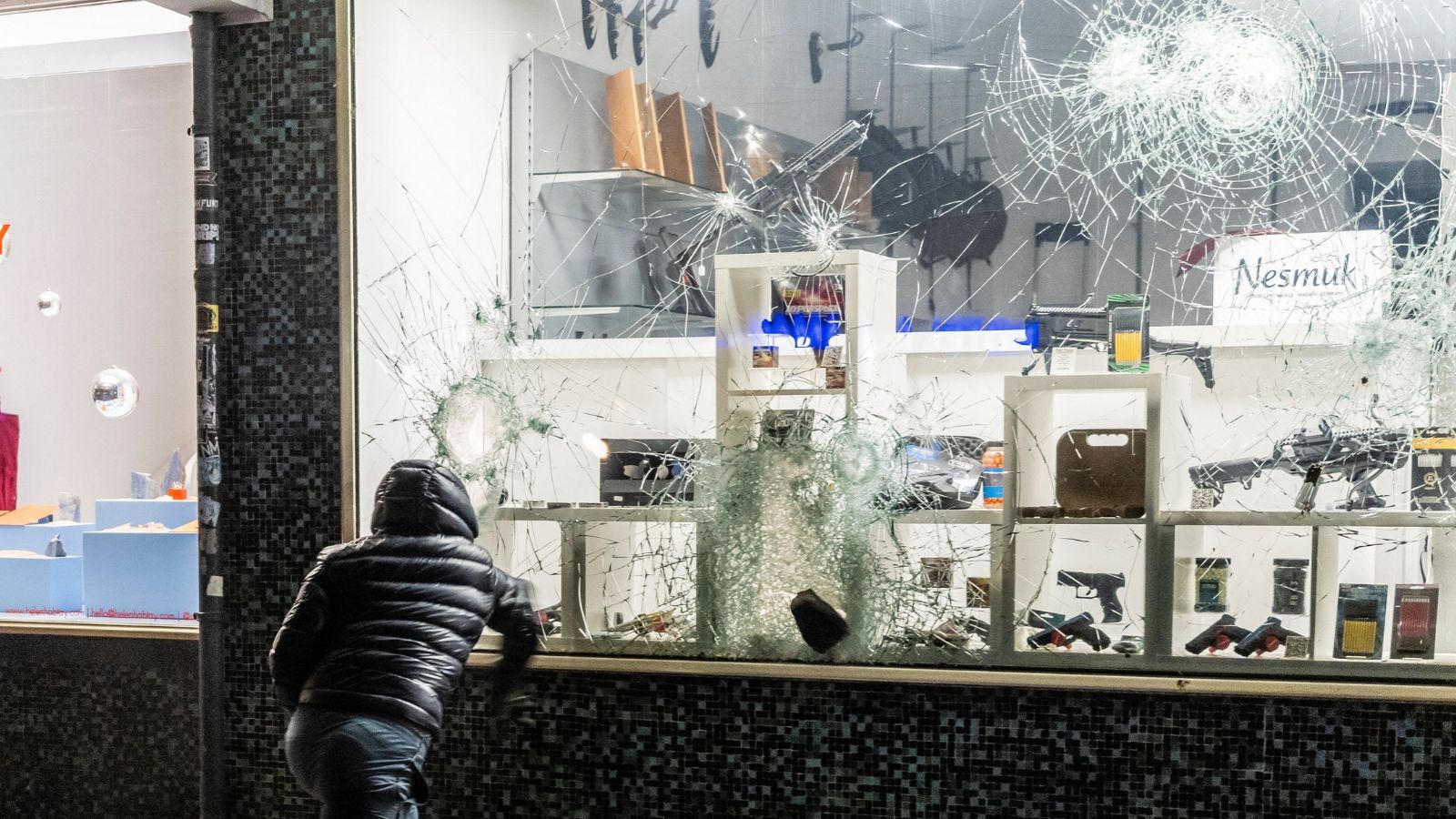
Most international headlines treat the Germany Gen Z protests like a single-issue tantrum over screen time or Friday school strikes. That reading completely misses the boiling point young Germans have actually reached.
Look past the viral clips of street clashes, and you'll find a generation squeezed from every direction. Skyrocketing urban rents, crumbling school infrastructure, heated debates over military conscription, and deep frustration with Berlin's sluggish coalition politics have collided on the pavement. When young people take to the streets in Berlin, Frankfurt, or Leipzig, they aren't just marching for one abstract cause. They're pushing back against an economic and political setup that asks them to shoulder massive future costs while shutting them out of immediate decisions.
Why Young Germans Are Actually Taking to the Streets
If you've spent time talking to university students or apprentices in major German cities over the past couple of years, you know the mood has shifted from idealistic optimism to sharp pragmatism. The stereotype of the comfortable, state-subsidized German youth doesn't hold up against modern inflation and housing math.
First, there's the housing crunch. In cities like Berlin, Munich, and Hamburg, finding an affordable shared flat—a WG—has turned into an exhausting, months-long casting call. Students routinely spend well over half their monthly BAföG (federal student financial aid) just to rent a single room. When housing becomes a luxury good, political patience evaporates fast.
Second, climate anxiety hasn't disappeared—it's mutated. Early Fridays for Future marches had a festival-like energy. Today, groups like Letzte Generation (Last Generation) and younger splinter collectives have shifted toward disruptive direct action because they believe polite marches failed to move the needle on Germany's transport and energy emissions.
Third, the revival of national security debates hit Gen Z directly in the gut. Discussions around reintroducing mandatory military or social service—championed by Defense Minister Boris Pistorius and debated fiercely across the Bundestag—triggered immediate pushback from teenagers and twenty-somethings who refuse to be drafted into policy decisions made without their input.
Add polarizing geopolitical flashpoints, particularly demonstrations over the Gaza conflict and German arms export policies, and you get a volatile mix of grievances sharing the exact same public squares.
Where the Clashes Broke Out and What Happened
Protests in Germany are heavily regulated under the Versammlungsgesetz (Assembly Act), which generally keeps demonstrations orderly. Yet specific flashpoints repeatedly tipped into direct confrontations with riot police (Bereitschaftspolizei).
Berlin Neukölln and Kreuzberg
Berlin remains the epicenter of youth mobilization, and the sharpest clashes have consistently unfolded in Neukölln and Kreuzberg. Along Sonnenallee and around Kottbusser Tor, spontaneous demonstrations and banned assemblies quickly escalated into street blockades. Police deployed water cannons, pepper spray, and mass kettling tactics to clear intersections, resulting in hundreds of temporary detentions and injuries on both sides.
Frankfurt and the Financial District
In Frankfurt, protesters targeted symbols of corporate and financial power. Youth-led climate and anti-austerity blocs staged sit-ins blocking major commuter arteries and bank headquarters. Tensions spiked when demonstrators attempted to breach police perimeters near the European Central Bank, leading to baton charges and aggressive dispersal operations.
Leipzig and Connewitz
Leipzig's Connewitz district has a long history of left-wing activism, and younger anti-fascist and housing-rights protesters have kept that friction alive. Demonstrations against rising living costs and far-right political gains frequently devolved into night-time street skirmishes involving pyrotechnics, makeshift barricades, and heavy police deployments from across Saxony.
University Campus Occupations
From Humboldt University in Berlin to campuses in Munich and Cologne, student groups occupied lecture halls and courtyards. While many occupations started peacefully with teach-ins and tent camps, university administrations routinely called in municipal police to clear buildings, turning academic spaces into sites of physical confrontation.
What Young Protesters Actually Want
Strip away the sensational footage of burning flares and police lines, and the core demands coming out of these movements are surprisingly concrete. They aren't asking for utopia. They're asking for basic guardrails.
- A hard cap on urban rents and real social housing expansion. Young renters want strict enforcement of the Mietpreisbremse (rent brake) without the loopholes landlords currently exploit through furnished short-term leases.
- Overhauled education funding and digital infrastructure. Germany's schools and universities suffer from a massive investment backlog. Students want higher BAföG rates indexed to real inflation and modernized classrooms that don't rely on outdated equipment.
- Zero return to compulsory conscription. Youth organizations across the political spectrum argue that if the Bundeswehr needs recruits, it should improve pay and working conditions rather than forcing eighteen-year-olds into mandatory service.
- Legally binding climate enforcement. Activists demand that the federal government meet its own constitutional climate targets without watering down sectoral emissions laws for transport and industry.
- Lowering the voting age nationally. Germany lowered the voting age to 16 for European Parliament elections, and youth groups want that standard applied to federal Bundestag elections so politicians can't ignore under-18 voters.
The Political Blind Spot in Berlin
Here's the problem with how Germany's political establishment responds to youth unrest. Whenever clashes make the evening news on Tagesschau, mainstream politicians immediately pivot to debating police powers, stricter sentencing for road blockades, or bans on specific protest slogans.
Law-and-order talking points win easy applause from older voter demographics. Germany is an aging society where voters over 60 hold massive electoral weight, and politicians naturally cater to their anxieties about stability and public order.
By treating the Germany Gen Z protests strictly as a policing issue, lawmakers completely ignore the underlying socioeconomic pressures driving young people into the streets in the first place. You can't arrest your way out of a housing shortage. You can't kettle a generation into feeling optimistic about their pension prospects or climate future.
Even worse, heavy-handed police responses at campus protests and street demonstrations often radicalize moderate participants. When a nineteen-year-old university student attends a peaceful rally and ends up bruised in a police kettle, they don't go home thinking the system works. They go home convinced that institutional politics is a dead end.
How to Follow and Analyze German Youth Movements Accurately
If you're tracking these developments from outside Germany—or trying to make sense of conflicting media coverage—don't rely on viral social media clips alone. Short videos strip out context, hide what happened ten minutes before a clash started, and blur completely different protest movements into one misleading narrative.
Cross-check local reporting from outlets like Der Spiegel, Die Zeit, and regional public broadcasters such as RBB (Rundfunk Berlin-Brandenburg) or MDR (Mitteldeutscher Rundfunk). Look closely at the specific organizing coalition behind each demonstration, because a Fridays for Future climate march operates under entirely different tactics and demands than an autonomous housing blockade in Connewitz or a campus occupation in Berlin. Pay attention to municipal police press releases alongside statements from legal observer groups like the Rote Hilfe or the Grundrechtekomitee to get a realistic picture of how proportionality and assembly rights played out on the ground.


