Germany just agreed to spend €6.6 billion to buy 50% of KNDS. Most headlines frame this as a bold Franco-German love story, a historic handshake uniting Europe's two biggest military spenders around one giant tank maker.
That's not what happened. Not even close.
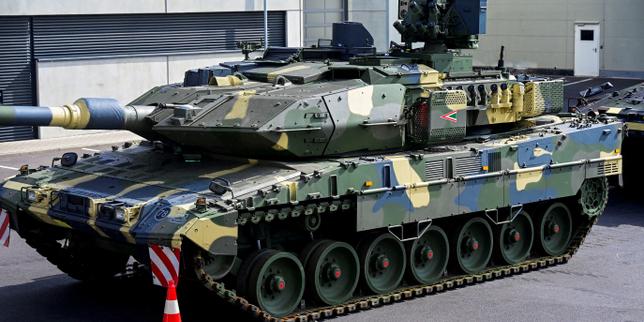
If you look past the diplomatic press releases from Paris and Berlin, this November 2026 deal isn't an ambitious industrial marriage. It's a defensive rescue mission. Berlin didn't step in because everything was going smoothly—it stepped in because the original plan blew up, foreign buyers started circling, and the German government couldn't afford to lose control of the company that builds its Leopard 2 tanks.
Why Germany Actually Bought Into KNDS
To understand why German taxpayers are suddenly footing a €6.6 billion bill, you have to rewind to how KNDS was built in the first place. When the group formed back in 2015, it merged two very different beasts: Nexter, a state-owned French defense contractor known for the Leclerc tank and the CAESAR howitzer, and Krauss-Maffei Wegmann (KMW), a fiercely private German firm owned by the Wegmann families.
For over a decade, the ownership structure was lopsided. The French state held 50% through its state holding agency. The Wegmann families held the other 50%.
That setup worked fine when defense budgets were sleepy. Then Russia invaded Ukraine, European defense spending exploded, and the Wegmann families decided they wanted out—or at least wanted to cash in on their equity.
The Failed IPO That Forced Berlin's Hand
Originally, nobody in Berlin wanted to nationalize half of a tank manufacturer. The plan unveiled in May and June 2026 was much cleaner. KNDS was supposed to go public via a dual stock market listing. Under that blueprint, both the French and German governments would hold 40% stakes, leaving the remaining 20% to public investors. Berlin's budget committee even earmarked up to €7.2 billion through the state development bank KfW just to buy that 40% slice at the IPO price.
Then reality hit the trading floor.
By July 2026, institutional investors balked at the price tag. The Wegmann families wanted a valuation floor of at least €12.5 billion, while market investors refused to go above €12 billion. Defense stocks were cooling off from their peak highs, and by September, the families officially shelved the listing.
Here's where things got tense in Berlin. Once the IPO died, the Wegmann families started exploring a sale to private foreign buyers. According to a confidential German finance ministry briefing leaked to Der Spiegel, interested suitors included the Czech defense conglomerate Czechoslovak Group (CSG).
Berlin panicked. Letting a foreign conglomerate—even a European ally—buy half of the company that produces the Bundeswehr's main battle tanks and Boxer armored vehicles was a non-starter. So the German government stepped in, bypassed the public markets entirely, and struck a deal in early November 2026 to buy out the Wegmann families' entire 50% stake directly.
Ironically, the market slump saved Germany money. Because defense valuations dropped between June and November, Berlin ended up paying €6.6 billion (roughly €6.64 billion according to parliamentary sources) for 50% of the company—less than the €7.2 billion ceiling it had originally reserved for just 40%. That €6.6 billion price breaks down into €5.6 billion for half of KNDS's revised €11.2 billion valuation, plus a €1 billion strategic premium to compensate the families for giving up their 2026 profit share.
Parity With France Sounds Great Until You Look Inside
On paper, KNDS is now a 50-50 state-owned enterprise split evenly between the French Republic and the Federal Republic of Germany. Politicians love the word "parity". It sounds balanced, fair, and unified.
In practice, 50-50 state ownership in European defense is notoriously messy.
Anyone who has watched Airbus or the Franco-German fighter jet program (FCAS) knows how this plays out. When two sovereign states hold exact equal stakes and equal veto rights, neither side can outvote the other. Every major board decision turns into a diplomatic negotiation between Paris and Berlin.
And inside KNDS, the two halves still operate almost like separate companies. Walk into KNDS Deutschland in Munich and KNDS France in Versailles, and you aren't looking at a single integrated assembly line. You're looking at two national champions sharing a corporate umbrella and a boardroom.
The Elephant in the Room Called MGCS
The entire strategic point of creating KNDS was to build Europe's next-generation tank—the Main Ground Combat System (MGCS)—to replace both the German Leopard 2 and the French Leclerc.
That program has been bogged down in industrial turf wars for years. France wants Nexter's legacy teams leading key gun and turret technologies. Germany wants its own engineering houses—alongside domestic rival Rheinmetall—to dominate the chassis and systems integration. Even senior French military officers have publicly questioned whether the joint tank project can survive in its original form.
With Berlin now sitting directly across the boardroom table from Paris as a 50% shareholder, those industrial arguments don't disappear. They just move straight into government ministries. Instead of private family owners negotiating commercial terms with the French state, you now have German civil servants and French treasury officials arm-wrestling over workshare, export licenses, and factory jobs.
The Export License Headache Nobody Mentions
If you ask defense procurement officers what actually slows down European arms deals, they won't talk about engineering. They'll talk about export controls.
France and Germany have completely different philosophies on selling weapons abroad. Paris views defense exports as a core pillar of its foreign policy and industrial survival—that's why the French-made CAESAR self-propelled howitzer has racked up hundreds of export orders across Europe and beyond. Germany, even after its post-2022 policy shift, maintains strict parliamentary and ministerial vetting on where German-made components end up.
When the Wegmann families owned half of KNDS, German export rules already complicated joint bids. Now that the German federal government is a direct 50% owner, political scrutiny over every export contract will only intensify. Left-wing opposition parties in the Bundestag, like Die Linke, have already attacked the €6.6 billion buyout as a misallocation of public funds. Every time KNDS wants to pitch a vehicle to a buyer outside NATO, expect a political firestorm in Berlin.
What Actually Happens Next With KNDS
Don't assume this full nationalization is permanent. Neither Paris nor Berlin actually wants to hold 50% of KNDS forever.
Look closely at the fine print of the Franco-German governance pact signed in June 2026 and the November buyout briefings. Both governments explicitly left the door open to revive the stock market listing as early as 2027, once equity market conditions improve. Under that scenario, France and Germany would each sell down a 10% slice to public investors, bringing both states back down to their original target of 40% each while keeping a golden share.
Meanwhile, the real test of Berlin's new ownership isn't happening in a boardroom—it's happening inside Germany's procurement agency, the BAAINBw. Even as the finance ministry was finalizing the €6.6 billion check to buy half of KNDS, the German armament office was holding up the first tranche of the massive "Arminius" contract for 1,800 Boxer wheeled armored vehicles over disagreements on price and technical scope.
Think about that contradiction. One arm of the German government just paid a €1 billion premium to rescue KNDS's ownership structure, while another arm is stalling the company's biggest domestic order because the price tag is too high.
How to Track Where This Deal Goes From Here
If you follow European defense stocks, industrial policy, or NATO procurement, ignore the celebratory speeches and watch three concrete milestones over the next six months:
- The Bundestag Budget Committee Sign-Off: Watch the final parliamentary clearance conditions (Maßgabebeschlüsse) attached to the €6.6 billion disbursement. German lawmakers routinely attach strict governance strings to major defense approvals that limit how fast executives can move.
- The Q1 2027 Arminius Boxer Decision: Track whether Berlin unblocks the 1,800-vehicle Boxer order in the first quarter of 2027. Since Rheinmetall is a partner on the Boxer program alongside KNDS, how Berlin divides that contract will tell you whether the German state intends to favor its newly acquired national champion or keep playing Rheinmetall and KNDS against each other.
- The 2027 IPO Window: Keep an eye on European defense sector multiples in spring 2027. Berlin is currently carrying €13.2 billion in implied valuation risk on its books. The moment defense equities rebound above that threshold, expect Germany's finance ministry to push hard to offload 10% of its stake onto the Frankfurt and Paris exchanges.
Germany didn't buy half of KNDS to build a European defense utopia. It bought half of KNDS because losing control of its own tank factories to foreign bidders was unthinkable. Now that Berlin and Paris are locked into a 50-50 dead heat at the top of Europe's largest land-armaments group, the hard part begins: proving two governments can actually run a defense contractor faster than the private owners they just bought out.