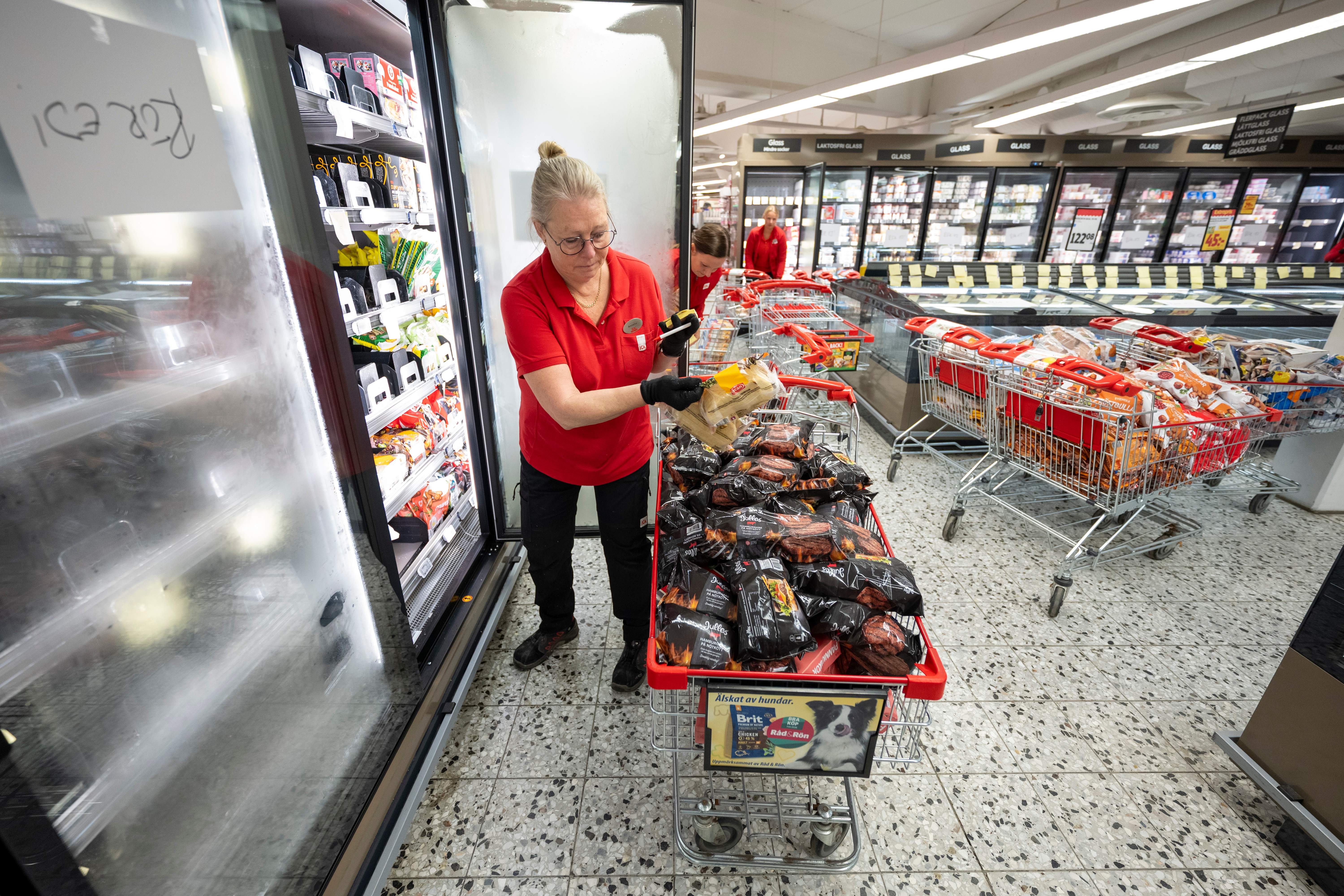
Your frozen peas are now a cybersecurity liability.
That sounds like a punchline from a bad tech thriller, doesn't it? Yet, when supermarket freezers across four European countries were recently knocked offline by an apparent cyberattack, thousands of shoppers walked into grocery stores only to find taped-off aisles and melting inventory. Most news outlets treated this like a quirky tech hiccup. They got the story completely backwards. Read more on a similar topic: this related article.
This wasn't just an inconvenience for folks trying to buy ice cream on a Tuesday afternoon. It was a loud, blinking warning sign about how fragile our modern food supply chain has become. When threat actors compromise Operational Technology (OT) and Internet of Things (IoT) devices inside retail infrastructure, they aren't after your credit card numbers. They're holding physical perishables hostage.
I've spent years watching retail security teams obsess over point-of-sale terminals while leaving their building management systems wide open. Honestly, it's a blind spot that keeps industrial security researchers awake at night. Let's break down what actually happened in those European grocery stores, why refrigeration systems are shockingly easy to hack, and how retailers can stop this before the next heatwave turns an attack into a massive food crisis. More reporting by MIT Technology Review delves into similar perspectives on this issue.
How Hackers Actually Break Into Supermarket Freezers
You might picture a hoodie-wearing hacker typing furiously to bypass military-grade encryption just to turn up a thermostat. The reality is way less glamorous. Modern commercial refrigeration isn't just a compressor and some coolant anymore. It's a complex network of smart sensors, programmable logic controllers (PLCs), and cloud-connected dashboards designed to save energy and alert maintenance crews before a unit fails.
To save money, grocery chains outsource the monitoring of these units to third-party HVAC and refrigeration contractors. Those contractors need remote access to check temperatures, tweak defrost cycles, and push firmware updates across hundreds of stores simultaneously.
Here's where things fall apart. Many of these industrial controllers were never designed with modern internet security in mind. They often sit on networks connected directly to the public internet, protected by weak credentials, outdated software, or unpatched vulnerabilities.
Once an attacker finds an exposed remote access portal—often using basic search engines for internet-connected devices like Shodan—getting in is trivial. They don't need a zero-day exploit. They just log in, override the temperature setpoints, or lock out the local operators so nobody can turn the cooling back on.
The Third-Party Vendor Trap
Think about how a major European supermarket chain operates across borders. A single grocery conglomerate might run stores in France, Belgium, the Netherlands, and Germany. Instead of managing thousands of individual freezer units in-house, they hire specialized European refrigeration management firms.
If a hacker compromises one central management platform or steals credentials from a single HVAC technician's laptop, they suddenly hold the keys to freezers across four different countries. This is classic supply chain lateral movement. The supermarket's corporate IT team might have firewalls, multi-factor authentication, and strict endpoint monitoring on their cash registers. Meanwhile, the refrigeration vendor has a wide-open Virtual Private Network (VPN) tunnel straight into the store's physical infrastructure.
I've seen network diagrams for major retail facilities where the automated lighting, security cameras, and cold-chain sensors share the exact same flat network. Once you're inside the freezer controller, pivoting to other store systems becomes a weekend hobby rather than a complex operation.
Why Attacking Cold Storage Hits Harder Than Ransomware
When hackers hit a corporate office with ransomware, employees go home early, IT restores backups from the cloud, and life moves on after a few stressful days. When someone compromises commercial refrigeration, the clock starts ticking immediately. Literally.
Food safety regulations across the European Union are notoriously strict. Under EU hygiene rules, once frozen or chilled food rises above specific temperature thresholds for a set period, it cannot legally be sold. You can't just refreeze thawed chicken or spoiled dairy and put it back on the shelf. It has to be destroyed.
For a supermarket chain operating dozens of stores across four countries, a 24-hour outage doesn't just mean lost sales. It means:
- Millions of euros in ruined inventory that has to be hauled away as waste.
- Emergency logistical nightmares trying to re-route refrigerated trucks to unaffected locations.
- Massive cleanup costs once freezers thaw and leak water across retail floors.
- Empty shelves that panic local shoppers and drive them straight to competitors.
This creates immense pressure on executives. Threat actors know that a grocery executive staring at 500 tons of rotting meat is much more likely to pay an extortion demand quickly than a CFO dealing with locked spreadsheets. Physical disruption forces immediate decisions. There is no "let's wait a week and rebuild our servers" option when milk is spoiling in real time.
The Myth of the Air-Gapped Retail Store
If you ask a typical retail operations manager about their freezer security, they'll usually tell you something like, "Oh, our refrigeration systems are completely separate from our main computers."
That used to be true in 1998. Today, it's a dangerous myth.
Energy costs in Europe skyrocketed over the past few years, pushing supermarkets to adopt aggressive smart-grid integrations. Modern grocery stores automatically adjust their freezer power consumption based on real-time electricity prices, store foot traffic, and outside weather forecasts. To do that, those freezers must talk to cloud servers, corporate energy management software, and external utility APIs.
True air-gapping doesn't exist in modern commercial retail. Every "smart" efficiency feature creates another digital bridge between the public internet and heavy machinery.
Even worse, the lifespan of commercial refrigeration equipment is 15 to 20 years. A supermarket might install a shiny new network gateway today that talks to a refrigeration controller built in 2012. That 2012 controller runs legacy communication protocols like Modbus or BACnet, which have zero built-in authentication. If a command reaches the controller saying "turn off compressor," the machine obeys without asking who sent the message.
What Security Researchers Have Warned Us About for Years
This incident in Europe didn't happen in a vacuum. Industrial cybersecurity organizations like Dragos and the U.S. Cybersecurity and Infrastructure Security Agency (CISA) have spent years publishing advisories about vulnerabilities in building automation and cold-chain hardware.
Back in 2021 and 2022, researchers uncovered critical flaws in widely used supermarket refrigeration controllers—specifically devices made by major industrial manufacturers like Emerson and Danfoss. These flaws allowed remote attackers to bypass authentication entirely, alter temperature alarms so store managers wouldn't even notice the freezers were warming up, and execute arbitrary code on the controllers.
Think about how insidious that is. A clever attacker doesn't just shut the freezers off and trigger loud sirens in the store. They gradually raise the temperature by a few degrees over 48 hours while spoofing the dashboard sensors so the central monitoring station still reads -18°C. By the time a clerk opens a freezer door and notices soft ice cream, the entire store's stock is already ruined.
Despite patches being released for many of these industrial flaws, adoption rates in the retail sector remain abysmal. Why? Because updating firmware on a live supermarket freezer requires taking the unit offline, risking temperature spikes, and paying a specialized technician to visit the site. Store managers hate downtime, so patches get postponed indefinitely.
The Bigger Picture for European Critical Infrastructure
Food retail isn't always classified alongside power plants and water treatment facilities in public discussions about cyber warfare, yet the European Union's NIS2 Directive explicitly recognizes the food production, processing, and distribution sector as critical infrastructure.
When freezers fail simultaneously across four countries, security analysts immediately look at two possibilities: financially motivated cybercriminals testing a new extortion playbook, or state-aligned hacktivists probing weak points in European civilian infrastructure.
Hacktivist groups operating out of Eastern Europe have increasingly shifted their focus from DDoS attacks on government websites to tampering with industrial control systems. They look for exposed HMIs (Human Machine Interfaces) connected to water pumps, grain silos, HVAC units, and cold storage facilities. Flipping switches on poorly secured industrial dashboards gives them maximum media headlines with minimal technical effort.
Whether this specific supermarket incident was driven by ransom demands or geopolitical disruption, the underlying vulnerability is identical. Retail companies digitized their physical operations faster than they secured them. They chased energy savings and remote convenience without budgeting for basic industrial network defense.
How Retailers and Facility Managers Need to Fix This Now
If you manage retail facilities, oversee IT security for a supply chain company, or work with commercial IoT systems, waiting for a regulatory audit is a terrible strategy. Securing refrigeration and building management systems doesn't require reinventing cybersecurity, but it does require stopping lazy habits.
First, audit your external exposure immediately. Use tools like Shodan or Censys to scan your organization's IP ranges and vendor portals. If you can see a refrigeration dashboard, an HVAC login screen, or an open Modbus port from a coffee shop Wi-Fi connection, so can every script kiddie on the planet. Shut down direct internet access to those interfaces today.
Second, enforce strict network segmentation. Your freezers should never share a network subnet with corporate Wi-Fi, security cameras, or point-of-sale systems. Put all Operational Technology and IoT building controllers behind dedicated industrial firewalls. Block all outbound internet traffic from those controllers except to explicitly whitelisted vendor IP addresses.
Third, kill shared vendor credentials. Stop letting third-party refrigeration contractors use a single static username and password across fifty different store locations. Require every outside technician to connect through a monitored jump host using individual accounts protected by phishing-resistant multi-factor authentication. Log every session and revoke access the minute maintenance work wraps up.
Fourth, install independent analog temperature alarms. Never rely solely on the same digital network to report a failure that controls the machinery itself. Basic, battery-backed physical temperature sensors operating on a separate cellular connection can alert store managers the second a freezer drifts out of range—even if the primary controller is completely compromised.
Finally, run tabletop exercises with store managers. Most retail staff have no idea what to do during a cyber-induced physical outage. Make sure every store has an offline binder detailing how to manually override digital controllers, where to source emergency dry ice, and who to call when the corporate dashboard goes dark. Treat a freezer hack with the exact same urgency as a power outage or a fire.
The European supermarket cyberattacks proved that hackers don't need to breach bank vaults to cause chaos. They just need to turn off the cooling fan and let physics do the rest.


