Nineteen children walked off a school bus without a scratch because one man didn't freeze when the driver lost consciousness behind the wheel. If you look up Ebro Ahmed Day today, most quick news blurbs treat it like a feel-good holiday plaque or a simple community footnote. They miss the point entirely.
What actually happened on that bus wasn't luck, and it wasn't just a nice gesture that earned a local proclamation. It was a split-second physical intervention during a live medical emergency in moving traffic. When a heavy commercial vehicle loses its operator, physics takes over immediately, and the margin between a minor traffic incident and a mass-casualty tragedy disappears in seconds.
The Real Story Behind Ebro Ahmed Day
Let's strip away the ceremonial language for a second. Ebro Ahmed Day honors Ebro Ahmed, whose quick actions stopped a runaway school bus carrying 19 schoolchildren after the driver suffered a medical emergency and collapsed. Nobody on that bus was injured.
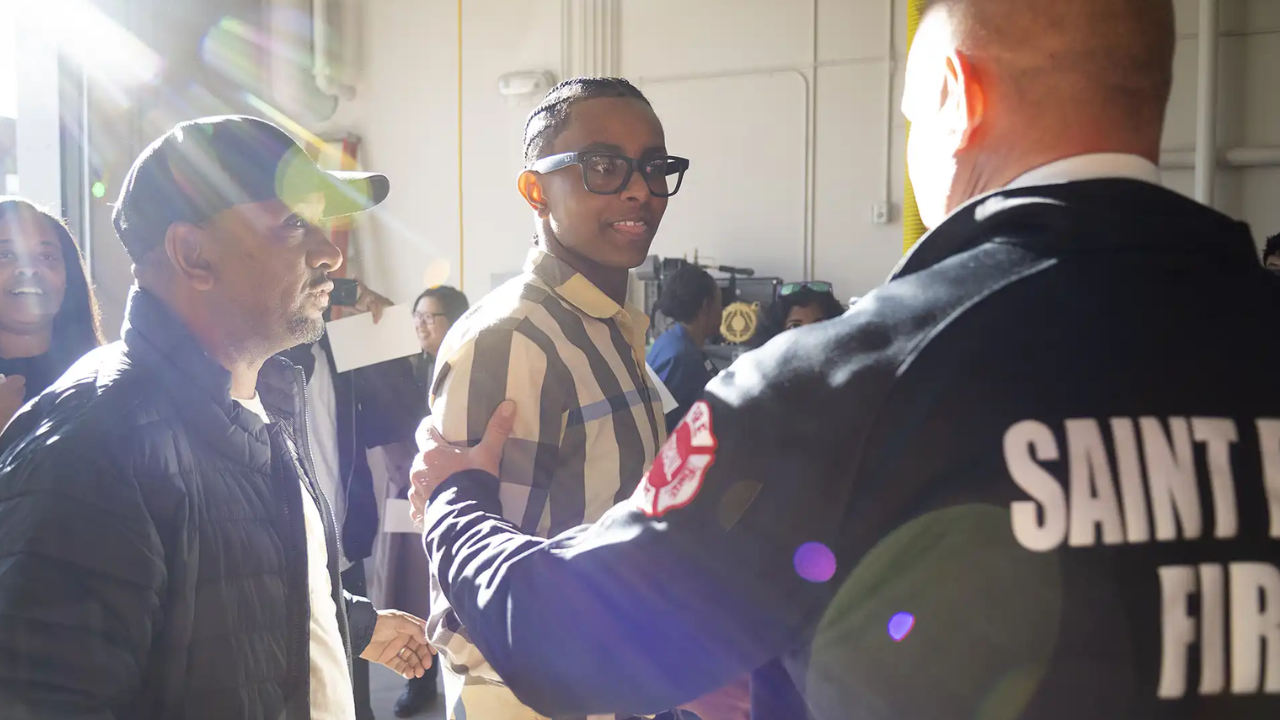
People love tidy hero stories, so coverage of events like this usually skips straight to the proclamation ceremony and the smiling photos. That's a mistake. When you look at how school bus emergencies actually unfold, you realize why local officials felt compelled to dedicate an entire day to what Ahmed did.
A standard full-size school bus weighs anywhere from 25,000 to 36,000 pounds empty. Add 19 students, backpacks, and forward momentum on a public road, and you're dealing with a massive kinetic battering ram with zero active steering or braking. Most bystanders either panic, yell, or wait for someone else to move. Ahmed stepped into the driver's area, took control of a moving vehicle he didn't start driving, and brought it to a safe stop.
Honestly, anyone who has ever driven a commercial vehicle or ridden in the front row of a transit bus knows how awkward and unfamiliar those controls feel if you aren't seated in the captain's chair. Reaching across or maneuvering around an incapacitated driver to hit the brake pedal and steer clear of oncoming lanes requires immediate spatial awareness under extreme adrenaline.
Why School Bus Medical Emergencies Happen More Often Than You Think
If you think a driver collapsing at the wheel is a one-in-a-million freak accident, you haven't looked at transportation labor data over the past few years. School districts across North America have been dealing with severe driver shortages, which has pushed retirement-age drivers to stay on routes longer and forced existing staff into exhausting split-shift schedules.
According to data frequently cited by the National Highway Traffic Safety Administration and state pupil transportation boards, commercial drivers face higher baseline rates of cardiovascular issues, sleep apnea, and acute fatigue than the general office workforce. Early morning routes often start before 6:00 AM. You're sitting in a vibration-heavy cab, dealing with screaming kids behind you and aggressive commuters cutting you off in front of you.
Sudden medical incapacitation doesn't give a five-minute warning. A driver can experience a syncopal episode, a stroke, a severe blood sugar drop, or a cardiac event mid-block.
Here's what happens the exact millisecond a driver passes out:
- Their foot either slips off the accelerator or presses dead weight onto it.
- Their hands drop from the steering wheel, allowing road crown and wheel alignment to pull the bus toward the curb or across the center line.
- The air brake system stays disengaged because nobody is applying pedal pressure or pulling the yellow parking brake valve.
Without someone physically intervening inside the cabin, the bus doesn't gently coast to a neat stop on the shoulder. It keeps rolling until it hits a curb, a utility pole, a ditch, or another vehicle.
What Actually Stops a Runaway Bus in Real Life
Movies love showing someone wrestling a steering wheel like they're flying a fighter jet in a hurricane. Real life is much less cinematic and way more mechanical.
If you ever find yourself on a bus where the driver slumps over, knowing two basic mechanical facts can save every life on board. First, modern school buses use air brakes, not the hydraulic brakes in your personal sedan. Stepping on the brake pedal releases air pressure to clamp the brake shoes against the drums. Second, right on the dashboard—usually within arm's reach of the center console—sits a bright yellow diamond-shaped knob.
That yellow knob is the spring brake control valve. Pulling it out exhausts the air system and forces the mechanical emergency spring brakes to lock up.
I've spoken with veteran fleet safety trainers who point out that most passengers—and almost all schoolchildren—have no idea what that yellow valve does. They assume the key in the ignition is the primary off-switch. Turning off the key on a moving bus is actually dangerous because it can kill power steering assist while the wheels are still turning, making the wheel feel like it's welded in place. You steer first, apply controlled foot braking if you can reach the pedal, and use the yellow parking brake valve once speed drops enough to prevent a violent skid.
When Ahmed stopped the runaway bus carrying those 19 children, the outcome proved he kept the vehicle stable enough that not a single child suffered an injury during the stop. Bringing a multi-ton vehicle to a halt without throwing unbuckled passengers into the metal seatbacks ahead of them is an underrated skill in itself. Remember, most school buses still rely on compartmentalization—high, padded seatbacks—rather than three-point seatbelts for every rider. A sudden, jerky panic stop can still cause broken noses and concussions even if the bus never hits anything outside.
Why Cities Create Days Like Ebro Ahmed Day
Cynics sometimes roll their eyes at municipal recognition days. They assume politicians hand them out like participation trophies whenever a local news station runs a viral segment.
That's not how civic proclamations work in practice. Local governments establish days like Ebro Ahmed Day for two very deliberate reasons: public record and behavioral modeling.
First, an official proclamation enters the municipal archive. Years later, when residents search local history, the record preserves the names of ordinary citizens who stepped up when municipal systems—or human bodies—failed. Without formal recognition, heroic transit rescues vanish from public memory within two news cycles.
Second, public recognition reinforces a specific social norm. Psychologists call the opposite problem the bystander effect, a phenomenon extensively documented since John Darley and Bibb Latané's landmark research in the late 1960s. When a crisis hits in a group setting, individuals wait for social cues from others before acting. Everybody looks around to see if someone else is going to handle it. On a moving bus, waiting three seconds to see if someone else stands up means traveling another 130 feet at 30 miles per hour.
Celebrating someone who broke through that hesitation sends a clear message to the community. Don't wait for permission when lives are on the line.
Common Myths About School Bus Safety and Passenger Rescues
Whenever a story like the Ebro Ahmed bus rescue circulates online, the comment sections fill up with bad assumptions about how school transportation works. Clearing these up matters because misinformation in an emergency gets people hurt.
Myth 1 Dead-man switches automatically stop the bus if a driver faints
People assume every bus has a pedal or seat sensor that immediately halts the vehicle if the driver passes out, similar to a treadmill safety clip or a locomotive alerter system. Most school buses do not have automatic incapacitation braking. While newer commercial fleets are slowly adopting automated emergency braking (AEB) radar for forward collision avoidance, those systems only trigger when radar detects an obstacle directly ahead—not if the bus drifts sideways off an embankment or rolls through a red light into cross traffic.
Myth 2 Someone outside the bus can easily board and stop it
You sometimes see videos of joggers running alongside a slow-rolling vehicle trying to pry open the door. On a school bus, the service door is controlled from the driver's left-hand panel via an air or electric switch. Unless the emergency door release above the windshield is flipped, nobody outside can simply pull the front doors open while the bus is moving. The rescue almost always has to come from someone already inside the cabin.
Myth 3 Kids are safer staying glued to their seats no matter what
In 99% of rides, staying seated is the golden rule. During a medical incapacitation event, strict compliance without situational awareness becomes a liability. Older students or adult monitors riding a bus need permission to break normal etiquette the second they see a driver slump over or become unresponsive.
What Schools and Parents Should Actually Do With This Story
Reading about Ebro Ahmed stopping a runaway bus and saving 19 schoolchildren feels good, then you close the tab and go back to your day. Don't waste the lesson. If you have kids who ride a bus, or if you work anywhere near school transportation, take ten minutes this week to turn this story into practical preparation.
Start by asking your school district two direct questions at the next board meeting or via email to the transportation director:
- Do you train older students and bus monitors on emergency stop procedures? Even a five-minute annual drill showing middle and high school riders where the yellow parking brake valve is located and how to unlatch the emergency exit doors changes outcomes.
- What medical screening and fatigue protocols are active for drivers? Ask whether drivers have clear, penalty-free procedures to pull over immediately if they feel dizzy, lightheaded, or unwell—before they lose consciousness in traffic.
If you're a parent, have a quick, calm conversation with your kids tonight. Tell them that if their bus driver ever puts their head down on the wheel, stops answering, or slumps sideways while the bus is moving, they shouldn't just sit quietly and hope it fixes itself. Teach them to yell loudly to alert everyone on board, look for any adult or older student near the front, and call 911 immediately if they have a phone.
Ebro Ahmed proved what happens when one person refuses to be a passive passenger during a crisis. Recognizing his name is the bare minimum; making sure the next bus full of kids has someone just as ready to act is what actually honors the story.