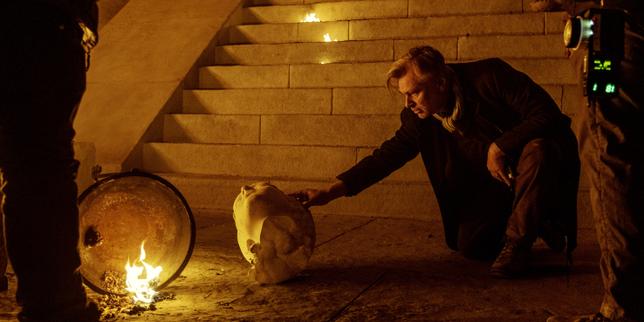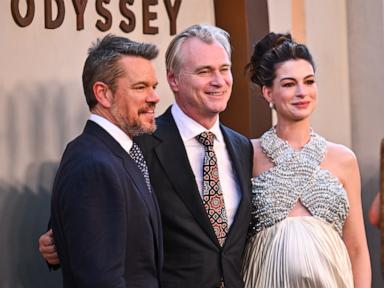
Hollywood has a long history of messing up the ancient world. When Christopher Nolan announced he was taking on Homer's epic poem, classicists everywhere braced for impact. Now that the $250 million IMAX spectacle is finally in theaters, the battle lines are drawn.
Predictably, the internet is losing its mind over historical accuracy. Critics are slamming the lack of Greek actors in the main cast. They're mocking Benny Safdie's Agamemnon helmet for looking like a carbon-fiber Batman cowl. Some internet sleuths even spotted a Viking longship in the trailers and threw a fit. For another perspective, consider: this related article.
But if you think the biggest issue with this movie is a bad helmet or an inaccurate boat, you're missing the point entirely. So are most of the internet purists.
The Fidelity Trap in Hollywood Epics
Homer's poem isn't a history textbook. It's a collection of oral songs passed down through generations, shifting and adapting long before anyone ever scratched it onto papyrus. Expecting a film director to deliver a perfectly faithful adaptation of a text that was never static in the first place is a fool's errand. Related analysis on the subject has been provided by GQ.
Renowned translator Emily Wilson, whose 2017 translation inspired Nolan's opening line about a "complicated man," has expressed mixed feelings about the adaptation. She's glad it's driving book sales, but she feels Nolan tried to pack too much in while missing the soul of the poem.
That's a fair academic critique. But let's be honest about what cinema does. Film transforms text into visual myth. When Nolan frames the Trojan Horse as a massive, haunting monument dragged from the surf by its own victims, he isn't trying to pass a history exam. He's building an image of psychological devastation.
The real problem isn't that Nolan changed things. It's why he changed them, and what those changes say about our modern obsession with gritty realism.
Why the Anti Woke and Purist Outrage Misses the Mark
The casting choices sparked a massive online firestorm. Having Matt Damon play Odysseus and Robert Pattinson play a creepy Antinous drew plenty of eye-rolls for the total lack of Greek representation. Then came the backlash regarding Lupita Nyong'o as Helen of Troy and Elliot Page as the Greek soldier Sinon.
Some conservative commentators complained that the movie was trying too hard to be progressive. But look closer at the actual film. It isn't progressive at all.
Classicist Joel Christensen pointed out that the movie's actual structure is incredibly conservative. The female characters are confined to highly traditional, rigid roles. The casting choices might look diverse on a poster, but the actual narrative dynamics don't challenge any old-school Hollywood hierarchies. It gives the illusion of a modern update while keeping its feet firmly planted in the past.
The Real Shift from Myth to Science Fiction
Nolan did something much more radical than changing the cast's skin tone or giving a character a weird helmet. He stripped away the divine mystery.
In Homer's work, the gods are active, capricious characters. They drive the plot. In the movie, Zendaya appears as Athena, but her interventions are almost entirely swallowed by natural forces and psychological hallucinations. Nolan treats the monsters—the Cyclops, Circe, and the Sirens—with a blend of practical horror and existential dread.
By grounding the supernatural in grit and survival, the film shifts from a mythic poem into a psychological sci-fi survival story. It feels like Dunkirk meets Interstellar on the Mediterranean.
Odysseus isn't a grand hero fighting destiny. He's a traumatized, deeply flawed military commander suffering from severe postwar disillusionment. His 10-year journey home isn't an adventure. It's a prolonged panic attack.
Read the Text Before You Watch the Film
If you want to actually enjoy this cinematic experiment, stop looking for Bronze Age accuracy. You won't find it. Instead, treat the movie as a conversation with the source material.
Grab a copy of Emily Wilson's translation or Richmond Lattimore's classic version. Compare how they handle Odysseus's grief. In the poem, Homer compares the hero's tears to a woman weeping as her city falls to pieces and she's dragged into slavery. It's a brutal, complex image that shows the human cost of war.
Nolan tries to capture that weight with massive IMAX shots of lonely landscapes and pounding drums, but a camera can only do so much. Read the original songs. See where Nolan borrowed, where he failed, and where he actually managed to capture a sliver of Homer's ancient genius. Then go book your theater ticket. Let the scholars argue in the lecture halls while you enjoy the ride.