Everyone loves a clean Hollywood spy thriller, which is exactly why half the internet misread the Nvidia scandal. You've probably seen the headlines painting Alice Huang as a classic "honey trap" operative deployed by Beijing to seduce Silicon Valley's most powerful chipmaker.
The reality is messier, far less cinematic, and arguably much worse for corporate governance.
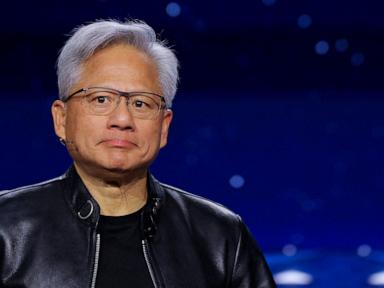
Over the past month, a cascade of classified leaks, congressional briefings, and sudden executive reversals turned Nvidia into the center of a geopolitical firestorm. Jensen Huang resigned as CEO, watched billions evaporate from his net worth, and then—in a twist nobody in corporate America saw coming—reclaimed his job just 11 days later.
If you're trying to separate actual intelligence findings from political theater, you need to look closely at what investigators actually proved versus what Washington politicians assumed.
Who Is Alice Huang and How Did She Enter Nvidia's Orbit?
Before late October 2026, almost nobody outside specialized Asian data-center circles knew who Alice Huang was. That obscurity fueled immediate speculation once her name hit the front page of The New York Times.
Alice Huang served as a top executive at Megaspeed, a Singapore-based data-center company. Corporate filings show she stepped down as a registered director in November 2023, though Singaporean investigators later identified her as Megaspeed's chief executive, chairperson, and key controller well into 2025. Megaspeed eventually stated she formally left the company on August 30, 2025.
Here's why Megaspeed mattered to Nvidia:
- Massive chip demand: Data-center operators across Southeast Asia became prime buyers for Nvidia's restricted high-end AI processors.
- Export-control friction: U.S. officials spent over a year investigating whether third-party hubs in Singapore and Malaysia were acting as backdoors to funnel banned Nvidia chips into mainland China.
- Direct executive access: Unlike mid-level procurement officers, Alice Huang didn't just deal with Nvidia's regional sales reps. She developed a personal, romantic relationship with CEO Jensen Huang.
When The New York Times broke the story on October 29, 2026, reporting that U.S. officials had scrutinized her ties to Beijing alongside her relationship with Nvidia's founder, Wall Street panicked. By November 8, Nvidia's board launched an internal review, and Jensen Huang admitted to employees that he had been unfaithful to his wife.
The Espionage Claim That Washington Got Backwards
If you only read social media summaries, you'd think U.S. intelligence caught Alice Huang smuggling blueprints out of Santa Clara in a briefcase. That isn't what happened.
Earlier in 2026, Secretary of State and National Security Adviser Marco Rubio drafted a classified memo warning President Donald Trump about Alice Huang's alleged links to Chinese intelligence. Rubio even briefed Trump directly while traveling toward Asia in May. Yet when news of the memo leaked in November, the public narrative immediately flattened into "Chinese spy seduces Nvidia CEO."
Classified briefings delivered to congressional intelligence committees on November 25, 2026, told a much more nuanced story. Officials from the CIA, FBI, NSA, and Office of the Director of National Intelligence laid out two distinct facts that people keep conflating:
- Contact with Chinese intelligence occurred. U.S. surveillance indicated Alice Huang communicated with an officer from China's Ministry of State Security (MSS) between spring 2025 and autumn 2026, overlapping with her affair.
- There is no proof Beijing directed the affair. Intelligence officials told lawmakers they found zero evidence that Chinese handlers ordered her to target Jensen Huang or that she passed along sensitive national-security secrets.
Think about the difference there. Intelligence analysts assess that Chinese operatives likely noticed her relationship with one of the world's most consequential tech executives and monitored or approached her opportunistically. Calling that a pre-planned Beijing honey trap misrepresents what the intelligence community actually concluded.
Of course, "opportunistic surveillance" doesn't make the situation harmless. Even without formal tasking from Beijing, an executive holding restricted chip contracts while maintaining backchannel contact with MSS officers creates an obvious counterintelligence nightmare.
What Singapore Actually Found During Its Investigation
A huge misconception in American coverage is that Singaporean authorities arrested Alice Huang for espionage. They didn't.
Singapore launched its probe into Megaspeed and Alice Huang back in February 2025. Authorities held her passport for months while examining corporate records and hardware transfers. When Singaporean Prime Minister Lawrence Wong addressed the matter in late November 2026, he explicitly clarified that Singapore's investigation had nothing to do with spying.
Instead, Singapore's Ministry of Home Affairs focused on corporate misrepresentation. Investigators concluded Huang had knowingly provided inaccurate statements to downplay her operational control over Megaspeed. Because prosecutors lacked sufficient evidence to bring criminal charges over those false declarations, Singapore issued her a formal warning, returned her passport on February 26, 2026, and permanently barred her from re-entering the country. Taiwan later revoked her entry permit as well.
Meanwhile, the broader hardware probe hasn't gone away. Six other individuals tied to Megaspeed remain wanted for questioning by Singaporean police, and the U.S. Justice Department's National Security Division continues to investigate Megaspeed alongside Super Micro Computer for potential export-control violations. Washington also added Megaspeed to its trade blacklist while tightening rules on remote data-center access to AI chips.
Why Jensen Huang Resigned and Returned in 11 Days
Watch how quickly corporate panic turns into pragmatism when $300 billion in market cap hangs in the balance.
By November 11 and 12, reports of two additional workplace relationships—one involving a vice president who reported directly to him—compounded the Alice Huang fallout. Under immense pressure, Jensen Huang stepped down on November 12 as president, CEO, and board member. CFO Colette Kress stepped in as interim chief executive, and Nvidia's stock took a bruising.
Most observers assumed Huang was finished. Tech CEOs rarely survive overlapping workplace affairs combined with a counterintelligence leak.
They underestimated two forces:
- Shareholder panic: Major backers, including longtime investor Leo KoGuan, openly questioned Nvidia's future without its founder. Allies launched a public petition that crossed 177,000 signatures, drawing support from industry heavyweights like Elon Musk and Tim Sweeney.
- White House intervention: Behind the scenes, President Trump and Vice President JD Vance pushed for Huang's return, arguing publicly on Truth Social that Nvidia needed its founder back. Crucially, senior administration officials assured Nvidia's board that Jensen Huang wasn't the target of a Justice Department criminal investigation and didn't pose a national-security threat.
On November 23, just 11 days after accepting his resignation, Nvidia's board reinstated him to all three leadership roles.
That rapid reversal exposed deep friction inside Washington. Several national-security officials—including Secretary of State Marco Rubio and Treasury Secretary Scott Bessent—had previously pushed for tougher action on Megaspeed and expressed skepticism about wiping the slate clean so quickly.
What Still Remains Unresolved for Nvidia
Jensen Huang got his corner office back, so you might assume the crisis is over. Not even close.
Reinstatement solved Nvidia's immediate leadership vacuum, but it didn't erase the legal and regulatory landmines still sitting on the company's desk:
- Congressional testimony: Huang is scheduled for closed-door interviews with House committees starting December 1, followed by public testimony before the Senate Banking Committee. Lawmakers from both parties have criticized his reinstatement and want answers about chip diversion.
- Active investigations: Both the Securities and Exchange Commission (SEC) and California Attorney General Rob Bonta have launched probes into whether Nvidia misled investors or failed to prevent restricted technology from reaching China.
- Governance credibility: Reports also surfaced that Nvidia paid a $1 million settlement in the mid-2000s to a former human-resources chief who had raised concerns about Huang's workplace conduct. Reinstating a CEO days after acknowledging multiple workplace relationships sends a rough message about board oversight.
If you're tracking this story as an investor, policymaker, or tech observer, stop watching the tabloid rumors about secret agents and keep your eyes on three specific documents over the next few weeks: the December 1 House committee transcripts, the SEC's disclosure inquiry into export-control risks, and the Justice Department's final charging decisions regarding Megaspeed. Those filings—not leaked memos—will decide whether Nvidia faces lasting financial penalties or walks away unscathed.