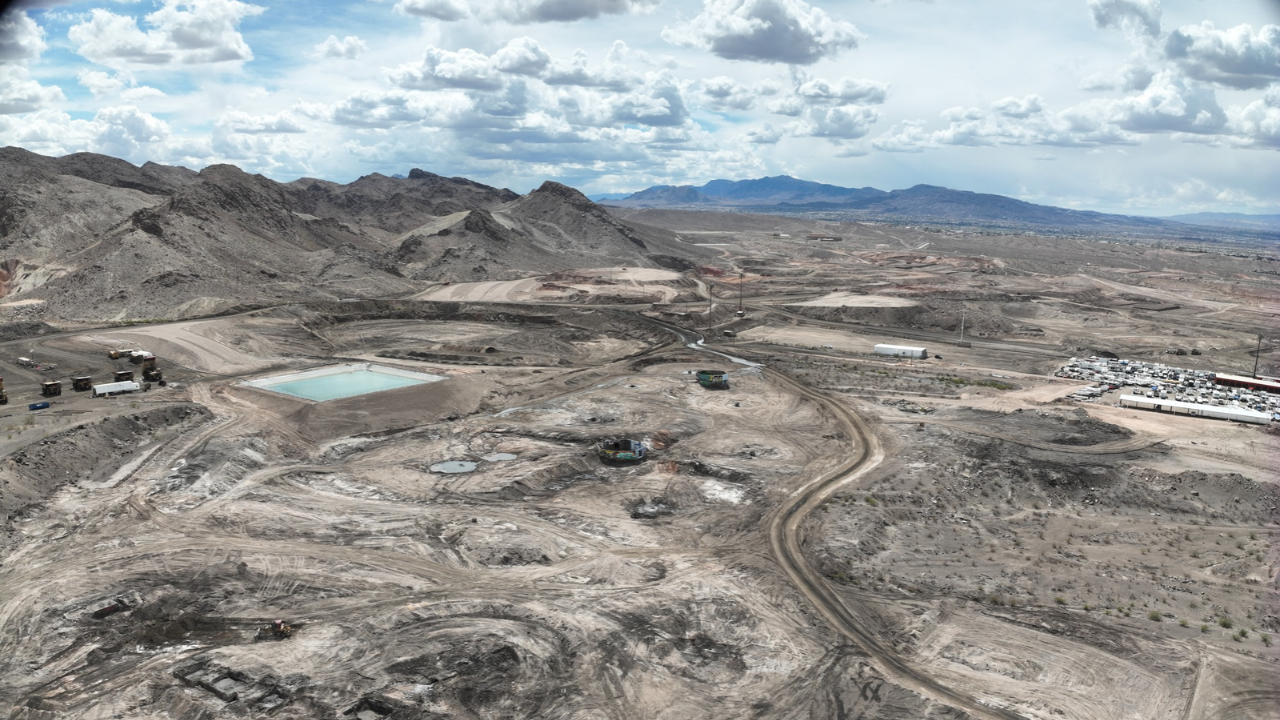
Can you really build 3,000 family homes and a public park on top of a toxic industrial wasteland? Most people hear about a massive Nevada mine site getting a $257 million cleanup and immediately assume someone is cutting corners to make a quick buck on real estate. They're wrong.
In Henderson, Nevada, the former Three Kids Mine site is undergoing one of the most ambitious brownfield redevelopments in the American West. For decades, this roughly 1,262-acre scar just south of Lake Mead Parkway sat fenced off, leaking manganese, arsenic, and lead dust into the desert wind. Now, a public-private partnership is actively scrubbing the dirt, opening a new community park, and laying the groundwork for thousands of new residences. If you liked this piece, you might want to look at: this related article.
If you live in Southern Nevada or follow urban development, you've probably seen the headlines. You might even feel skeptical. Turning an open-pit manganese mine that operated from 1917 through 1961 into a walkable neighborhood sounds like a plot from a cynical movie. Let's look at the actual engineering, the money, and the regulatory guardrails behind this project so you can separate real environmental risks from standard internet outrage.
Why the Three Kids Mine Sat Empty for Over Fifty Years
To understand why this project costs a quarter-billion dollars, you have to look at what happened on this land during World War I and the Cold War. The Three Kids Mine wasn't a small mom-and-pop operation. It supplied critical manganese ore to the federal government for steel production and military hardware. For another angle on this event, refer to the latest coverage from The Washington Post.
When the mine closed in 1961, environmental laws barely existed. Operators simply walked away. They left behind massive open pits, unlined tailings ponds, and millions of tons of contaminated waste rock.
For half a century, nobody touched it. Why? Because under federal and state liability laws, whoever bought the land inherited the astronomical cost of cleaning it up. A developer couldn't build homes there without spending hundreds of millions on soil remediation first, and the land value simply didn't justify the expense. Meanwhile, Henderson exploded in population. Master-planned communities like Lake Las Vegas and Cadence grew right up to the edges of the poisoned fence line, leaving a massive, hazardous donut hole in the middle of a booming suburban corridor.
How a $257 Million Cleanup Actually Works
You don't just throw a layer of sod over heavy metals and call it a park. The remediation plan overseen by the Nevada Division of Environmental Protection (NDEP) requires moving and encapsulating millions of cubic yards of dirt.
Here is how the engineering breaks down:
- Deep Pit Encapsulation: The primary open pits left from mining operations are massive. Crews are gathering the scattered, contaminated tailings and surface soils from across the 1,262 acres and consolidating them into these deep pits.
- Engineered Capping: Once the contaminated material is packed into the pits, engineers cover it with thick, multi-layered caps made of clean fill dirt, compacted clay, and specialized geotextile membranes. This prevents rainwater from percolating down into the waste and stops dust from escaping up to the surface.
- Continuous Groundwater and Air Monitoring: Sensors and monitoring wells surround the perimeter. Even after the dirt stops moving, state regulators require ongoing testing to prove the contaminants stay locked in place.
The $257 million price tag isn't coming straight out of everyday taxpayers' pockets through a new tax hike. Instead, the City of Henderson and the Henderson Redevelopment Agency structured a complex financing deal using Tax Increment Financing (TIF) alongside private investment from the developer, Lakemoor Ventures. Basically, the future property taxes generated by the new 3,000 homes pay back the bonds used to fund the environmental cleanup. Without the housing, the cleanup never gets funded. Without the cleanup, the housing can't legally be built.
The New Park Isn't Just Window Dressing
Critics often dismiss developer-built parks as PR stunts designed to soften opposition to high-density housing. In this case, the new public park serves a dual purpose—both recreational and engineering-based.
Because capped waste pits cannot have deep building foundations drilled into them, open green space is the smartest, safest use for specific zones of the remediated land. You can't put a basement or a three-story condo over an encapsulated pit, but you can build walking trails, sports fields, shade structures, and native desert landscaping over thick layers of verified clean fill.
For current Henderson residents, this opens up previously inaccessible terrain right next to the River Mountains Loop Trail and Lake Mead National Recreation Area. Instead of staring at rusted barbed wire and warning signs along Lake Mead Parkway, locals get actual trail connectivity and park amenities.
Should You Actually Buy One of the 3,000 New Homes?
If you're looking at Southern Nevada real estate, the idea of buying a brand-new house on a former Superfund-style site gives plenty of buyers cold feet. That hesitation is completely normal. Nobody wants to gamble with their family's health or their biggest financial asset.
However, from a purely regulatory standpoint, remediated brownfield sites often undergo stricter soil testing than standard "raw" desert land. In Nevada, raw desert soil naturally contains varying levels of arsenic and heavy metals anyway, yet standard subdivisions get graded and built without individual lot-by-lot environmental clearance. At the Three Kids Mine site, every single residential parcel has to receive formal sign-off from the NDEP before a single slab of concrete is poured.
Still, you shouldn't take any developer's marketing brochure at face value. Before putting down earnest money on a property in a remediated master-planned community, take three concrete steps:
- Pull the NDEP Site Closure Documents: Every remediated parcel receives a specific No Further Action (NFA) letter or environmental covenant recorded with the county. Read the exact restrictions on your specific lot. Some lots have zero restrictions, while others might prohibit digging deep backyard swimming pools or planting deep-rooted fruit trees.
- Check the HOA and Special Improvement District (SID) Fees: Because projects like this rely on specialized bond financing to pay for that $257 million cleanup and infrastructure buildout, homeowners almost always pay an annual SID or Local Improvement District (LID) assessment on top of regular property taxes and HOA dues. Calculate the true monthly payment, not just the base mortgage.
- Review Dust Control Logs During Construction: Since the 3,000 homes will be built in phases over several years, active earthmoving will continue nearby even after the first residents move in. Check Clark County Department of Environment and Sustainability records to verify that the contractors are following strict dust mitigation protocols.
Brownfield redevelopment isn't magic, and it certainly isn't charity. Developers want to sell 3,000 homes in a land-constrained valley, and the City of Henderson wants a toxic liability turned into tax revenue and public parks. When the regulatory oversight holds firm, everybody wins—including the desert environment that spent sixty years blowing toxic dust across the valley. Verify the NDEP clearance records on your specific lot, factor the bond assessments into your budget, and make your decision based on engineering data rather than headlines.