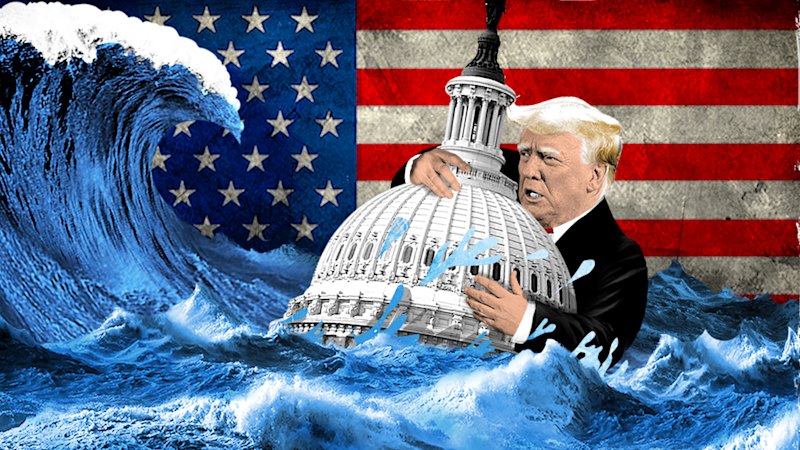
You can't ride a wave of voter anger forever without eventually drowning in it. That's the harsh reality Donald Trump and the Republican Party just ran into during the November 2026 midterm elections, where the very economic discontent that propelled them back into power two years ago turned right back around and bit them. Voters showed up at the polls frustrated by persistent cost-of-living pressures, chaotic tariff rollouts, and stalled legislative promises, delivering a decisive blue wave that flipped control of the House of Representatives.
Yet if you think this Democratic resurgence means the party has suddenly figured out its long-term identity crisis, you're misreading the room. Honestly, this election wasn't a ringing endorsement of the Democratic platform. It was a protest vote. Just like in 2018, 2020, and 2024, the American electorate acted less like a loyal fanbase and more like an impatient customer demanding a refund when the product doesn't work as advertised.
Why Voter Discontent Turned on the White House
When Trump won the presidency in 2024, he did so by tapping into a deep reservoir of working-class frustration. People were tired of high grocery bills, unaffordable housing, and a sense that Washington wasn't listening. He promised quick fixes. He promised an immediate economic boom.
Two years later, reality got in the way.
Aggressive tariff policies, while popular as a talking point on the campaign trail, created real friction for American businesses and consumers. Supply chains felt the squeeze. Retail prices on everyday goods remained stubbornly high, and the Federal Reserve found itself boxed in, unable to cut interest rates as aggressively as the White House demanded because inflation refused to fully cooperate. When you campaign on lowering costs on day one and prices stay high in year two, voters don't care about macroeconomic excuses. They blame the person in charge.
Look at the exit polling data from organizations like Edison Research and the Pew Research Center. The economy remained the undisputed number one issue for voters across battleground districts. Only this time, independent voters—the exact group that swung toward Republicans in 2024—broke sharply toward Democratic challengers.
It wasn't just the economy, though. Executive overreach and constant internal friction within the GOP coalition exhausted moderate voters in the suburbs. Districts in places like Pennsylvania, Michigan, and suburban California, which had flirted with Republican candidates two years ago, snapped back into the Democratic column.
The Illusion of a Permanent Majority
Every time a party wins a big election in modern American politics, pundits immediately declare the start of a new political era. We heard it after 2008. We heard it after 2016. We heard it again in November 2024 when Republicans secured a governing trifecta.
Those predictions almost always age terribly.
The modern electorate is fundamentally restless. According to historical election data tracked by the University of Virginia Center for Politics, the president's party has lost House seats in almost every midterm election since the Civil War. The structural gravity of midterm politics is brutal, especially in an era of razor-thin margins and hyper-polarization. Trump didn't invent this dynamic, he just proved that even a populist movement isn't immune to it once it becomes the establishment.
Why the 2026 Blue Wave Doesn't Guarantee Democratic Stability
So Democrats are taking back the gavel in the House in January 2027. Celebrate, right? Not so fast.
If you look closely at how Democrats won these seats, you see a coalition held together by duct tape and shared opposition to Trump, rather than a unified vision for governing. That's a massive problem when you actually have to govern, even from just one chamber of Congress.
Consider the candidates who actually flipped red seats in 2026. They didn't run on sweeping progressive overhauls. They ran hyper-local, moderate campaigns focused almost entirely on healthcare costs, protecting Social Security, and lowering everyday expenses. Meanwhile, safe-seat Democrats in major urban centers are pushing for an aggressive investigative agenda and immediate legislative confrontations with the White House.
Here is where the friction starts:
- The Subpoena Trap: Progressive voters want House Democrats to launch immediate, wall-to-wall investigations into the Trump administration. Moderate Democrats in swing districts know that endless political warfare turns off the exact independent voters who just elected them.
- The Economic Messaging Gap: Democrats successfully criticized Republican tariff policies, yet the party remains deeply divided on trade, corporate taxes, and energy policy. Saying "the other guy's plan is bad" works great in October. It doesn't pass a budget in March.
- The 2028 Shadow: The moment the midterm votes are counted, the 2028 presidential primary begins in earnest. Every major Democratic governor and senator is about to start positioning themselves for a White House run, which inevitably pulls the party's national brand toward its ideological extremes.
I've watched this exact cycle play out in Washington for over a decade. An opposition party mistakes a rejection of the incumbent for an embrace of their own ideas. They overreach during their first six months in power, alienate the political center, and set themselves up for a brutal backlash two years later.
The Structural Trap Facing Both Parties
What we're witnessing isn't a realignment. It's a stalemate.
Neither party has figured out how to build a durable, 55-percent governing majority in the twenty-first century. Instead, both sides are fighting over the same narrow slice of exhausted, cynical swing voters in roughly six or seven states and about thirty congressional districts.
Think about what this means for actual policy. With a Republican president in the White House and a Democratic majority in the House starting in 2027, Washington is heading straight back into divided government. Forget major legislative breakthroughs on immigration, tax reform, or healthcare. For the next two years, the primary legislative output of Congress will be last-minute continuing resolutions to avoid government shutdowns and high-stakes debt ceiling standoffs.
Is that what voters wanted when they cast their ballots? Probably not. They wanted relief from high prices and a sense of normalcy. Instead, they used the only lever they had—throwing out the party in power—which paradoxically guarantees more gridlock.
What Happens to the MAGA Movement Now
For Republicans, the 2026 results force an uncomfortable conversation that most party leaders have tried to avoid. Because Trump is constitutionally term-limited and cannot run again in 2028, the GOP is about to enter a succession crisis.
For the past ten years, the Republican Party's entire identity, fundraising apparatus, and voter turnout strategy have revolved around one man. Trump could routinely outperform generic Republicans on the ballot, bringing out low-propensity voters who rarely showed up for anyone else. The 2026 midterms proved once again that when Trump isn't personally on the ballot, that magic doesn't automatically transfer to down-ballot candidates.
Now, potential 2028 contenders—from Vice President JD Vance to ambitious GOP governors—have to figure out how to inherit Trump's working-class coalition without inheriting the political baggage that just cost the party the House. If they embrace his populist economic policies too tightly, they risk alienating suburban moderates and business conservatives. If they distance themselves from him, they risk losing the base. It's a tightrope walk with no safety net.
How to Read the Political Tea Leaves Going Forward
If you're trying to make sense of where American politics goes from here, stop paying attention to cable news shouting matches and national generic ballot polls. They create more noise than signal. Instead, watch the specific indicators that actually dictate whether the 2026 blue wave turns into a 2028 Democratic victory or just another temporary swing of the pendulum.
First, watch how House Democratic leadership handles the budget process in early 2027. If they force a government shutdown over ideological riders, watch how quickly those newly elected swing-district Democrats panic. A disciplined caucus focuses on kitchen-table bills that force the president to either sign them or explain a veto. An undisciplined caucus gets bogged down in messaging bills that go nowhere in the Senate.
Second, pay close attention to local economic data in the Rust Belt—specifically housing starts, manufacturing employment, and consumer price index trends in states like Wisconsin, Michigan, and Pennsylvania. Political narratives are written in Washington, but elections are decided by whether a family in Macomb County feels better off financially than they did twelve months ago.
Third, track the primary challengers. Both parties are going to face internal civil wars during the 2028 cycle. Watch whether moderate pragmatists or ideological purists win the primaries in open Senate and gubernatorial races. That will tell you far more about the future of American governance than any speech on the House floor.
The 2026 midterms proved that voters are willing to punish any party that fails to deliver tangible economic results. Trump crashed on the shores of the very discontent he once mastered, giving Democrats a lifeline they desperately needed. Now, the burden of proof shifts entirely to them, and the American electorate has already shown it has zero patience left.