Every defense analyst and breathless headline writer spent the last week hyperventilating over the latest panic attack from Washington. The narrative is as lazy as it is predictable. The United States military supposedly crossed a historic Rubicon by stationing an on-orbit weapon in Earth orbit, transforming the peaceful abyss of low Earth orbit into a floating gunship arena.
It makes for great science fiction. It is also completely wrong.
I have spent the better part of two decades watching defense budgets turn into expensive bonfires of misplaced priorities. When you look past the congressional posturing and the recycled cold war theatrics, the hardware sitting a few hundred miles above our heads is not a harbinger of Star Wars orbital bombardment. It is something much more mundane and infinitely more vulnerable. We are staring at a multi-billion-dollar shield masquerading as a dagger, and the defense establishment is happy to let you panic about the dagger because admitting the truth means admitting how fragile our entire terrestrial infrastructure actually is.
Let us define terms before the hysteria completely overwhelms reality.
The Myth of the Orbiting Laser Death Star
The mainstream media loves to talk about space weapons as if we are one orbital decay calculation away from kinetic bombardment rods dropping from the heavens like divine wrath. This view ignores the brutal laws of orbital mechanics and energy physics.
To station an effective kinetic or directed-energy weapon in low Earth orbit that can strike terrestrial targets with any meaningful precision, you violate every rule of mass, power generation, and thermal dissipation. A satellite in low Earth orbit travels at roughly seventeen thousand five hundred miles per hour. It stays over a single target for mere minutes before screaming over the horizon. To maintain a constant threat profile, you need a sprawling constellation of hundreds of nodes, each requiring massive nuclear or solar power arrays that cannot be shielded from radar, optical tracking, or anti-satellite interceptors.
The system the headlines are hyperventilating about is not an offensive platform designed to shoot down cities or incinerate ICBM silos from above. It is a defensive, highly maneuverable situational awareness and electronic warfare node designed to protect our own orbital assets from getting blinded or nudged out of alignment by foreign competitors who have spent the last ten years mastering proximity operations.
We are not building a death star. We are putting up a burglar alarm on a very expensive, very exposed glass house.
Why the Pentagon Loves the Panic
Why would the Department of Defense allow everyone to think they just militarized the heavens? Because fear opens checkbooks.
For thirty years, procurement bureaucrats have struggled to justify astronomical black-budget spending on mundane logistics, ground-based antenna networks, and resilient software pipelines. Tell the public you are buying better encryption for GPS ground stations in Colorado Springs, and nobody blinks. Tell them the nation is locked in an invisible Star Wars dogfight in the thermosphere, and suddenly Congress is rubber-stamping ten-figure appropriations bills without reading the footnotes.
I have seen defense contractors pop champagne corks every time a sensationalized report paints low Earth orbit as a lawless shootout. It justifies the next generation of cost-plus contracts for interceptors that will likely spend their entire operational lifespans gathering space debris data instead of firing a single shot.
The dirty secret of modern defense tech is that space is the ultimate high-ground illusion. If a conflict ever escalates to the point where orbiting weapons are actively trading blows, the resulting Kessler syndrome—a cascading cloud of high-speed shrapnel—will shred every satellite in our sky, civilian and military alike. Within forty-eight hours, global finance, weather forecasting, GPS navigation, and secure communications would flatline. Nobody initiates that kind of mutual orbital suicide. It is the celestial equivalent of pulling the pin on a grenade inside a crowded elevator.
The Real Battlefield Is Down in the Dirt
While everyone is looking up at the night sky and tracking telemetry data, the actual conflict is happening right beneath our feet.
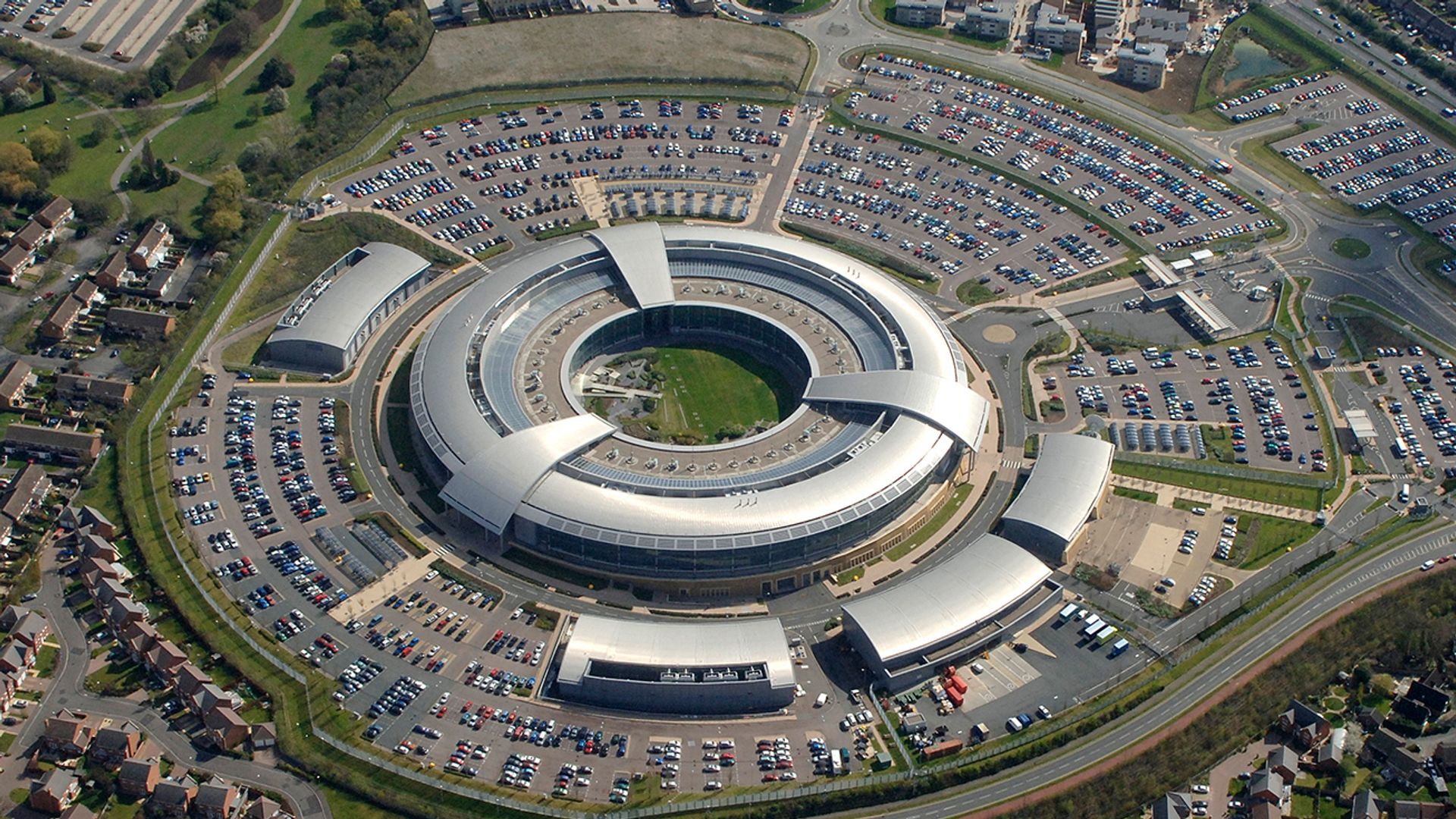
The real vulnerability of modern space architecture has never been the satellite zooming through a vacuum. It is the ten-thousand-pound concrete bunker sitting in the middle of a desert in Colorado or an undisclosed field in the UK that sends the uplink signal.
You do not need an orbital railgun to blind an adversary. You need a cyber weapon that compromises the ground station operating system. You need a directional radio-frequency jammer mounted on a flatbed truck parked three miles outside a domestic military installation. You need supply chain infiltration that sneaks a compromised microchip into the telemetry processing unit before it ever leaves a manufacturing floor in Shenzhen.
Focusing our anxiety on orbital weapons is a brilliant sleight of hand. It draws attention away from the glaring software vulnerabilities and decaying physical infrastructure that keep our entire orbital fleet tethered to Earth. Our satellites are only as smart as the ground controllers managing them, and right now, those ground controllers are fighting legacy codebases, talent shortages, and antiquated security protocols that look like swiss cheese to a motivated state-sponsored hacker.
Stop Preparing for the Wrong War
The obsession with space militarization misses the forest for the stars. We are pouring capital into high-tech orbital fencing while leaving the front door unlocked at ground level.
If we want to secure our national security interests in the coming decades, we need to stop funding shiny panic objects that look good in congressional slide decks. We need radical decentralization of ground control networks, hardened quantum-resistant encryption for every uplink and downlink, and a brutally honest assessment of what our assets can actually survive in a contested environment.
The next conflict will not be won by the nation that puts the biggest gun in orbit. It will be won by the nation that can lose half its constellation and still keep its logistics, communications, and command structures functioning on the ground.
Look down. That is where the war is actually being decided.